
The real difference between being buzzed and being drunk comes down to one thing: control. A buzz is that sweet spot—the gentle, early-stage effect of alcohol that makes you feel relaxed and a bit more cheerful. Being drunk, on the other hand, is when you've crossed a line into noticeable mental and physical impairment.
Scientifically, it's your Blood Alcohol Concentration (BAC) that draws that line in the sand.
Understanding the Line Between Buzzed and Drunk
Think of the journey from buzzed to drunk not as a sudden jump, but as a slippery slope. Knowing where you are on that slope is the key to having a great, safe time. The most important factor here is your Blood Alcohol Concentration (BAC), which is just a fancy way of saying how much alcohol is in your bloodstream.
This isn't just about how you feel; it's a measurable state. A good buzz usually lands you at a BAC of about 0.02% to 0.05%. At this point, you're probably feeling more social and a little loose, but your coordination is still intact.
Once your BAC hits 0.08% or higher, you’re considered legally drunk in most places. This is where you see a serious decline in motor skills and judgment. If you're curious about how these standards differ across the globe, you can check out some fascinating alcohol consumption data from around the world.
Key Subjective Differences
While BAC gives us the hard numbers, it's the personal experience that really matters. A buzz can make a good social situation even better, leaving you feeling warm, chatty, and connected. Being drunk often does the opposite. It can lead to slurred speech, unpredictable emotions, and a clumsy loss of physical control that nobody enjoys.
The whole point of mindful drinking is to ride that pleasant buzz—to get the social perks of alcohol without tipping over into impairment, where the fun stops and the risks begin.
Knowing where that boundary lies is everything. It's the difference between a memorable night with friends and a morning full of regret.
Quick Comparison Buzz vs Drunk
To put it all in perspective, here's a quick side-by-side look at the key differences you'll notice when you're buzzed compared to when you're drunk.
| Characteristic | Feeling Buzzed | Feeling Drunk |
|---|---|---|
| BAC Level | ~0.02% - 0.05% | 0.08% and above |
| Coordination | Slightly relaxed, mostly normal | Noticeably impaired, clumsy |
| Judgment | Lowered inhibitions, still sound | Significantly impaired |
| Emotional State | Euphoric, relaxed, sociable | Unpredictable, exaggerated |
| Speech | Clear, maybe more talkative | Slurred, difficult to understand |
This table makes it clear that while a buzz can be a pleasant, manageable feeling, being drunk is a state of significant impairment that affects nearly every aspect of your physical and mental abilities.
Understanding the Stages of Getting Drunk
The line between being buzzed and being drunk isn't a hard one; it's more like a journey with a few key stops along the way. Alcohol doesn't just flip a switch in your brain. Instead, its effects build progressively as your Blood Alcohol Concentration (BAC) goes up, systematically moving through different parts of your brain.
First up is the frontal lobe—your brain's CEO, in charge of judgment, planning, and keeping your impulses in check. This is where the "buzz" happens. You feel more relaxed, maybe a little more chatty and euphoric. It's that warm, easygoing vibe that makes having a single drink at a social gathering feel so good.
The Tipping Point: From a Light Buzz to Noticeable Impairment
As you keep drinking and your BAC inches toward the 0.08% legal limit, alcohol starts to expand its reach. This is when you'll start noticing more concrete changes in your motor skills and reaction time.
- A Little Less Graceful: You might not be stumbling, but fine motor skills get a bit trickier.
- Emotions on High: Happy feels happier, sad feels sadder. Everything gets a bit more intense.
- Caution to the Wind: Your decision-making gets a little fuzzy, and you might take small risks you'd normally skip.
This is the transition zone, the crucial point where a pleasant buzz begins to morph into the first real signs of being drunk. Your ability to make smart, safe choices starts to dip. Catching these signals is your best bet for tapping the brakes before your judgment is truly out the window.
Think of it this way: A "buzz" is when you feel a pleasant wave of relaxation but are still very much in the driver's seat. Being "drunk" is when alcohol takes the wheel, noticeably messing with your coordination, judgment, and emotional control.
When You've Arrived at "Drunk"
Cross the 0.08% BAC threshold, and you're officially in "drunk" territory. By now, alcohol's influence has spread to the cerebellum, the part of your brain that handles balance and physical coordination. The signs are pretty hard for you—or anyone else—to ignore.
At this stage, the classic signs of intoxication are on full display:
- Slurred Speech: Forming words clearly becomes a real challenge.
- Poor Coordination: Stumbling, swaying, and difficulty walking a straight line are common.
- Blurred Vision: Your eyes might have trouble focusing.
- Slow-Motion Reactions: Your ability to react quickly is seriously compromised.
This is where the fun ends and the risks begin to pile up. The real difference between a social buzz and being drunk is the loss of control—both physically and mentally. Knowing how you get from one to the other is the key to enjoying the former without accidentally stumbling into the latter.
Alcohol Buzz vs. A THC Seltzer High
With cannabis-infused drinks like Day Dreamer quickly becoming the new go-to alternative to alcohol, it’s worth taking a moment to understand how they really differ. Sure, both can help you unwind, but the path from a light alcohol buzz to a gentle THC high is a completely different journey—in timing, sensation, and the overall experience.
An alcohol buzz hits pretty fast. Since alcohol is water-soluble, it gets absorbed straight into your bloodstream from your stomach. You’ll usually start feeling it within 15 to 45 minutes. This quick, predictable onset is what most of us know from social drinking: a rapid shift into a more relaxed, less inhibited state.
A THC seltzer, on the other hand, takes the scenic route. When you drink your THC, it first has to pass through your liver, where it gets converted into a more potent form before it hits your bloodstream. This metabolic detour means the effects are delayed, often taking anywhere from 30 minutes to two hours to fully kick in. This slow, gradual build is a world away from the fast hit of alcohol.
The Nature of The Experience
The feeling itself is another major point of difference. Alcohol is a depressant. It’s known for that "social lubrication" effect, lowering inhibitions and helping to take the edge off. For many, it tends to dull the senses, which can make navigating social situations feel a bit easier.
A low-dose THC seltzer, however, often creates a much different vibe. People often describe it as a heightening of the senses—music sounds fuller, food tastes incredible, and conversations can feel more connected and creative. It’s less about numbing out and more about tuning in.
The core difference really boils down to perception. An alcohol buzz often mutes your senses for social ease, while a THC seltzer high tends to sharpen them for a more present, sensory-rich experience.
This infographic lays out the typical progression of alcohol's effects, starting from a pleasant buzz and moving toward severe impairment.
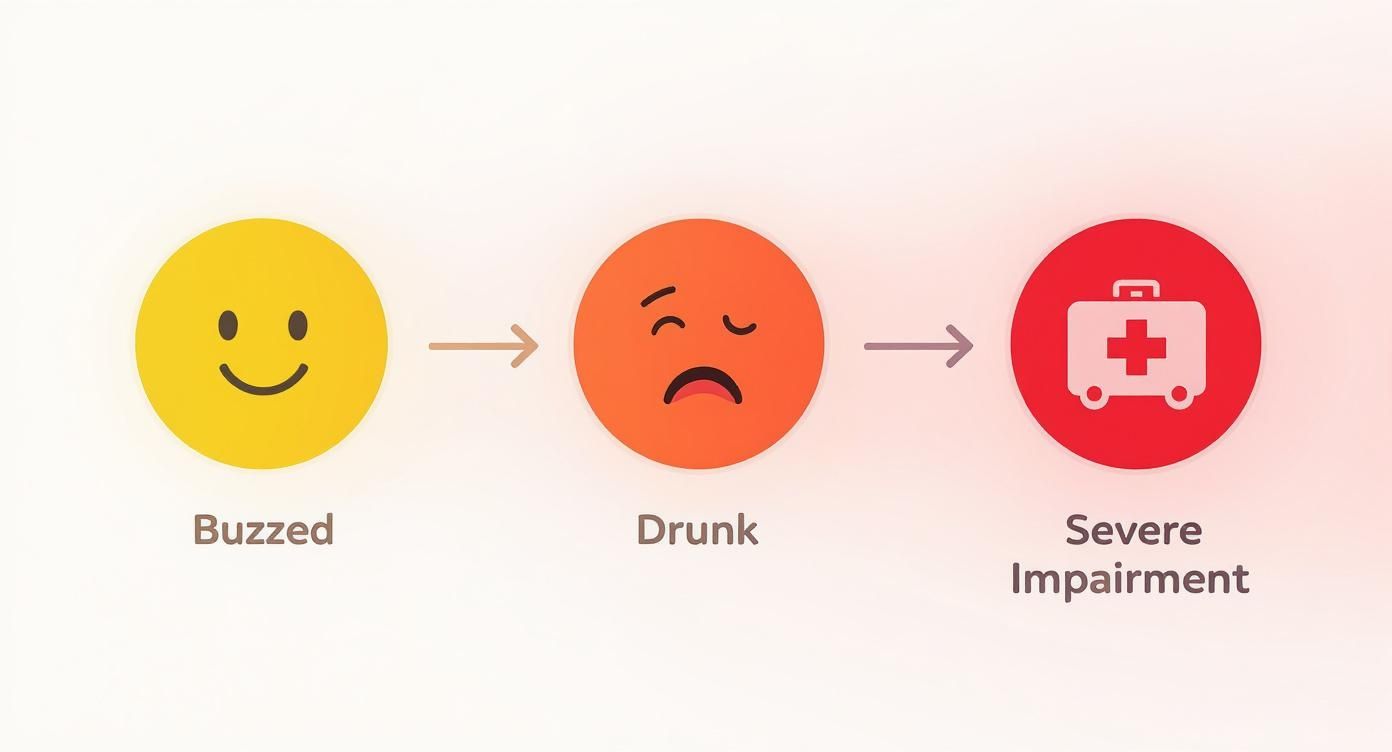
It’s a clear visual reminder of how quickly a good time can turn into a bad one, really driving home the importance of pacing yourself.
Duration and Control
The last piece of the puzzle is how long it all lasts. The buzz from a beer or a glass of wine usually wears off within a couple of hours. That shorter duration makes it fairly straightforward to manage your level of intoxication over the course of an evening.
The high from a THC seltzer sticks around for a while longer, typically lasting anywhere from four to six hours. This extended ride, combined with that delayed onset, requires a bit more mindfulness. Patience is key here; unlike alcohol, you can’t just have another to speed things up. Understanding this helps you stay in the driver's seat and enjoy the gentle lift without accidentally going overboard.
To make things even clearer, let's break down the key differences side-by-side.
Alcohol Buzz vs. THC Seltzer High: A Detailed Breakdown
| Factor | Alcohol (e.g., One Beer/Wine) | THC Beverage (e.g., 2.5mg Seltzer) |
|---|---|---|
| Onset Time | 15-45 minutes | 30-120 minutes |
| Primary Sensation | Depressant; lowered inhibitions, relaxation, numbing of senses. | Mild euphoria; heightened sensory perception, creativity, body high. |
| Mental State | Disinhibited, sociable, can become foggy or sluggish. | Engaged, creative, introspective, sometimes giggly. |
| Duration of Peak | 1-2 hours | 4-6 hours |
| "The Hangover" | Common; headache, nausea, fatigue. | Rare; some report feeling groggy, but no "hangover." |
| Control Factor | Effects are immediate, making it easier to gauge your next drink. | Delayed onset requires patience to avoid overconsumption. |
This table really highlights that while both are "drinks," the way they interact with your body and mind couldn't be more different. Planning your experience around these factors is the best way to ensure you have a good time, no matter which you choose.
How Global Drinking Cultures Shape Our Experience
https://www.youtube.com/embed/e5fjFxzE6WA
Whether a night out leads to a gentle buzz or full-blown intoxication isn't just a matter of personal choice. More often than not, it's guided by powerful, unspoken cultural rules that shape our entire relationship with alcohol.
The social setting around us is a huge factor, dictating what's considered normal, celebratory, or just plain excessive. These unwritten codes can either encourage moderation or, in some cases, create an environment where heavy drinking feels like the only option.
Take many Mediterranean cultures, for instance. Alcohol is often a part of daily life, but it’s almost always paired with food. A glass of wine with dinner is the norm, where the focus is on enhancing a meal and savoring the moment, not necessarily chasing a feeling. This approach naturally lends itself to a mild, pleasant buzz rather than getting drunk.
The Influence of Binge-Drinking Norms
On the flip side, some societies have what’s often called a "binge-drinking" culture. In these places, the main goal of a social event can be to get drunk, and quickly. This is especially common in places where drinking is packed into specific windows, like weekends, instead of being woven into the fabric of daily meals.
This kind of cultural backdrop can make it tough for someone who just wants to enjoy a light buzz. When everyone around you is drinking heavily, sticking to just one or two can feel awkward or even draw unwanted comments. Simply recognizing that this pressure exists is the first step toward making choices that feel right for you.
The difference between a buzz vs drunk experience isn't just physical; it's cultural. Your environment often sets the default, influencing whether drinking in moderation is seen as the norm or the exception.
Global Consumption Patterns and Social Context
Global alcohol consumption data throws these cultural differences into sharp relief. European countries often have the highest intake, with social traditions that are deeply intertwined with drinking. To put it in perspective, in 2022, the per capita alcohol consumption in the United States was about 9.8 liters of pure alcohol—already well above the global average of 5.8 liters.
But even that number is dwarfed by countries like Romania, which led the world at roughly 17 liters per capita, or the Czech Republic at 13.3 liters. It’s easy to see how in places with such high consumption rates, the social expectation to get drunk would be much more common. You can dive deeper into these global drinking patterns and their rankings to see just how stark the contrasts are.
Ultimately, understanding the cultural script you’ve been handed is empowering. It gives you the freedom to consciously decide whether to follow the crowd or forge your own path. This awareness is crucial for navigating the buzz vs drunk dynamic on your own terms.
Embracing Mindful Drinking and Harm Reduction
There's a major shift happening in how we think about social drinking. The conversation has evolved beyond a simple "buzz vs. drunk" comparison and into a much more thoughtful space focused on mindful consumption and harm reduction. This whole movement is being driven by a collective desire for more control, better well-being, and social experiences that actually add to our lives instead of taking away from them.
This isn't about giving up alcohol completely. It's about being intentional. It’s about choosing to enjoy the pleasant, social lift that comes with a light buzz while actively steering clear of the negative fallout from getting drunk. Cultivating this kind of awareness in your life can be a game-changer, and exploring tools like these powerful mindfulness techniques for anxiety can really help build that muscle.
You can see this mindset popping up in market trends, too. People are reaching for high-quality, precisely dosed drinks that give them a more controlled, predictable experience. Take the boom in ready-to-drink (RTD) cocktails. Demand is expected to double between 2019 and 2029, and some North American markets are seeing growth as high as 400%. That’s a loud-and-clear signal that consumers want pre-measured drinks perfect for hitting a buzz, not getting wasted.
Practical Strategies for a Better Buzz
Harm reduction isn’t just an abstract idea—it’s a set of real, practical strategies you can use to make social occasions safer and a lot more fun. The goal is simple: hang out in that sweet spot of a perfect buzz without tipping over into drunk territory.
A few smart habits can make a world of difference:
- Pace Yourself: The classic rule of one standard drink per hour is a good one. It gives your liver a fighting chance to keep up, which helps keep your blood alcohol content (BAC) from spiking.
- Hydrate Relentlessly: For every alcoholic drink you have, follow it up with a full glass of water. Not only does this slow you down, but it also helps counteract the dehydrating effects of alcohol.
- Eat Before and During: Food in your stomach acts like a buffer, slowing down how quickly alcohol gets into your bloodstream. It’s a simple way to prevent your BAC from shooting up too fast.
- Know Your Standard Drink: Get familiar with what "one drink" actually means. It’s typically 12 ounces of beer, 5 ounces of wine, or 1.5 ounces of spirits.
Mindful drinking is about empowerment. It’s the conscious choice to savor the experience, maintain control, and prioritize your well-being, ensuring you wake up feeling as good as you did the night before.
Setting Your Intentions
Before you even have that first sip, ask yourself what you want out of the experience. Are you just looking for a light social boost for an hour or two? Or are you planning for a longer evening? Deciding on a clear intention and a firm drink limit ahead of time is one of the most powerful ways to stay in control.
This simple act of planning puts you firmly in the driver's seat. It changes drinking from something you do on autopilot into a conscious, deliberate choice. That's how you consistently find that perfect buzz while sidestepping the all-too-common regrets of getting drunk.
Your Intoxication Questions, Answered
When you start comparing alcohol with alternatives like THC seltzers, a lot of practical questions pop up. It's one thing to understand the theory, but another to know how it all plays out in real life. Let's break down some of the most common queries people have about feeling buzzed versus getting drunk.
Think of this as your go-to guide for making smarter, safer choices, whether you’re moderating your drinking or just curious about new ways to unwind.
How Can You Sober Up Faster?
Everyone wishes there was a magic button for this, but sadly, there isn't. Your liver works at its own pace, processing about one standard drink per hour, and nothing—not a cold shower, a greasy meal, or a gallon of coffee—can speed it up. Those things might jolt you into feeling more awake, but they won't actually lower your Blood Alcohol Concentration (BAC).
The only real cure is time. While you're waiting for your body to do its job, the best things you can do are:
- Stop drinking: Don't give your liver any more work to do.
- Drink water: Alcohol is dehydrating, so sipping water will help you feel better, even if it doesn't make you sober.
- Rest: Let your body focus on processing the alcohol. It's the only way.
Does Body Weight Affect How You Get Drunk?
It absolutely does. Your body weight and composition are huge factors in how alcohol affects you. Someone with a larger frame typically has more body water, which acts as a diluent for the alcohol. Think of it like adding the same drop of food coloring to a small glass of water versus a large one—the concentration will be much higher in the smaller glass.
This is why a lighter person will usually feel the effects of alcohol more quickly and reach a higher BAC than a heavier person, even after drinking the exact same amount. It’s not just about weight, either; muscle tissue holds more water than fat, so a leaner person may process alcohol differently than someone of the same weight with a higher body fat percentage.
What Does the Legal Limit for Impairment Mean?
In most of the U.S., the legal limit for driving is a 0.08% BAC. It’s crucial to understand that this isn't a "safe" number to aim for. Impairment starts far sooner. Even a BAC of 0.02%—an amount you might not even feel—can begin to slow your reaction time and cloud your judgment.
Hitting a 0.08% BAC isn’t just being “a little buzzed”; it’s the legal definition of being drunk. At this level, your motor skills, coordination, and ability to make sound decisions are significantly compromised.
Understanding the legal aspects of DUI is essential, because the consequences of driving impaired are incredibly serious. If you're drinking, the only safe option is to have a designated driver or call a rideshare. No exceptions.
Can You Get a Hangover from Just Being Buzzed?
It's pretty unlikely, but it’s not completely off the table. A hangover is your body's angry response to dealing with alcohol, driven by things like dehydration, inflammation, and disrupted sleep. The more you drink, the more intense that response is.
If you stick to a light buzz—maybe one or two drinks spread out over a few hours with plenty of water—you’ll almost certainly wake up feeling great. But if you’re particularly sensitive, drink on an empty stomach, or don’t hydrate, you might still feel some mild, hangover-like symptoms. The difference is that a true hangover is a near-certainty after getting drunk, while it's a rare fluke from a simple buzz.
Ready to find your perfect buzz without the downsides of alcohol? Day Dreamer offers a sophisticated alternative with our clean, hemp-derived Delta-9 THC and CBD sparkling waters. Crafted for a clear, controlled experience, it’s the ideal choice for mindful indulgence. Discover a better way to unwind at https://enjoydaydreamer.com.


