

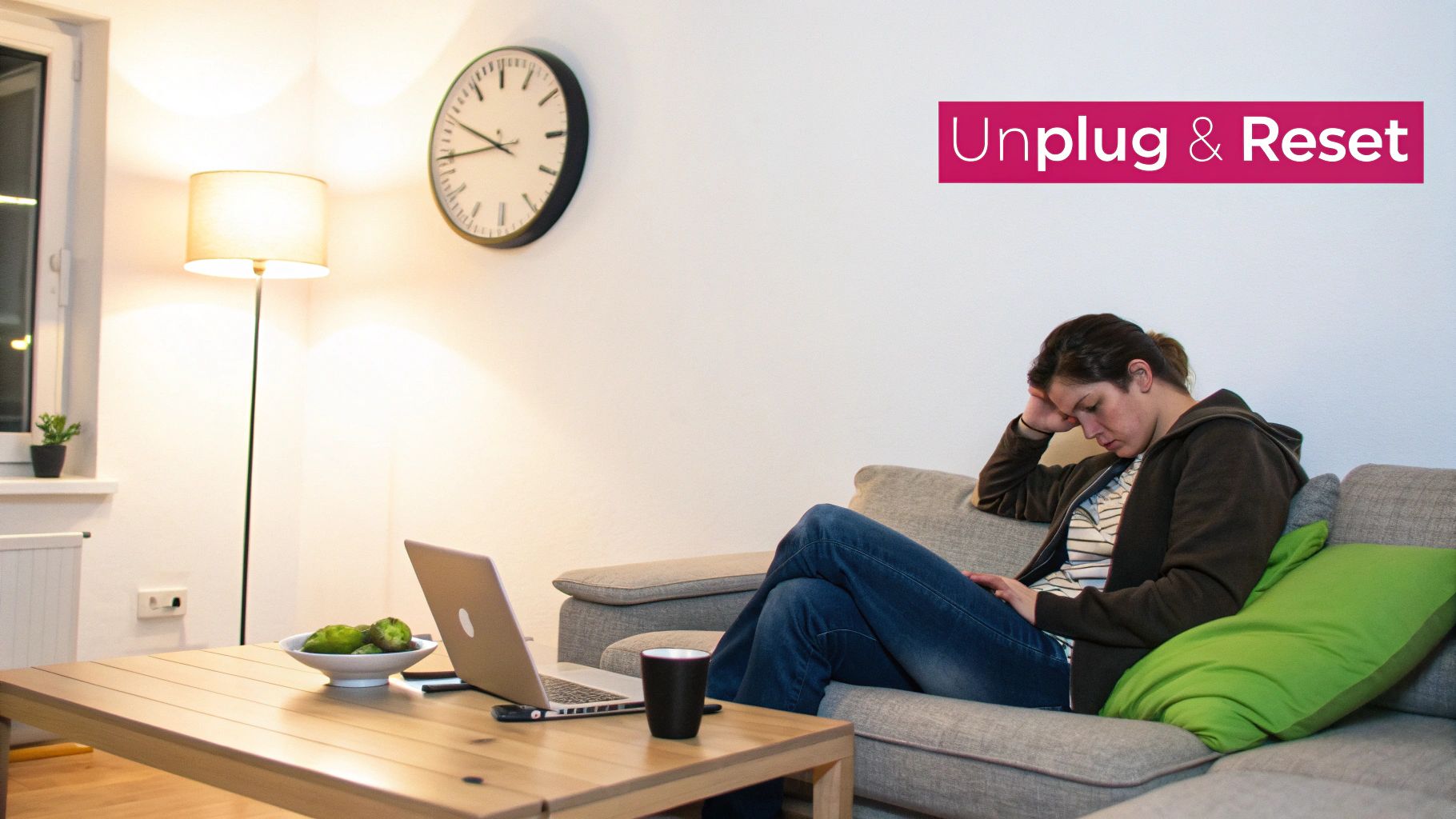
If you've ever felt "wired but tired" after a long day, you know the feeling. You're home, but your brain is still stuck in a meeting, replaying conversations and checking off mental to-do lists. It's a frustrating state of limbo, and it's not just in your head.
Learning how to truly relax after work is about creating a deliberate buffer—a set of simple, intentional rituals that signal to your brain that the workday is officially over. This is how you shift from a stressed, high-alert state into one of genuine rest and recovery.
Why Is It So Hard to Switch Off After Work?
That lingering tension is a real physiological response. After hours of focus and stress, your body can still be swimming in hormones like cortisol and adrenaline. This keeps your nervous system stuck in "fight-or-flight" mode long after you've closed your laptop.
This is why you might find yourself mindlessly scrolling on the couch, unable to engage in a conversation, or just feeling... off. Without a clear boundary, the mental weight of your job spills into your personal time, making it feel impossible to actually unwind. This constant state of low-grade alert is a one-way ticket to burnout.
The Power of a Decompression Routine
This is where a decompression period comes in. Think of it as a mental airlock between your "work self" and your "home self." It's not about adding more to your plate; it's about carving out a small, intentional space to transition. This buffer is absolutely essential for keeping chronic stress at bay.
And let's be honest, the need for this has never been greater. Gallup's research shows that nearly half of U.S. employees feel work-related stress every single day. Even more alarming, some reports suggest over 80% are at risk of burnout this year.
The good news? It doesn’t take much to make a difference. Research has found that unwinding with simple, low-key activities can slash stress hormones like cortisol by up to 30% in just 30 minutes.
This isn't about finding more hours in the day. It’s about reclaiming the time you already have with simple rituals that tell your brain and body it's finally safe to power down.
If you're looking for more ways to help your mind shift gears, you can learn how to reset your brain for focus and mental clarity. Once you understand this biological hangover from your workday, you can start using small, effective rituals to take back your evenings for good.
Create a Ritual to End Your Workday
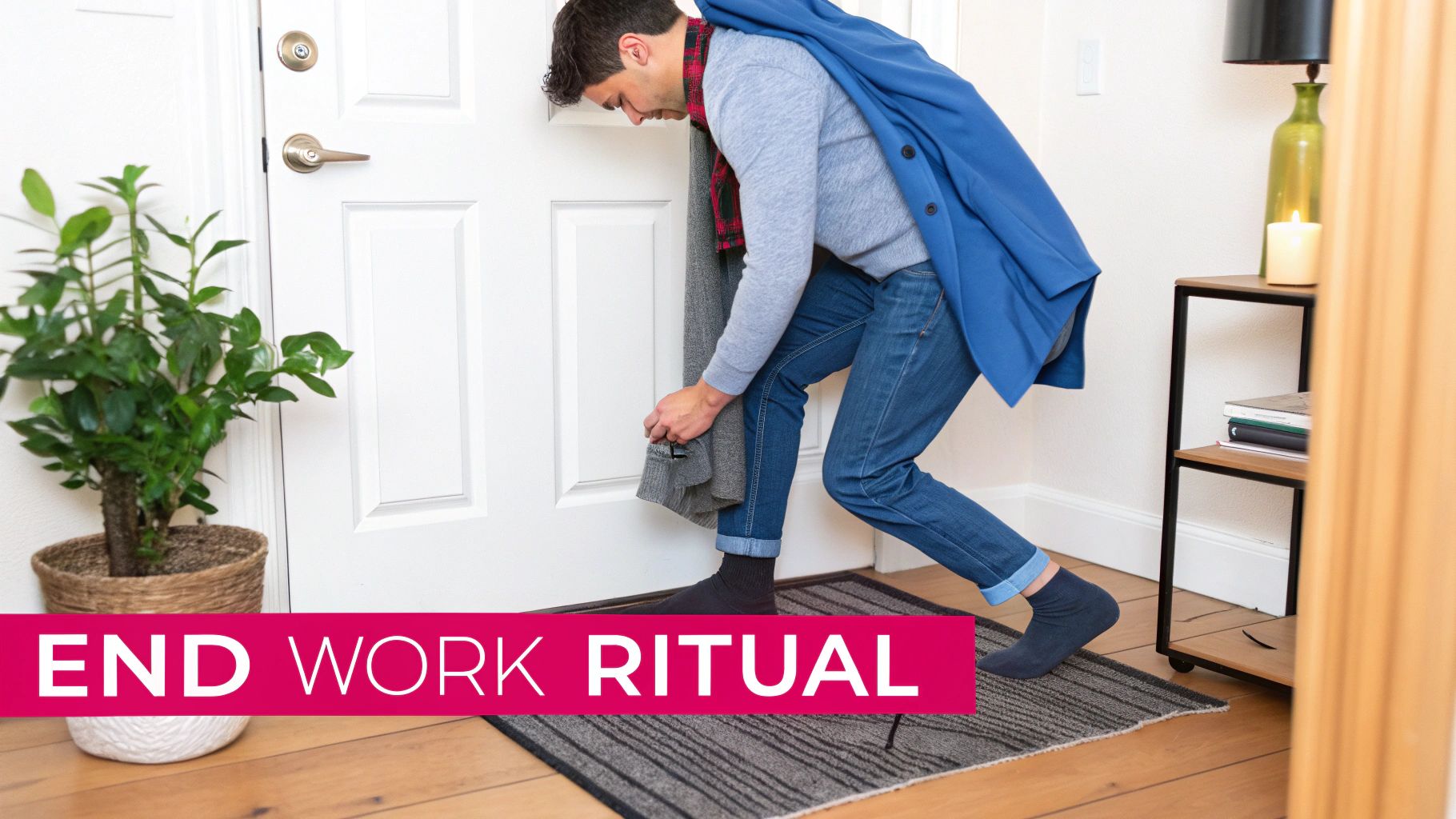
That moment when you finally close your laptop or walk through the front door after a long day is more than just an ending—it's a critical transition point. Without a clear boundary, the mental chatter from your job has a nasty habit of following you into your personal time, making it nearly impossible to truly unplug.
This is where a simple ritual comes in. It's not about adding another complicated task to your to-do list. Instead, it’s about creating an essential buffer, a signal to your brain that says, "Okay, that's done. Now it's my time."
Engage Your Senses to Decompress
The secret to a powerful ritual lies in engaging your senses. By grounding yourself in the present moment through physical sensations, you can effectively interrupt the cycle of lingering work stress. Think of it as deliberately transforming your space from a "work zone" into a "relaxation zone."
One of the most effective ways to start is simply by changing your clothes. The physical act of shedding your work attire—whether it's a uniform or just the jeans you sat in all day—and slipping into something comfortable is a potent psychological cue. It tells your body, “The performance is over; you can stand down now.”
Next, let's talk about sound.
- Curate a "Transition" Playlist: Put together a short playlist of calming, low-key music. Playing the same few songs every day as you wrap things up builds a powerful mental association between that music and the feeling of unwinding.
- Embrace the Quiet: On the flip side, if your day was a constant barrage of notifications and meetings, just five minutes of intentional silence can feel like a miracle. Try just sitting and looking out a window, with no audio input whatsoever.
Consciously choosing your soundscape puts you back in the driver's seat and kicks off the de-stressing process.
Shape Your Atmosphere for Calm
Scent and light are two other heavy hitters when it comes to crafting a relaxing atmosphere. Our sense of smell is hardwired directly to the parts of our brain that manage memory and emotion, making it a shortcut to a calmer state of mind.
A consistent post-work routine can signal to your brain that it's time to shift modes. The simple act of changing your clothes, lighting a candle, or making a cup of tea can create a powerful transition from work time to personal time.
To put this into practice, you could light a specific candle or turn on an essential oil diffuser with a soothing scent like lavender or eucalyptus. This small action can become a cornerstone of your ritual. Over time, your brain will link that specific aroma with safety and relaxation, making the shift into your evening feel almost automatic.
Finally, take a look at your lighting. Bright, harsh overhead lights are great for focus but terrible for relaxation—they mimic the office environment and can keep your brain on high alert. Try dimming the lamps or switching to warmer, softer light sources. It's a tiny adjustment that completely changes the feel of a room, signaling to your nervous system that it’s time to wind down.
Here’s a quick-reference guide to sensory cues you can use to signal the end of the workday and the beginning of your time.
Your After-Work Transition Toolkit
| Sensory Cue | Simple Action | Why It Works |
|---|---|---|
| Touch | Change into comfortable clothes. | Physically sheds the "work uniform" and cues the body to relax. |
| Sound | Play a specific "unwind" playlist or sit in silence for 5 minutes. | Replaces work-related noise with intentional sound (or lack thereof). |
| Smell | Light a specific candle or use an essential oil diffuser. | Scent is strongly tied to memory and emotion, creating an instant mood shift. |
| Sight | Dim the lights and switch to warmer-toned lamps. | Reduces harsh, stimulating light, signaling to your brain it's time to rest. |
These small, intentional actions don’t take much effort, but they work together to help you fully disconnect, find your peace, and reclaim your evening.
Find Your Low-Stimulation Escape
Once you’ve established that all-important transition ritual, the next question is: what do you actually do with your evening? The whole point is to find things that occupy your mind just enough to keep work at bay, but without demanding a ton of focus or energy. This is your low-stimulation escape.
It's so easy to swap one kind of stress for another. We shut the laptop and immediately fall into a doom-scrolling black hole on social media or get sucked into stressful news headlines. That keeps your brain in the exact same high-alert state it was in all day, preventing any real chance to decompress.

Embrace Gentle Movement
Relaxing doesn't have to mean becoming a statue on the couch. Think about it—after being hunched over a desk or on your feet all day, your body is probably screaming for a release. Gentle movement is one of the best ways to let go of that physical tension and quiet the mental chatter that comes with it.
The trick is to avoid anything too intense. A hardcore workout right before bed can spike your stress hormones, which is the opposite of what we're going for. Instead, try something that feels genuinely restorative.
- A 15-minute walk: Just a quick loop around your neighborhood is enough. Getting some fresh air creates a real, physical separation from your workspace and clears your head.
- A simple stretching routine: Zero in on the spots that are always tight—your neck, shoulders, and lower back. You don’t need an hour-long yoga class; five minutes of intentional stretching can work wonders.
- A beginner yoga flow: Find a gentle, easy-to-follow video online. The combination of mindful movement and controlled breathing is a direct signal to your nervous system to calm down.
This kind of movement helps your body metabolize the day's stress, making it much easier for your mind to get on board.
Discover Low-Key Hobbies
The other piece of the puzzle is finding a hobby that engages you without feeling like a chore. The best low-stimulation activities are the ones you can get lost in, pushing out those lingering work thoughts without requiring any heavy mental lifting. It’s all about finding that state of calm, easy focus.
An ideal after-work activity should be absorbing but not demanding. It’s a gentle distraction that lets your mind recover from the day's pressures without adding new ones.
Think about things that feel creative, soothing, or just plain fun.
- Journaling: This doesn't mean you have to write an entire novel. Just jotting down a few thoughts about the day, something you're grateful for, or whatever is cluttering your mind is a powerful release. It helps you process things so you’re not still mulling them over at 11 PM.
- Listening to a podcast or audiobook: Here’s a perfect way to engage your brain passively. Pick something light and entertaining—and definitely not related to your industry. This is your time off.
- Sketching or doodling: Forget about being an "artist." The simple, tactile act of putting a pen to paper and letting it wander without a goal can be incredibly meditative.
The right activity will feel like a breath of fresh air for your brain, not just another task on your to-do list. Play around with a few different things until you find what makes you truly disconnect and feel recharged.
Your Evening Drink, Reimagined
For so many of us, the sound of a bottle opening is the universal signal that the workday is officially over. That satisfying pop or fizz is a deep-seated ritual that says, "Okay, you can relax now." But what if you could keep the ritual without the downsides of alcohol?
This is where thoughtfully crafted THC and CBD-infused sparkling waters come in. They’re designed for that exact moment—the end-of-day unwind—but with a focus on a clean, calming experience. Imagine that same crisp fizz, the taste of real fruit, and a gentle wave of relaxation that melts away the day's tension without the brain fog or next-day regrets. It’s a sophisticated, mindful choice for anyone looking to cut back on alcohol or simply find a better way to decompress.
And let's be honest, finding that "off" switch is harder than ever. If you’re feeling that post-work burnout, you’re in good company. A massive 90% of desk and remote workers report feeling serious stress from their jobs. The good news? Since the 2018 Farm Bill opened the door for more research, clinical trials have found that legally compliant Delta-9 THC can cut perceived stress by 35% in about 20 minutes. It's no wonder that among cannabis users, 85% prefer beverages for their predictable, easy-to-manage effects. You can dig into more of the data on work-related stress and its impact if you're curious.
Finding Your Sweet Spot
If you're new to THC drinks, the golden rule is simple: start low and go slow. The effects are different from alcohol—they're more subtle and can take a little longer to fully settle in. The key is a mindful approach to find what feels right for you.
Don't just down the whole can on your first go. Think of it more like a little personal experiment to find your perfect dose. Here’s a method I always recommend:
- Start with a Small Pour: Pour just a quarter of the can into a nice glass.
- Sip and Savor: Actually taste it. Enjoy the experience. Don't rush.
- Give it Time: Wait a solid 60-90 minutes. This is crucial. See how you feel. Are you feeling a gentle calm? Is the edge taken off?
This patient approach lets you learn how your body responds without accidentally overdoing it. Everyone’s tolerance is unique, and figuring out your own personal sweet spot is part of the journey.
The goal here isn't to get high; it's to find a gentle state of calm. You're just trying to soften the sharp edges of the day, not erase it completely. This is what mindful consumption is all about.
Make it a Real Ritual
The magic of a cannabis beverage isn't just what's in it, but how you enjoy it. Treat this moment with the same intention you would a fancy cocktail or a great glass of wine. The ritual is half the benefit.
- Use Your Favorite Glass: It just feels better.
- Add a Little Garnish: A slice of lime, a few fresh berries, or a sprig of mint makes it feel like an occasion.
- Settle Into Your Spot: Take your drink to that comfy chair, out on the porch, or wherever you feel most at peace.
By building this small, intentional moment, you're creating a powerful cue for your brain to transition out of work mode. You're not just swapping one drink for another; you're creating a new, healthier habit that actually helps you rest, recover, and reclaim your evenings.
Optimize Your Environment for Restful Sleep
Everything we've talked about—the deep breaths, the transition rituals, the mindful evening activities—it all leads to this. The single most critical activity for mental and physical repair: sleep. A truly great night's sleep is the ultimate reset button, but it rarely happens by accident. Your environment plays a massive role in signaling to your brain that it's finally time to power down.
Think of it less as a rigid set of rules and more as a series of small, intentional experiments to discover what truly works for you. These are gentle adjustments designed to guide your body toward the deep, restorative rest it craves.
Set the Stage for Quality Rest
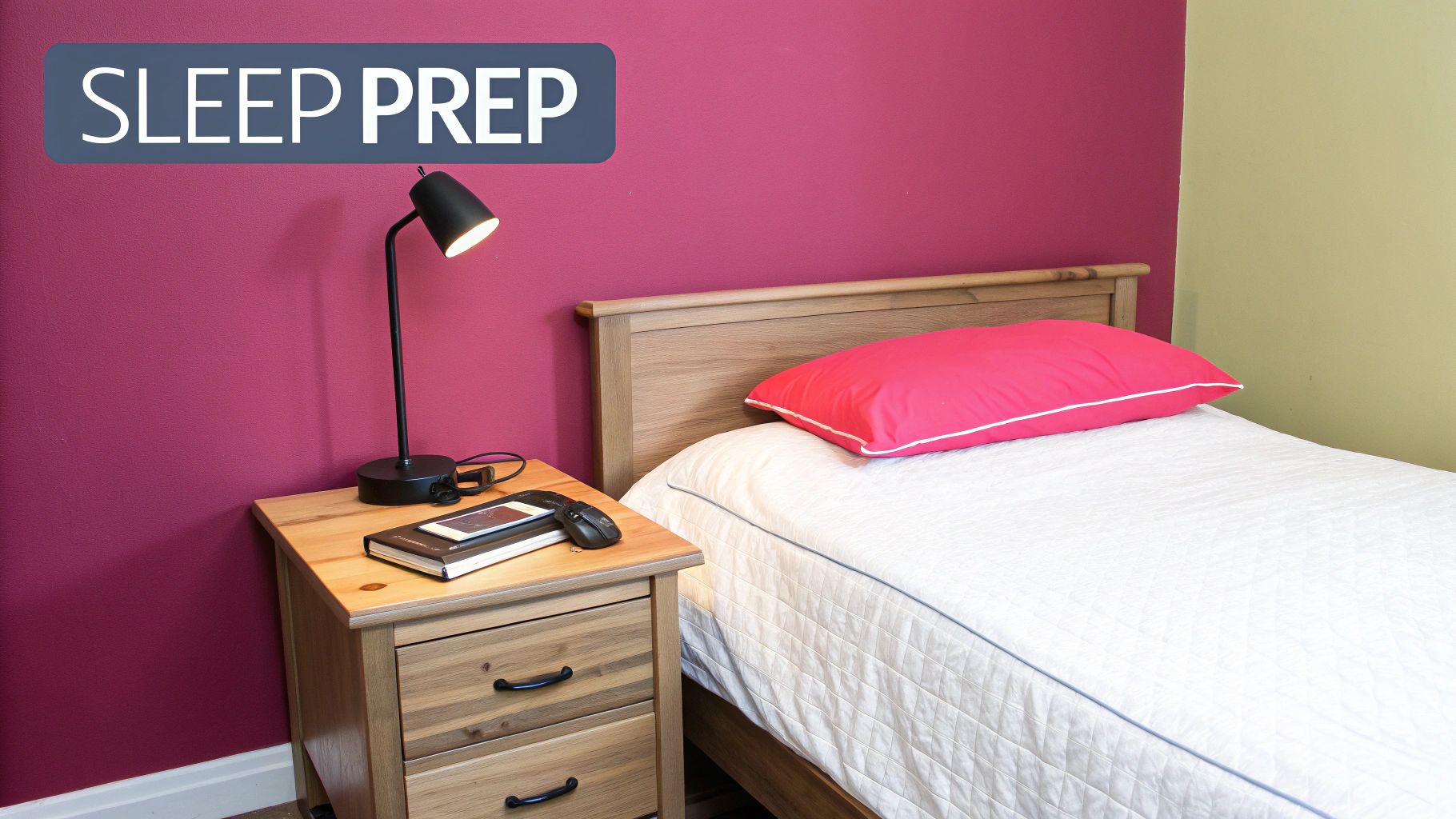
The foundation for good sleep is laid long before your head hits the pillow. The goal is to create a sanctuary dedicated solely to rest, and two of the biggest levers you can pull are temperature and light.
Most sleep experts will tell you that a cool room is a must. Your body temperature naturally dips as you fall asleep, and keeping your room cool (between 60-67°F or 15-19°C) helps that process along beautifully. Just as important is darkness. It's the primary signal your brain uses to start producing melatonin, the hormone that governs your sleep-wake cycle.
- Invest in blackout curtains. They're a game-changer for blocking out streetlights and the early morning sun.
- Grab an eye mask. It's a simple, effective fix if new curtains aren't in the budget.
- Cover up bright LEDs. A tiny piece of electrical tape over the glowing lights on your TV or charger can make a surprising difference.
Your bedroom should be a cave: cool, dark, and quiet. By managing the temperature and eliminating light, you're removing two of the biggest environmental roadblocks to a great night's sleep.
The Wind-Down Hour
That last hour before you intend to be asleep is sacred. It’s your final chance to gently nudge your mind away from the day's constant buzz. The single biggest saboteur of this crucial window? The blue light glaring from our screens. Phones, tablets, laptops, TVs—they all emit a specific wavelength of light that is notorious for suppressing melatonin, effectively tricking your brain into thinking it's still daytime.
Try to make a real commitment to disconnect from all screens at least 60 minutes before bedtime. Instead of one last scroll, pick up a physical book, listen to some calm music, or do a few gentle stretches.
If you want to take it a step further, you can even explore how using a sauna can improve your sleep to tap into your body’s natural rhythms.
This isn't just about feeling better; it's about combating a real problem. With 72% of U.S. workers still dealing with moderate-to-high stress levels, these simple wind-down routines are more important than ever. Globally, the WHO links poor mental health to 12 billion lost workdays each year. For those nights when stress is particularly stubborn, emerging research shows that aids like CBD can cut anxiety by 25-40% within an hour, making that transition to sleep much smoother.
Building a Relaxation Routine That Actually Sticks
Knowing how to relax after work is one thing; making it a real, consistent habit is a whole different ballgame. The most beautifully crafted routine is useless if it’s too much to handle on a day when you’re already running on fumes.
The secret isn't perfection—it's sustainability. Let's get real about the hurdles you'll face and figure out how to build new habits that actually stick around.
“But I Don’t Have Time for This”
This is the big one, right? The most common myth is that you need a whole hour to properly decompress. Honestly, that’s just setting yourself up for failure.
Consistency beats intensity, every single time. An intentional 15-minute ritual you do every day is infinitely more powerful than a sporadic, hour-long session once a week.
The trick is to start small. I'm a big believer in a technique called "habit stacking." You simply latch a new, tiny habit onto something you already do without thinking.
For example, your trigger is closing your laptop. The new habit is walking to the kitchen and pouring a glass of water before you do anything else. It's almost laughably small, but that's why it works. It’s a tiny, achievable win that builds momentum.
Navigating the Inevitable Roadblocks
Let's be honest: life is rarely a calm oasis the second you clock out. A chaotic home with kids, roommates, or a partner who needs your attention can feel like a massive barrier to finding your peace. The key is to focus on what you can control and create a tiny, personal bubble of calm.
-
Create an Audio Sanctuary: Noise-canceling headphones are a game-changer. Your "transition playlist" isn't just background music; it's a tool to instantly create a private soundscape, even if the room around you is buzzing with activity.
-
Find Your Tiny Corner of Peace: You might not be able to dim the lights in the whole house, but you can escape to your bedroom for five minutes. Seriously, just five. Change into your comfy clothes, light that specific candle you love, and just breathe. Claiming a small personal space is a powerful signal to your brain that it's time to shift gears.
Another classic mistake? Swapping one type of screen for another. Shutting your work laptop only to immediately start doom-scrolling through stressful news or social media completely defeats the purpose. Your brain never gets a break. True relaxation happens when you consciously choose low-stimulation activities that let your nervous system downshift from "go-go-go" to "rest-and-digest."
How to Stay Consistent on the Hardest Days
What about those days when everything goes wrong, and even a 15-minute routine feels like a monumental task? This is where your "minimum viable routine" comes in.
Think of it as your absolute, bare-bones, non-negotiable action. It's the one tiny thing you do no matter what.
Maybe it's just taking three deep, intentional breaths before you get out of the car. Or perhaps it's simply changing out of your work clothes into something soft. That's it.
This tiny action keeps the habit alive, even on your worst days. It reinforces the identity of "a person who takes a moment for themselves," making it so much easier to get back to your full routine tomorrow. By being flexible and realistic, you create a practice that actually supports you for the long haul.
Ready to elevate your evening ritual? Day Dreamer offers a sophisticated, clean alternative to help you unwind. Explore our curated line of hemp-derived Delta-9 THC and CBD sparkling waters at https://enjoydaydreamer.com.
The statements made regarding these products have not been evaluated by the Food and Drug Administration. The efficacy of these products has not been confirmed by FDA-approved research. These products are not intended to diagnose, treat, cure, or prevent any disease. All information presented here is not meant as a substitute for, or alternative to, information from healthcare practitioners. Please consult your healthcare professional about potential interactions or other possible complications before using any product. The Federal Food, Drug, and Cosmetic Act requires this notice. All products on this website contain 0.3% THC or less.


