
When the party's over and you realize you've had a bit too much, the first instinct is often a frantic search for a way to sober up—fast. But I’m going to give you the straight, unvarnished truth: there’s no magic button or secret trick.
The only thing that actually lowers your blood alcohol concentration (BAC) is time. That's it. Your liver needs time to do its job, and it works at its own, unhurried pace.
The Uncomfortable Truth About Sobering Up Quickly
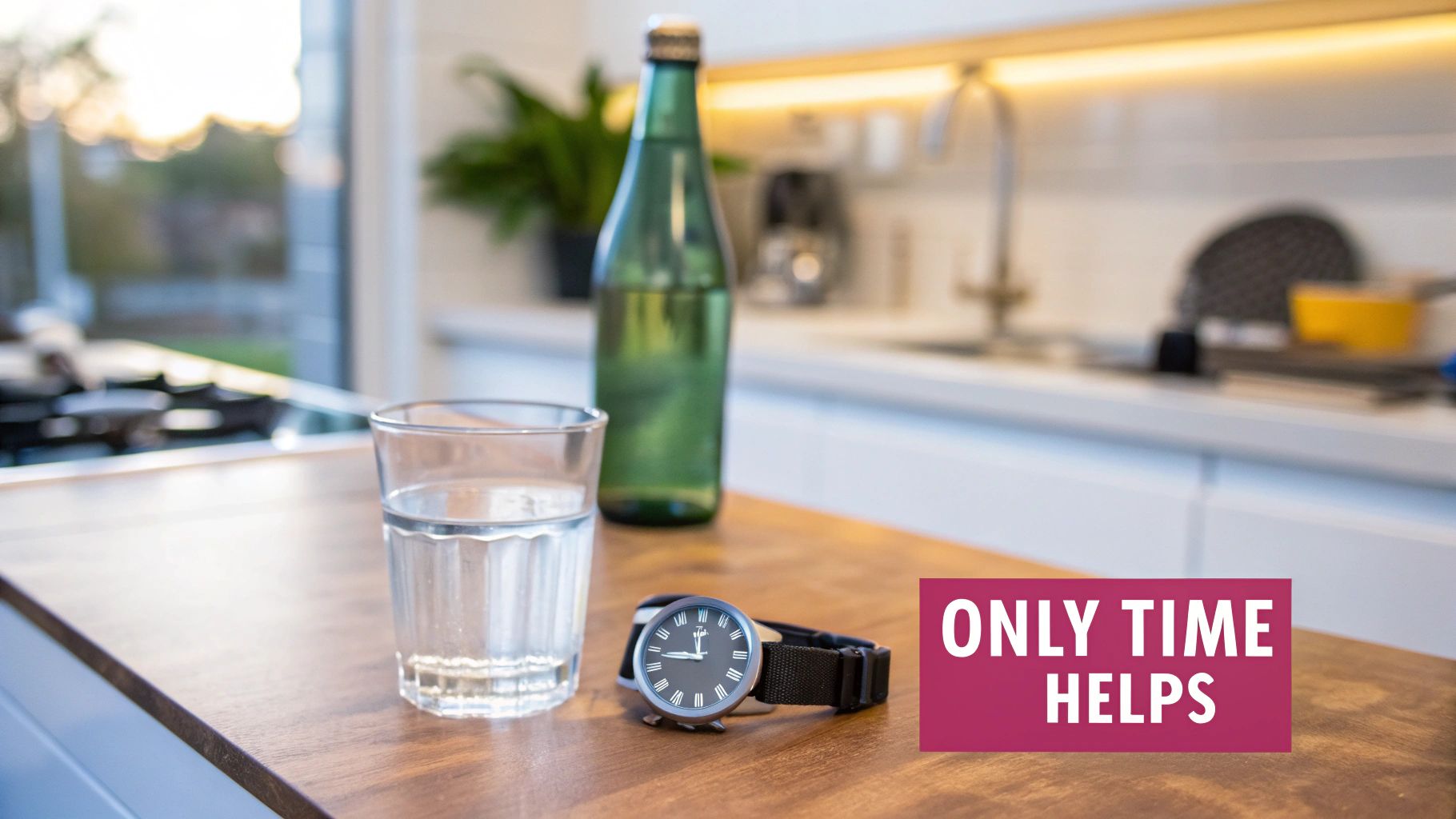
When the effects of alcohol hit harder than you planned, it’s natural to want a quick fix. We’ve all heard the advice passed down through generations—chug coffee, jump into a cold shower, or grab a greasy burger. Unfortunately, these popular "cures" are nothing more than myths that can create a dangerous false sense of security.
While some of these actions might make you feel more alert or settle your stomach, they do absolutely nothing to reduce the amount of alcohol in your bloodstream. Your liver is the only organ that can break down alcohol, and it's a remarkably consistent worker. You simply can't speed it up.
The science is crystal clear on this: your liver metabolizes alcohol at a steady rate of about 10 grams per hour. That's roughly the equivalent of one standard drink. No matter what you drink, eat, or do, you can't rush this fundamental biological process.
Accepting this is the most critical step toward making safer decisions when you've overindulged. The goal isn't to magically become sober; it's to manage the symptoms of intoxication safely while you wait for your body to catch up.
Myths vs Reality: What Actually Helps When You've Had Too Much
It’s so important to understand the difference between what makes you feel better and what actually makes you sober. Feeling wide-awake after a strong coffee doesn't mean your coordination, judgment, or reaction time has suddenly returned to normal. This misunderstanding isn't just ineffective—it's incredibly risky.
Let's break down some of the most common myths and contrast them with what you can realistically do to manage the situation.
| Mythical 'Quick Fix' | Why It Doesn't Lower BAC | What Actually Helps (Symptom Management) |
|---|---|---|
| Drinking Black Coffee | Caffeine is a stimulant. It just counters alcohol's sedative effects, making you a "wide-awake drunk." It does not speed up alcohol metabolism. | Staying hydrated with water or electrolyte drinks to combat the dehydrating effects of alcohol. |
| Taking a Cold Shower | A blast of cold water might shock your system and make you feel more alert for a minute, but it has zero impact on your BAC level. | Finding a safe, quiet place to rest. This allows your body to process the alcohol without extra stimulation or risk. |
| Eating Greasy Food | Food slows alcohol absorption if eaten before drinking. It can't "soak up" alcohol that’s already in your bloodstream. | Eating a light, balanced snack with carbs and protein can help stabilize your blood sugar, which alcohol often disrupts. |
| Sweating It Out | A tiny, negligible amount of alcohol exits through sweat. Exercising while intoxicated is a terrible idea—it's risky and worsens dehydration. | Taking slow, deep breaths of fresh air can help with feelings of nausea or dizziness and help calm your system down. |
This distinction is more than just trivia; it's a matter of safety. Believing one of these myths could lead to a disastrous decision, like getting behind the wheel of a car. Understanding the serious and long-lasting drunk driving consequences is often a powerful reminder of why responsible choices are so critical.
Research from the Alcohol Hangover Research Group backs this up, showing a clear link between how much you drink and the negative after-effects. One study found that people who consumed over 106 grams of alcohol per week (about nine drinks) reported monthly hangovers at a rate of 43.8%. For lighter drinkers, that number was just 6.6%. It’s pretty compelling proof that the best strategy is simply moderation from the start.
How Your Body Actually Processes Alcohol
Ever downed a glass of water after a few drinks, hoping to "sober up" on the spot? We've all been there. But the hard truth is, sobering up isn't about willpower or quick fixes—it's about biology. Understanding what's really happening inside your body is the first step to navigating a night out more safely.
From the moment you take a sip, alcohol gets on the fast track. While a little bit is absorbed through your stomach lining, most of it heads straight for the small intestine. From there, it jumps directly into your bloodstream. Think of your circulatory system as a superhighway delivering alcohol to every part of your body, including, most notably, your brain.
That's why you feel the effects so quickly. Once it reaches the brain, alcohol starts messing with your neurotransmitters—the chemical messengers that handle everything from balance and coordination to your mood and decision-making.
The Liver: Your Body's Detoxification Plant
So, what stops the party? Your liver. All the blood in your body eventually makes a pass through this incredible organ, which acts as the main processing plant for alcohol. Your liver is equipped with special enzymes, primarily one called alcohol dehydrogenase (ADH), that get to work breaking down the alcohol.
It’s a two-stage process:
- First, ADH converts alcohol into a pretty nasty, toxic compound called acetaldehyde. This stuff is a known carcinogen and is the main culprit behind many of those classic hangover symptoms.
- Then, another enzyme, aldehyde dehydrogenase (ALDH), swoops in to quickly break down the acetaldehyde into acetate, a much less harmful substance your body can easily turn into water and carbon dioxide.
Here's the catch: this metabolic process runs at a fixed speed. Your liver can generally only handle about one standard drink per hour. If you drink faster than your liver can work, the excess alcohol just keeps circulating in your bloodstream, your Blood Alcohol Concentration (BAC) rises, and you become more intoxicated.
It’s like an assembly line that can't be sped up. You can pile on as much work as you want, but the line only moves at one speed. Anything extra just creates a huge backup.
Why Do People React So Differently to Alcohol?
While the liver's processing rate is pretty standard, several factors influence how quickly you feel the effects of alcohol. Knowing these can help you better pace yourself.
- Having Food in Your Stomach: A full stomach, particularly one with protein or fats, physically slows down how quickly alcohol moves into your small intestine. This gives your liver a crucial head start.
- Body Weight and Composition: It’s not just about weight, but what that weight is made of. More body mass typically means more water to dilute the alcohol. Muscle tissue holds more water than fat tissue, which also plays a role.
- Biological Sex: On average, women may notice a higher BAC than men after drinking the same amount. This is often due to differences in body water percentage and having lower levels of the ADH enzyme in the stomach.
- Genetics: Your DNA has a say, too. Some people have genetic variations that make their alcohol-processing enzymes more or less efficient, directly impacting how they feel after a drink.
It’s also worth noting that alcohol throws other systems out of whack. It can cause major swings in your blood sugar, for example. Understanding how blood sugar levels impact mood can shed light on why you might feel extra irritable, anxious, or tired when you've been drinking.
At the end of the day, getting a handle on this biology is key. It helps you see why there's no magic pill for sobering up and why the best strategy is to support your body while it methodically does its job.
What You Can Do to Feel Better While You Sober Up
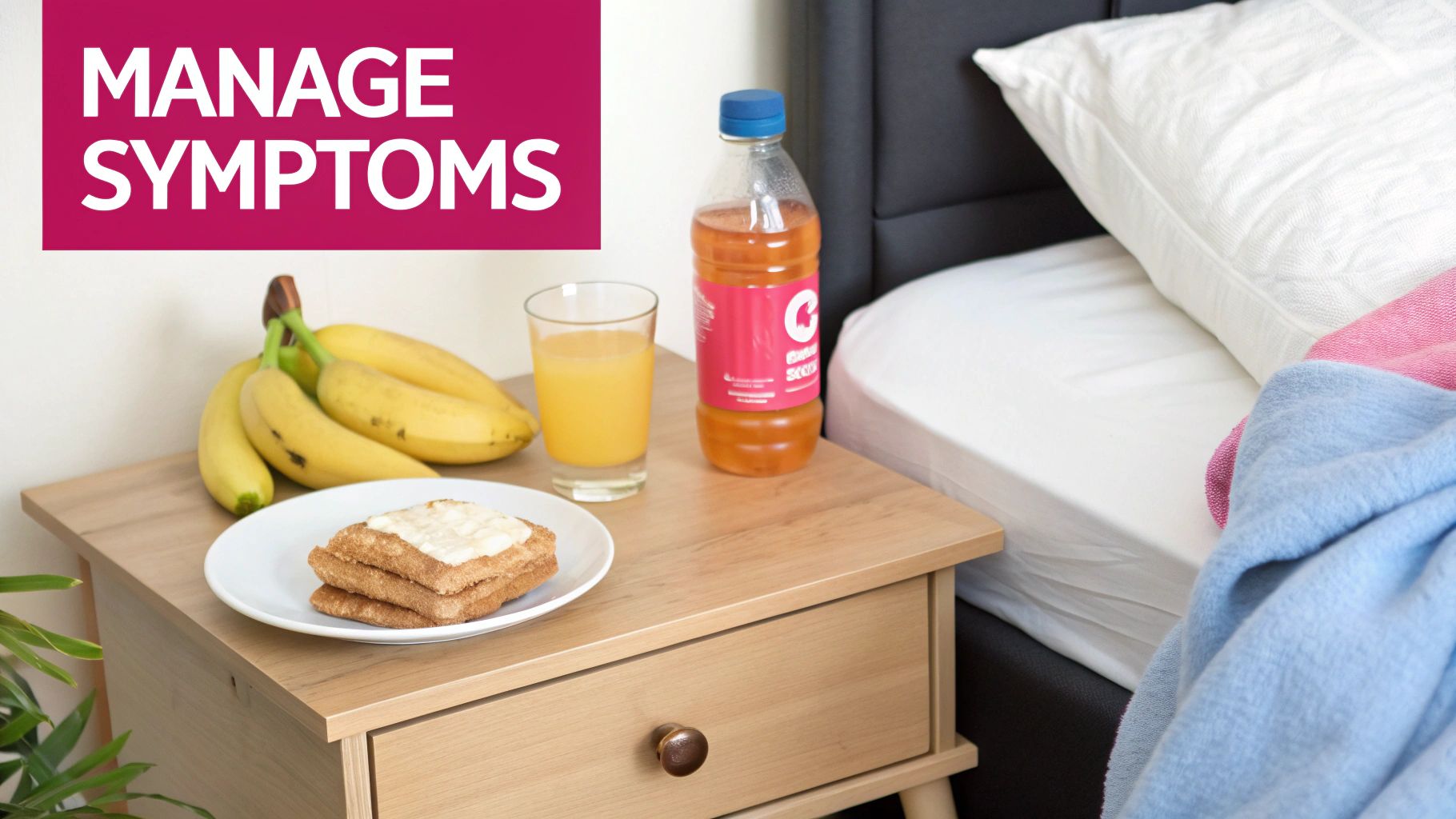
Since you can't actually speed up your liver, the best game plan is to focus on managing the immediate symptoms of being drunk. This is all about making yourself more comfortable and, most importantly, keeping yourself safe while you wait for your BAC to drop. Think of it as supporting your body, not trying to accelerate a natural process.
Instead of falling for quick-fix myths, these practical steps can genuinely help you feel better and navigate the process more smoothly. Each one is designed to counteract a specific physiological effect of alcohol.
Go Beyond Water: Hydrate the Right Way
Alcohol is a diuretic, which is just a scientific way of saying it makes you pee a lot. This fluid loss is a huge reason why you get headaches, feel dizzy, and are completely wiped out. Grabbing a glass of water is a decent start, but you can do much better.
The problem is, when you lose all that fluid, you're also losing essential electrolytes like potassium and sodium. These are the minerals your body needs for proper nerve function and fluid balance. Plain old water won't bring those back.
- Electrolyte Drinks: This is where sports drinks or electrolyte powders really shine. They restore both fluids and those crucial lost minerals, helping your system rebalance way more effectively.
- Coconut Water: If you want a more natural route, coconut water is fantastic. It's packed with potassium and is a great alternative to some of the more sugary sports drinks.
- Take It Slow: Whatever you choose, sip it. Chugging a ton of liquid at once, especially when you're already feeling queasy, is a recipe for an upset stomach. Slow and steady wins the race here.
By focusing on electrolyte replacement, you’re giving your body the specific tools it needs to recover from alcohol's dehydrating assault.
Eat to Stabilize, Not to "Soak It Up"
Drinking can throw your blood sugar completely out of whack, often causing it to plummet. That dip is what makes you feel weak, irritable, and lightheaded, piling on top of the intoxication itself.
Let's be clear: eating will not "soak up" alcohol that's already in your bloodstream. That’s a persistent myth. But choosing the right kind of snack can help stabilize your glucose levels and give your body some much-needed fuel. The key is to pick foods that are simple and gentle on your stomach.
- Crackers or Toast: Simple carbs are your friend. They're easy to digest and give you a quick blood sugar boost without overwhelming your system.
- Bananas: These are a perfect choice. Not only are they easy on the stomach, but they’re loaded with potassium, so you’re tackling that electrolyte loss at the same time.
- Scrambled Eggs: If you can handle something a bit more substantial, eggs are a great option. They offer protein and an amino acid called cysteine, which helps your body break down acetaldehyde—a nasty, toxic byproduct of alcohol metabolism.
Steer clear of greasy, heavy foods right now. They're tough to digest and are likely to make any nausea or indigestion much worse. The goal is to get stable, not to have a feast.
Find a Safe, Calm Space
When you're intoxicated, your brain's ability to process sensory information is impaired. Bright lights can feel blinding, and loud noises can be incredibly jarring, ramping up feelings of anxiety and disorientation. Getting yourself to a safe, quiet space is one of the most important things you can do.
This isn’t just about feeling more comfortable—it’s a critical safety measure. By reducing all that external stimulation, you help prevent accidents and give your nervous system a chance to calm down.
Moving to a quiet, dimly lit room allows your body to focus its energy on processing alcohol rather than managing external chaos. It minimizes the risk of falls and provides a space for you to rest without interruption, which is exactly what your body needs.
Lying down in a comfortable position can also work wonders for dizziness or that spinning sensation. If you feel sleepy, it's generally fine to rest. However, if there's any chance you've had a dangerous amount to drink, make sure someone can check on you periodically to ensure you're conscious and breathing normally.
What's the Deal with "Hangover Cures"?
You’ve seen them everywhere—the market for "hangover cures" is absolutely massive. In 2023, the global industry hit an eye-watering $2.34 billion and is on track to reach $6.18 billion by 2030. That alone tells you how desperate people are for a quick fix. You can learn more about the exploding hangover cure market and its drivers here.
But what do these products actually do? Most are just a cocktail of vitamins, electrolytes, and sometimes herbal ingredients. They can certainly help replenish lost nutrients and rehydrate you, much like a sports drink and a banana would. Some ingredients, like dihydromyricetin (DHM), have shown some promise in studies for helping increase the enzymes that break down alcohol.
Even so, it's crucial to remember that while they might make you feel better, no product can magically lower your BAC. They simply support your body's natural recovery process—they don't put your liver into overdrive.
The Real Timeline For Alcohol to Leave Your System
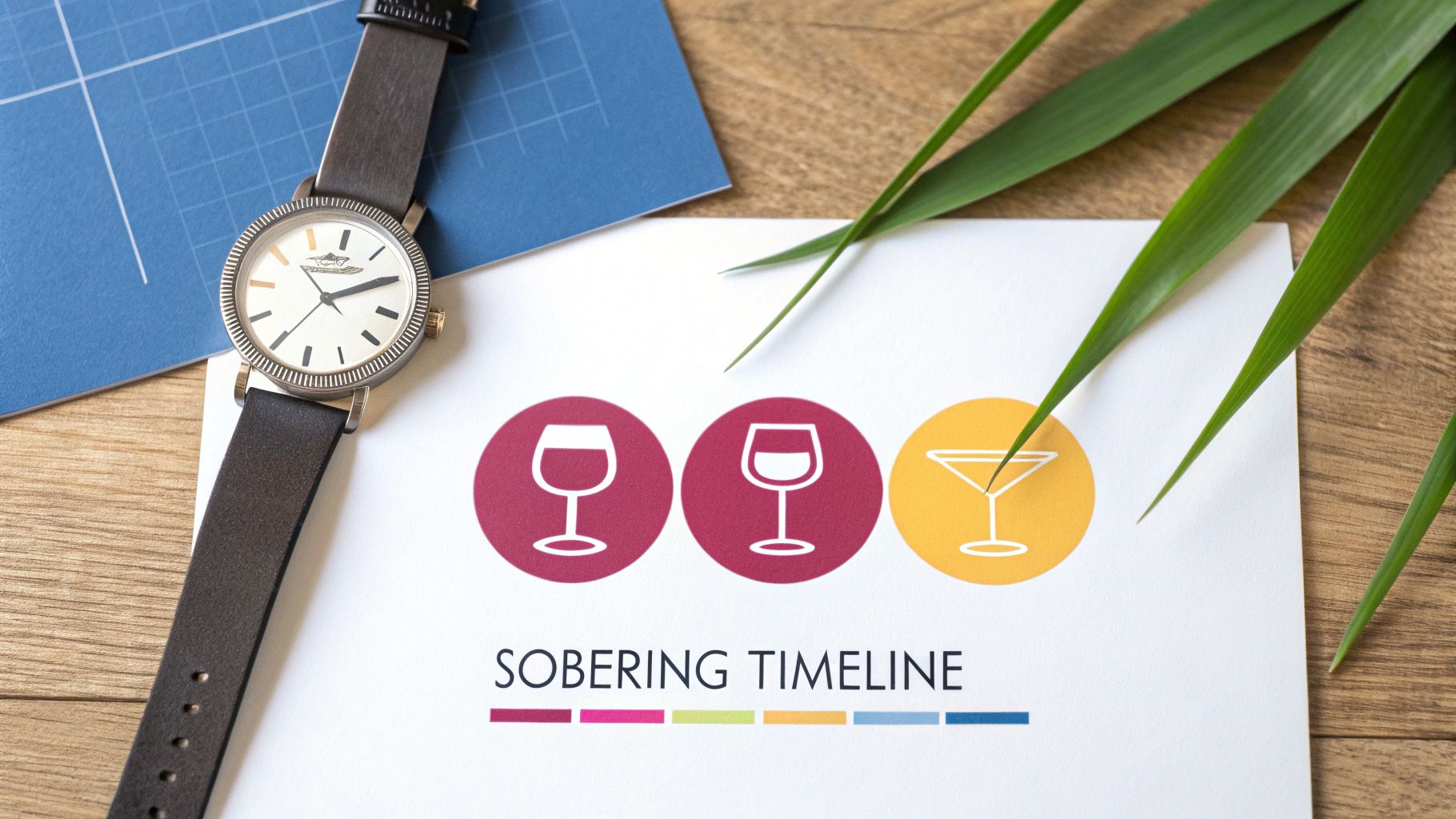
Here's one of the biggest misconceptions about drinking: feeling a bit better is the same thing as being sober. You might feel your head clearing or your coordination coming back, but that feeling can be dangerously misleading. The hard truth is that how you feel has almost no bearing on your actual Blood Alcohol Concentration (BAC).
Your liver processes alcohol at a remarkably consistent and non-negotiable pace. On average, your BAC drops by about 0.015% every single hour. This is a biological constant. You can't speed it up with a pot of strong coffee, a freezing cold shower, or just by wishing it away.
This fixed timeline is absolutely crucial to understand. It’s the very reason you can still be over the legal driving limit the morning after a night out, even if you feel perfectly fine. The alcohol is still in your system, and your liver is just methodically working through the backlog, one hour at a time.
How Your BAC Dictates Your Sobering Time
Let's put that 0.015% per hour figure into a real-world context. Say a few drinks push your BAC to 0.08%, which is the legal limit for driving in most states. It will take your body over five hours to metabolize that alcohol and get back down to a BAC of 0.00%.
That steady, linear pace is why knowing the timeline for sobering up is so critical for personal safety. A few hours of sleep doesn't magically reset the clock on alcohol metabolism.
The most important takeaway is this: managing symptoms helps you feel more comfortable, but it does absolutely nothing to shorten the actual time it takes for alcohol to leave your system. Your body operates on its own schedule.
To make this even clearer, let's look at some general estimates. The table below gives you a rough guide for how long it might take to hit a 0.00% BAC once you’ve had your last drink. Just remember, this is an approximation—your mileage will vary based on a number of factors.
Estimated Time to Sober Up Based on Drinks Consumed
This table provides a general estimate of the time required for the body to metabolize alcohol, based on the number of standard drinks. Individual results may vary.
| Number of Standard Drinks | Estimated Hours to Reach 0.00% BAC |
|---|---|
| 2 Drinks | Approximately 2.5 - 3 hours |
| 4 Drinks | Approximately 5 - 6 hours |
| 6 Drinks | Approximately 8 - 9 hours |
| 8 Drinks | Approximately 10 - 12 hours |
| 10 Drinks | Over 13 hours |
Seeing these numbers laid out really makes the reality of the situation sink in. After ten standard drinks, your body is still actively working to clear the alcohol well into the next day. This is the fundamental truth about sobering up fast—you can't. But you can plan for the time it will actually take.
Factors That Tweak the Timeline
While that average rate of 0.015% per hour is a solid benchmark, a few personal variables can nudge the needle one way or the other. It's important to know that these factors don't drastically change the timeline, but they do explain why the experience differs from person to person.
- Age: As we get older, our liver function can become a bit less efficient and our body composition changes. This can potentially slow down alcohol processing, even just slightly.
- Biological Sex: On average, differences in body water content, certain hormones, and liver enzymes mean women may metabolize alcohol at a slightly different rate than men.
- Liver Health: This is the big one. The health of your liver is everything here. Years of heavy drinking can damage the liver, which will significantly impair its ability to do its job and process alcohol.
- Genetics: Your DNA plays a part in how well the enzymes that break down alcohol—ADH and ALDH—work in your liver. Some people are just genetically more efficient at it than others.
Knowing about these factors helps paint a more complete picture, but they're nuances, not game-changers. No single variable will ever let you sober up in a fraction of the expected time. The core principle holds true no matter what: only time will truly reduce your BAC and make you sober.
When Alcohol and Cannabis Mix
It's common for social gatherings to involve more than just a drink or two. For a lot of people, that means combining alcohol with cannabis. This mix, often called a "crossfade," can lead to a powerful, and frankly, very unpredictable experience, making the whole idea of "sobering up" a lot more complicated. If you're going to mix, knowing how these two actually interact is crucial for staying safe.
When you have alcohol and cannabis in your system at the same time, their effects don't just add up—they multiply. Alcohol is the real game-changer here. Studies have shown that even a little bit of alcohol can seriously ramp up how much THC (the main psychoactive part of cannabis) your body absorbs.
How? Alcohol relaxes and widens the blood vessels in your digestive system. This creates a fast lane for THC to get into your bloodstream, meaning it can hit you harder and faster than you'd ever expect from just cannabis alone.
What a "Crossfade" Actually Feels Like
The term "crossfade" is pretty fitting because the experience can be incredibly disorienting. People often report feeling the effects of both substances much more intensely, and it can get overwhelming in a hurry. That pleasant buzz you were aiming for might quickly turn into a wave of anxiety, paranoia, or just plain old dizziness.
Here’s a classic scenario: you feel totally fine after using some cannabis, so you have a beer or two. Suddenly, you're way more intoxicated than you have any right to be. This is exactly why that old saying, "Beer before grass, you're on your ass; grass before beer, you're in the clear," caught on. It's not exactly science, but it points to a common truth: drinking after you’ve used cannabis seems to send the THC high into overdrive.
The biggest problem with mixing is how unpredictable it is. Your normal tolerance levels for either alcohol or cannabis basically get thrown out the window, so you have no real way of knowing how you're going to react. This is often what leads to "greening out"—that awful feeling of nausea, panic, and dizziness from way too much THC, with alcohol acting as a megaphone.
How to Stay Safer if You Combine Them
Look, if you do decide to mix alcohol and cannabis, the name of the game is harm reduction. The idea of sobering up "fast" is even less realistic because your body is trying to process two completely different things at once.
- Start Low, Go Slow. This is the golden rule, and it's non-negotiable here. Because one substance cranks up the other, you need to use much, much less of both than you normally would.
- Hydrate with Water, Period. Both substances will dehydrate you. Sipping on water is your best friend. Steer clear of sugary sodas or energy drinks, as they can just make you feel worse.
- Be in a Safe Space. Make sure you're somewhere comfortable and familiar, and with people you trust. If things start to feel like too much, having a quiet spot to escape to can be a lifesaver.
- Do Not Even Think About Driving. I can't say this enough. Your motor skills, reaction time, and judgment are all severely impaired. Driving under the influence of both is incredibly dangerous. There is no safe way to be behind the wheel in this state.
At the end of the day, managing a crossfade isn't about finding a magic trick to get sober. It's about respecting the powerful synergy between these two and planning ahead to reduce the risks. The only thing that truly works is giving your body even more time to do its job.
Recognizing the Signs of Alcohol Poisoning
It’s one thing to be very drunk, but it’s another thing entirely to be in the middle of a medical emergency. Knowing the difference isn't just a good idea—it can literally save a life. Sometimes, the situation gets past the point of just needing to "sober up" and requires immediate professional help.

Alcohol poisoning is what happens when someone drinks so much that their body is overwhelmed by the toxic effects. This can shut down the central nervous system, which controls essential functions like breathing and heart rate.
Unmistakable Signs of a Medical Emergency
If you spot any of these signs in someone who has been drinking, don't hesitate. Call for emergency medical help right away.
- Confusion or Stupor: They seem completely out of it, can't form a coherent sentence, or you can't get them to respond.
- Vomiting: Especially if they can't stop, or if they're vomiting while passed out.
- Slow or Irregular Breathing: You notice they're taking fewer than eight breaths a minute, or there are gaps of more than 10 seconds between breaths.
- Clammy or Blue-Tinged Skin: Their skin feels cold and clammy, or looks pale or even bluish. This is a classic sign of hypothermia, as their body temperature is dropping dangerously low.
- Seizures: Their body is convulsing uncontrollably.
- Unconsciousness: They are passed out and you cannot wake them up. This isn't "sleeping it off."
The absolute worst thing you can do is assume someone will just "sleep it off." Leaving a person with alcohol poisoning alone can be fatal. They could choke on their own vomit or simply stop breathing.
With over 88,000 alcohol-related deaths in the U.S. annually, this is a risk no one should take. These aren't just numbers; they represent preventable tragedies. You can find more information about alcohol's impact on public health here.
What to Do While Waiting for Help
You've made the call. Now what? Your actions in the next few minutes are critical.
- Keep them awake, if you can. Try to keep them conscious and in a sitting position.
- If they must lie down, put them on their side. This is the recovery position, and it's crucial for preventing them from choking if they vomit.
- Gather information for the paramedics. Be ready to tell them what the person drank, and roughly how much. Every detail helps.
Common Questions About Sobering Up
Even when you know the science, a few persistent questions always seem to come up. Let's tackle some of the most common ones and clear up any lingering confusion about how to get sober fast.
Does Throwing Up Help You Sober Up Faster?
In a word, no. It’s not the shortcut many people think it is.
Throwing up only expels the alcohol that's still hanging out in your stomach. It does absolutely nothing for the alcohol that’s already been absorbed into your bloodstream, which is what’s actually making you feel intoxicated. While it might stop you from getting more drunk, it won't lower your current blood alcohol concentration (BAC) one bit.
Will Eating Food "Soak Up" the Alcohol?
This is a classic myth, and the key here is timing. Eating a solid meal before you start drinking is a fantastic move. It slows down how quickly your body absorbs the alcohol, giving your liver a fighting chance to keep up.
But once you’re already drunk? Eating won’t magically sponge up the alcohol circulating in your system. A late-night snack might help stabilize your blood sugar and make you feel a little less awful, but it won’t speed up the sobering process itself.
Don't mistake a high tolerance for a superpower. It doesn't mean your liver is working overtime; it just means your brain has gotten used to functioning with alcohol. This is a dangerous illusion, as you might feel fine to drive when your BAC is actually well over the legal limit.
If I Have a High Tolerance, Do I Sober Up Quicker?
Absolutely not. This is a critical misunderstanding. A high tolerance just changes how you feel the effects of alcohol. It has zero impact on how quickly your liver can process it.
Your liver metabolizes alcohol at a pretty fixed rate—roughly one standard drink per hour. That speed doesn't change, no matter how seasoned a drinker you are.
How Do THC Beverages Compare to Alcohol?
THC-infused drinks are in a completely different category. They offer a social buzz without a drop of alcohol, which means your BAC stays at zero.
This gives you a way to enjoy the vibe of a social gathering without the whole sobering-up process, the dreaded next-day hangover, or the specific risks that come with alcohol intoxication. It’s a modern alternative for anyone looking for a more mindful experience.
For those looking for an elegant, alcohol-free alternative, Day Dreamer offers a sophisticated experience. Our clean, hemp-derived Delta-9 THC and CBD sparkling waters are crafted for a refined buzz without compromise. Explore a new way to unwind and socialize at our official Day Dreamer website.
The statements made regarding these products have not been evaluated by the Food and Drug Administration. The efficacy of these products has not been confirmed by FDA-approved research. These products are not intended to diagnose, treat, cure, or prevent any disease. All information presented here is not meant as a substitute for, or alternative to, information from healthcare practitioners. Please consult your healthcare professional about potential interactions or other possible complications before using any product. The Federal Food, Drug, and Cosmetic Act requires this notice. All products on this website contain 0.3% THC or less.


