
If you want to stop drinking every night, the first real step is to get honest with yourself about why you're drinking in the first place. This isn't about judgment. It's about gently peeling back the layers of a habit to find the trigger—is it stress, boredom, social pressure?—and then building a new routine that actually serves you better.
Understanding Your Nightly Drinking Ritual
That 5 PM glass of wine or post-dinner beer can feel like pure muscle memory. You walk in the door, drop your keys, and head straight for the fridge without a second thought. If that sounds familiar, you're not alone. This is what we call a habit loop—a deeply ingrained ritual that signals to your brain that the workday is over and it's time to unwind.

The trick to breaking this cycle is to stop judging it and start getting curious. What purpose does that drink really serve for you? For many, it's a quick fix for stress or a way to numb feelings of loneliness. For others, it’s simply the comforting rhythm of a predictable routine at the end of a chaotic day.
Recognizing these patterns isn't about blaming yourself; it's about gathering clues. Once you know why you reach for a drink, you suddenly have the power to choose a different path. This isn't about deprivation or fixating on what you're giving up. It's all about what you stand to gain: better sleep, more energy, and a life lived more intentionally.
A Gentle Self-Assessment
Before you can build a new routine, you need a clear, honest picture of your current one. This isn't about meticulously counting every drop but about observing your own behavior with a bit of kindness. The goal here is to pinpoint the specific moments, feelings, and situations that make you want a drink.
To get started, let’s walk through a simple self-assessment.
Your Nightly Drinking Pattern Self-Assessment
This is a simple checklist to help you reflect on your own drinking habits without judgment. Be honest with yourself.
| Question to Consider | Your Reflection (Take a Moment to Answer) |
|---|---|
| What time does the craving usually hit? Is it right after work, while making dinner, or later at night? | |
| What are you feeling at that moment? Stressed? Bored? Anxious? Lonely? Celebratory? | |
| Where are you, and who are you with? Does it happen in a specific chair, while watching a certain show, or with a particular person? | |
| Is it a conscious choice or an automatic action? Do you think about it, or does your hand just reach for it? | |
| How do you feel an hour after the first drink? More relaxed? Anxious for another? Tired? | |
| What need is the drink really meeting? Is it a transition from work life to home life? A social lubricant? A way to unwind? |
Taking a few minutes to think through these questions gives you a roadmap for change. If you drink to de-stress after work, you can start exploring alternatives like a quick walk or five minutes of meditation. If boredom is the culprit, a new hobby or a call with a friend can easily fill that void.
By identifying your triggers, you transform the problem from "I drink too much" into a series of smaller, solvable challenges, like "I need a better way to unwind after 5 PM."
This change in perspective is incredibly powerful. You're no longer focused on restriction; you're focused on creation. You're not just taking something away—you're actively designing a better, healthier evening for yourself.
You Are Not Alone in This Shift
Sometimes, the motivation to change comes from realizing you're not swimming against the tide. Cultural attitudes toward alcohol are shifting, and many people are consciously choosing to drink less.
Believe it or not, the share of U.S. adults who had a drink “within the last 24 hours” dropped from 34% to 28% in just three years. This isn't just a fleeting trend; it's a measurable cultural move away from daily drinking. It means you're joining a growing movement, not fighting a lonely battle. You can explore more data about global alcohol consumption trends to see just how much habits are evolving worldwide.
The Real Impact of Daily Alcohol on Your Health
It’s so easy to fall into the habit of a nightly glass of wine or beer. You tell yourself it's a harmless ritual, a simple way to unwind after a long day. But to really get motivated for a change, it helps to understand what's actually going on inside your body. This isn't about scare tactics; it's about connecting the dots between your evening routine and how you really feel.
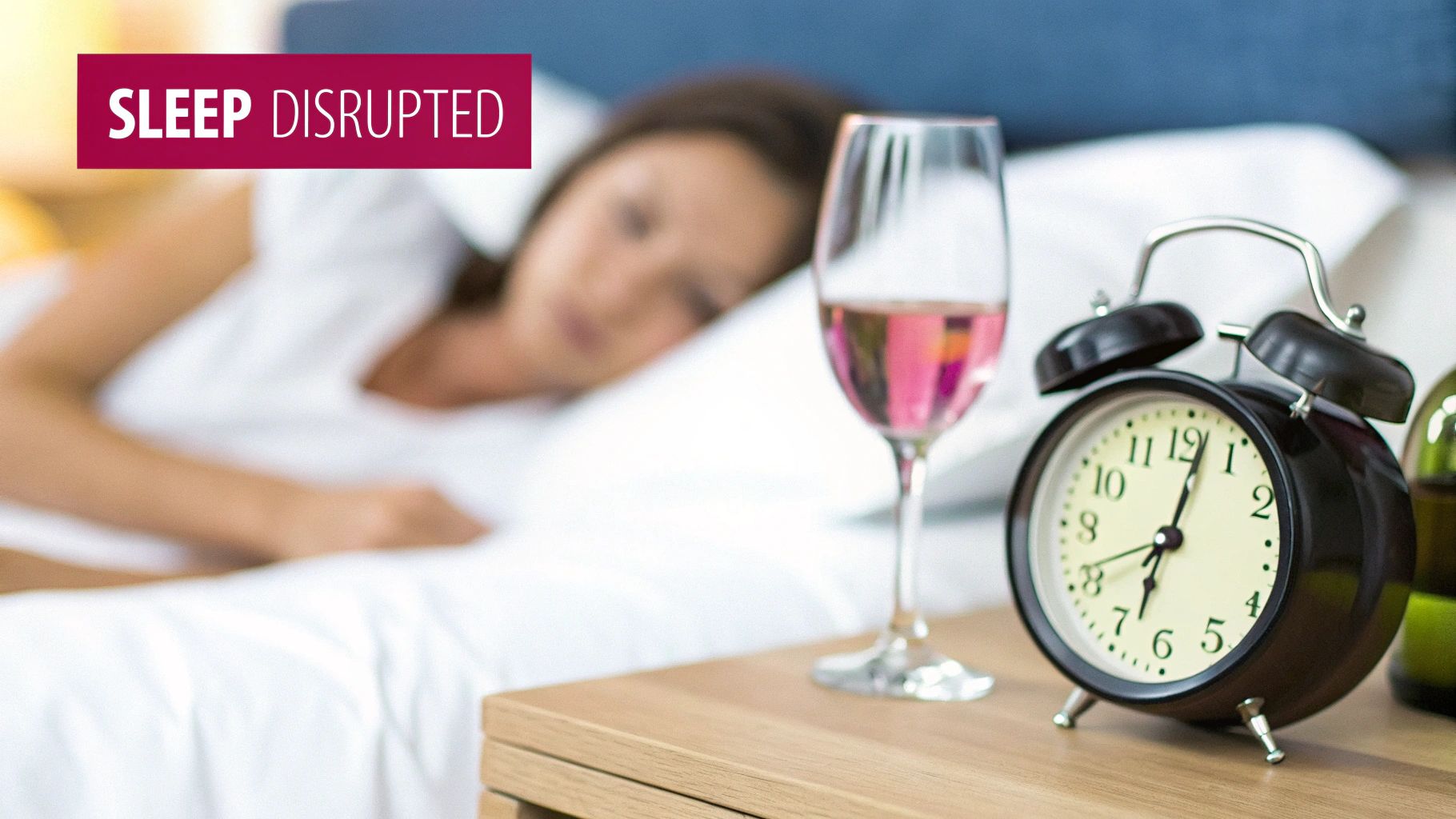
So many people think alcohol is a sleep aid. And in one sense, they’re right—it’s a sedative, so it can make you feel sleepy and help you doze off faster. The problem is the quality of that sleep. Alcohol is notorious for suppressing REM sleep, the most restorative stage for your brain, which is essential for things like memory and managing emotions.
This is exactly why you can get a full eight hours but still wake up feeling exhausted, irritable, and in a complete mental fog. A huge piece of the puzzle is understanding how alcohol can disrupt your sleep and completely sabotage the very rest you were looking for in the first place.
The Anxiety and Energy Connection
That relaxed feeling you get from a drink? It’s fleeting. Over time, a nightly drinking habit can paradoxically make you more anxious. Alcohol throws off the delicate balance of neurotransmitters in your brain, especially the ones that keep your mood stable.
Once the alcohol's calming effect fades, your brain goes into overdrive to compensate, often leading to a spike in anxiety and restlessness the next day. This is what people often call "hangxiety." It’s a vicious cycle: you end up feeling like you need a drink to calm the very anxiety that last night’s drink helped create.
The irony of using alcohol to manage stress is that it often leaves you less equipped to handle stress the following day. It depletes your energy and mental clarity, making everyday challenges feel more overwhelming.
This constant cycle of sedation and rebound stimulation really takes a toll. You start to notice things like:
- Persistent Fatigue: You just feel drained, no matter how much you sleep.
- Dull Skin: Alcohol is incredibly dehydrating, and it shows in your skin's elasticity and overall appearance.
- Lowered Motivation: That brain fog and low energy make it tough to get pumped for workouts, hobbies, or even just daily chores.
Rethinking What Is Considered Moderate
It’s not just anecdotal, either. Global health guidance has taken a much firmer stance on alcohol, which can be a real eye-opener if you're stuck in a nightly drinking pattern.
For years, the U.S. dietary guidelines defined “moderation” as up to two drinks a day for men and one for women. But a lot has changed. Canada, for instance, now advises no more than two alcoholic drinks per week for all adults. That's a massive shift.
The World Health Organization has gone even further, stating that no amount of alcohol is truly safe. There’s simply no clear line below which the health risks vanish. Yet, awareness is lagging. A recent survey found that only 37% of U.S. adults know alcohol increases cancer risk, while a staggering 53% either believe it doesn’t or are unsure.
If you’re drinking every night, you might be taking on a level of risk you haven't fully considered. It’s clear the consensus is moving toward treating routine daily drinking as more of a health hazard than a harmless habit.
The goal here is to empower you. By seeing the real, day-to-day impacts of nightly drinking, you can reframe your decision to cut back. It’s not about restriction—it's about making a proactive investment in your physical and mental well-being, starting tonight.
How to Create Your Personal Action Plan
Alright, you’ve done the hard work of looking honestly at your nightly drinking habits. Now comes the part where we turn that insight into a real, workable plan. This isn't about following some rigid, one-size-fits-all rulebook. It's about designing a path forward that feels right for you—one that’s challenging, sure, but ultimately achievable.
When it comes to changing your relationship with alcohol, there are two main highways you can take: tapering down gradually or stopping completely. There’s no moral high ground here. The best choice is simply the one you can see yourself sticking with. Let’s break down what each approach actually looks like day-to-day so you can figure out which one fits.
Option 1: Tapering Down Your Drinking
If the idea of going from your current routine to zero drinks overnight makes you break out in a cold sweat, tapering is probably your best bet. It’s a strategy that allows your body and mind to adjust slowly, which reduces the shock to your system and makes the whole process feel much more sustainable.
The goal here is to gradually decrease how much you drink in a structured, deliberate way. This isn't about wishy-washy goals like "I'll try to drink less." You need a concrete, measurable plan. Here are a few frameworks that people find really effective:
- The "One Less" Rule: This one is beautifully simple. If you currently have three beers every night, your new rule for this week is to have only two. Once that feels like the new normal, you drop down to one. This slow reduction helps you sidestep that jarring feeling of deprivation.
- The Swap-Out Method: For every alcoholic drink you have, make your next one a non-alcoholic alternative. Think sparkling water with lime, a good herbal tea, or one of the many great non-alcoholic beers on the market now. It slows your pace, keeps you hydrated, and reduces your total intake without making you feel like you're missing out on the ritual.
- Designate Alcohol-Free Days: Start by picking just two days a week—say, Monday and Wednesday—and committing to them as your zero-alcohol days. Once you get comfortable with that, you can add another day to the calendar, and then another.
The real magic of tapering is consistency. You're essentially retraining your brain and unwinding a habit that's been reinforced night after night. That takes time and repetition.
Option 2: Quitting Completely
For some people, moderation is a minefield. If you know that having "just one" is a slippery slope, or if the mental energy of trying to manage your intake feels exhausting, then a clean break might be the more straightforward path. This approach takes a bit more upfront mental fortitude, but it can deliver a powerful sense of clarity and accomplishment pretty quickly.
Success here is all about preparing your environment—and your mindset—for that first crucial week.
- Clear Your Space: First things first, get all the alcohol out of your house. If you live with others, explain what you're doing and ask them to keep their own stash somewhere you won't see it. The idea is to remove those easy, visual triggers that can derail you in a moment of weakness.
- Stock Up on Alternatives: This is key. Fill your fridge with interesting non-alcoholic options that you're genuinely excited to drink. This could be anything from flavored seltzers and kombucha to high-quality THC or CBD beverages designed for relaxation. Having a delicious replacement ready to go makes you feel prepared, not deprived.
- Mentally Rehearse: Walk yourself through your evening routine. What happens at 6 PM when that first craving usually hits? Have a plan ready. "When I feel that urge, I will immediately put on my sneakers and go for a walk," or "I'm going to make myself a fancy mocktail with muddled mint and lime." Making the decision ahead of time is half the battle.
A Critical Safety Warning If you are a heavy, long-term drinker, stopping alcohol abruptly can be dangerous and potentially life-threatening due to the risk of severe withdrawal symptoms. Please consult a doctor before making any changes if you experience any of the following when you stop drinking:
- Shaking or tremors
- Intense anxiety or agitation
- Nausea or vomiting
- Heavy sweating
- Confusion or hallucinations
Your safety is the top priority. A medical professional can help you create a plan to reduce your drinking safely.
At the end of the day, this is your journey. Whether you decide to taper or quit all at once, the most powerful step is the one you take right now. Pick the path that feels most empowering for you, and start building the healthier evenings you deserve.
Building New Rituals to Replace Old Habits
That familiar 5 PM craving? It often has less to do with the alcohol itself and more to do with the ritual. It’s a powerful signal your brain has learned, a shortcut to flip the switch from "work mode" to "relax mode."
The secret to breaking this cycle isn't about white-knuckling it with willpower. It’s about creatively and intentionally swapping the old habit for a new one you genuinely enjoy.
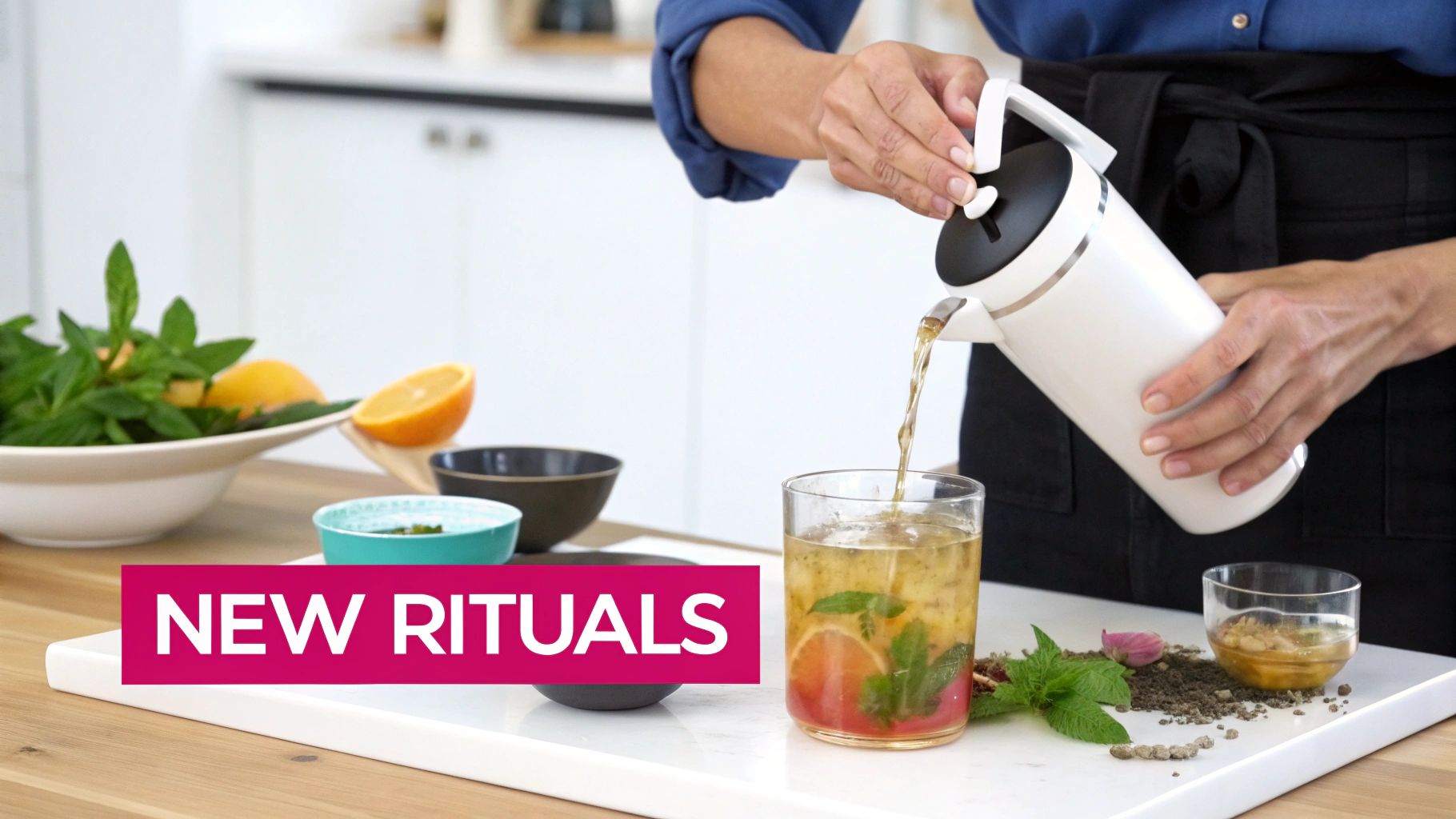
Think of it like this: your brain has a well-worn path it follows every evening. Instead of trying to put up a roadblock, your job is to build a new, more appealing path right beside it. By designing a new routine that still delivers that feeling of reward and relaxation, you're not just resisting an old urge—you're creating a lifestyle that no longer needs it.
Upgrade Your Evening Beverage
The physical act of pouring a drink is deeply ingrained for many of us. The good news is you can keep the satisfying motion while completely changing what's in your glass. The goal is to find a replacement that feels like a treat, not a sacrifice.
- Craft Sophisticated Mocktails: Go way beyond basic soda. Try experimenting with muddled herbs like mint or basil, a splash of high-quality tart cherry juice, and a top-off of sparkling water. A fancy glass and a nice garnish can make it feel just as special as a cocktail.
- Explore Calming Herbal Teas: There's something incredibly soothing about a warm mug of chamomile, lavender, or peppermint tea. This ritual can signal to your body that it's time to wind down, creating a new and healthier sleep association.
- Discover High-Quality CBD or THC Beverages: For those looking for relaxation without the hangover, the market for cannabis-infused drinks is booming. A chilled can of a low-dose, hemp-derived THC or CBD sparkling water can provide a gentle sense of calm and well-being.
Changing a nightly drinking habit is so much easier when you have something to reach for instead of just something to avoid. This matters on a practical level—you can swap in a sophisticated beverage, keep the sensory experience of "having a drink," and break the alcohol dependency loop.
Identify and Reroute Your Triggers
A trigger is any feeling, place, or time of day that sparks your craving for a drink. The key is to get specific about your personal triggers and then create a simple "if-then" plan to redirect your response before the craving takes hold.
For example, if you realize your main trigger is the wave of stress that hits the moment you walk in the door after work, your plan could be: "If I feel stressed after work, then I will immediately change into workout clothes and go for a 15-minute walk."
This proactive approach puts you back in the driver's seat. To get you started, think about what need your evening drink is really fulfilling.
Finding Your New Favorite Evening Ritual
The table below offers a few concrete swaps for the nightly drinking habit, categorized by the need it might be fulfilling for you.
| If You Drink To... | Try This New Ritual Instead |
|---|---|
| De-stress after work | Go for a quick walk, do 10 minutes of guided meditation, or listen to a favorite podcast. |
| Cope with boredom | Pick up a new hobby like painting, learn an instrument on YouTube, or tackle a puzzle. |
| Feel more social | Call a friend, join a local club or class, or plan an outing that doesn't center on alcohol. |
| Reward yourself | Enjoy a small piece of dark chocolate, take a relaxing bath, or spend 20 minutes reading a good book. |
These are just ideas—the best replacement ritual is one that you genuinely look forward to and that truly works for you.
Build a Better Bedtime Routine
Nightly drinking can seriously mess with your sleep, even if it feels like it helps you doze off faster. One of the best things you can do for your well-being is to replace that evening drink with activities that actually promote restorative rest.
For instance, establishing effective bedtime routines for better sleep can signal to your body and mind that it's time to unwind naturally.
This could involve a few simple steps:
- Turn off screens an hour before bed to reduce blue light exposure.
- Do some light stretching to release physical tension from the day.
- Journal for five minutes to get any racing thoughts out of your head.
By finding a new ritual you look forward to, the old one starts to lose its power. You're not just learning how to stop drinking every night; you're actively building a more fulfilling and restful evening, one small habit at a time.
How to Navigate Your Social Life with Confidence
You’ve made the decision to stop drinking every night—a huge personal win. But then comes the real test for many of us: the social world. That fear of being the odd one out, of fumbling through awkward questions, or just feeling like you’re missing the party can be a massive hurdle.
Here’s the thing, though: a rich, fulfilling social life doesn't have to revolve around alcohol. The key is to stop thinking in terms of avoidance and start thinking about confident preparation. This isn't about hiding or making excuses. It's about owning your choices and having a few simple strategies ready so you can walk into any social setting feeling empowered, not exposed.
Mastering the Art of "No, Thanks"
That moment someone offers you a drink can feel like a spotlight just switched on. The trick is to have a simple, direct, and drama-free response ready to go. You don’t owe anyone a dissertation on your life choices. A confident, brief answer is all you need.
Here are a few real-world phrases you can make your own:
- Simple & Direct: "No thanks, I'm good for now." or "I'll grab a sparkling water, thanks!"
- Health-Focused: "I'm taking a break from alcohol for a bit, feeling great."
- Vague & Easy: "Not drinking tonight, but I'd love a soda with lime."
- The Proactive Move: This one is my favorite. Walk in, head straight to the bar or kitchen, and get your own non-alcoholic drink immediately. With a glass already in hand, most people won't even think to offer you one.
The goal is to deliver your line with a smile and then immediately pivot the conversation. "Not tonight, thanks. Hey, did you catch the game last night?" This smoothly signals that your choice isn't up for debate and keeps the social vibe flowing.
Remember, your decision is your own. Most people are far too wrapped up in their own experience to spend much time analyzing yours. A simple, confident "no thanks" is almost always enough.
How to Talk to Friends and Family
The people closest to you can either be your biggest cheerleaders or your unintentional saboteurs. Getting them on your team starts with an open, honest conversation—and a party is definitely not the time or place for it.
Choose a calm, neutral moment to talk to your partner or close friends. You don't need to make a grand proclamation. Just frame it around your personal goals and how they can support you.
Try saying something like:
"Hey, I’m working on cutting back on my drinking because I really want to have more energy and sleep better. It would mean a lot if we could find some fun things to do together that don't just involve grabbing drinks."
This approach is an invitation, not an accusation. You're not asking them to change, but you are asking them to support your change. For a partner, this might mean keeping alcohol out of sight at home for a while or suggesting a walk after work instead of cracking open a bottle of wine.
Hosting with Style
Being a great host doesn't mean you have to serve as a bartender. In fact, when you host, you get to change the script and show everyone how to have a fantastic time without booze being the main event. The real goal is making all your guests feel comfortable, regardless of what's in their glass.
Here are some tips for hosting memorable, inclusive get-togethers:
- Elevate Your NA Game: Go way beyond soda and water. Set up a station with fancy sparkling ciders, different juices, fresh mint, and sliced citrus so people can create their own mocktails.
- Create a Signature Mocktail: Give it a fun name and serve it in your best glassware. This makes the non-alcoholic option feel intentional and special, not like a sad afterthought.
- Make the Activity the Star: Plan your gathering around something other than drinking. Think game night, a potluck with a creative theme, a backyard bonfire with s'mores, or a movie marathon. When the focus is on a shared experience, the drinks fade into the background.
Navigating your social life with confidence is a skill you build over time. Each time you confidently turn down a drink or host an amazing alcohol-free event, you're proving to yourself that your social connections are built on something far more meaningful than what's in your cup. You’re not just learning to stop drinking every night; you're redesigning a social life that truly nourishes you.
Got Questions About Quitting Your Nightly Drink? We've Got Answers.
As you start changing your nightly drinking habit, a ton of questions are going to come up. It's totally normal to wonder if what you're feeling is typical or to get anxious about the bumps in the road. Let's tackle some of those real-world concerns head-on so you can feel confident and stay on track.
Think of this as your go-to guide for a little reassurance. You’ve already made the biggest move by deciding to change; now, let’s navigate what comes next with some clarity.
What If I Have a Bad Night and Slip Up?
First off, breathe. A slip-up isn’t a sign of failure—it's just a data point. It doesn't wipe out all the progress you've made. The most important thing is what you do the very next day.
Instead of getting caught in a guilt spiral, get curious. What actually happened?
- Were you feeling totally overwhelmed with stress or some other strong emotion?
- Did you end up in a high-risk social spot without a solid plan?
- Were you just unprepared when a craving hit and didn't have a non-alcoholic drink handy?
Use the answers to make your strategy stronger for next time. A single slip only turns into a full-blown relapse if you let it. Acknowledge what happened, learn from it, and get right back to your plan tomorrow. Seriously, self-compassion is your best tool here.
How Long Will These Cravings Last?
This is the big one, and the honest answer is that it's different for everyone. The purely physical cravings usually hit their peak within the first few days to a week. That's your body just recalibrating after getting used to a substance that's suddenly gone.
The psychological cravings, on the other hand, are tied to habits and emotions, so they can stick around a bit longer. You might feel that familiar pull when you walk past your old happy hour spot or when the clock strikes 5 PM on a Friday. But the good news is, both the intensity and the frequency of these cravings will drop off a cliff over time, especially as you start building new, healthier ways to cope.
Cravings are a lot like waves in the ocean. They build up, they peak, and then they disappear. Your job isn't to stop the wave, but to learn how to ride it out—maybe by taking a quick walk, calling a friend, or grabbing that go-to mocktail you've stocked up on.
Will I Ever Be Able to Just Drink Moderately Again?
This is a really personal question, and the answer depends entirely on your specific relationship with alcohol. For some people, especially those whose nightly drinking was more about habit than true dependence, getting back to occasional, mindful drinking might be possible way down the road.
But for many others, trying to moderate is a slippery slope that slides right back into old habits. It often takes up way more mental energy to constantly police your drinking than it does to just avoid it altogether.
For now, just focus on the immediate goal: breaking the nightly habit. Give yourself a real chunk of time—at least 30 to 90 days completely alcohol-free—to let your mind and body reset. After that, you’ll have a much clearer headspace to decide what role, if any, you want alcohol to play in your life.
What If My Friends Don’t Understand?
This is a totally valid fear, but you might be surprised. Most of your real friends will respect your choice, even if they don’t quite get it. The key is to be clear and confident when you talk about it.
You don't owe anyone a detailed life story. A simple, "I'm just taking a break from drinking for my health" is almost always enough. If someone keeps pushing you, it honestly says a lot more about their own relationship with alcohol than it does about you.
Remember, your health and well-being have to come first. As you stick with this, you'll find yourself naturally gravitating toward people and activities that support this healthier version of your life. Your social circle might shift a little, but it will be for the better.
Ready to replace your nightly drinking ritual with something that genuinely feels good? Day Dreamer offers a sophisticated alternative. Our clean, hemp-derived Delta-9 THC and CBD sparkling waters are crafted with no added sugars or dyes, delivering a refined sense of relaxation without the compromise. Explore a more mindful way to unwind at https://enjoydaydreamer.com.
The statements made regarding these products have not been evaluated by the Food and Drug Administration. The efficacy of these products has not been confirmed by FDA-approved research. These products are not intended to diagnose, treat, cure, or prevent any disease. All information presented here is not meant as a substitute for, or alternative to, information from healthcare practitioners. Please consult your healthcare professional about potential interactions or other possible complications before using any product. The Federal Food, Drug, and Cosmetic Act requires this notice. All products on this website contain 0.3% THC or less.


