

When people talk about cannabis and its classic 'high,' they're almost always talking about one specific compound: Delta-9-tetrahydrocannabinol. It's the most famous cannabinoid out of more than a hundred found in the plant, and for good reason.
Think of it as the main ingredient responsible for that signature feeling of euphoria, deep relaxation, and sometimes, a completely fresh perspective that makes your favorite song or snack feel brand new. In short, when you hear "THC," this is the one they mean.
Your Quick Guide to Understanding Delta 9 THC
So, what's Delta 9's role in the grand scheme of things? It's the star of the show. Its unique molecular shape is what allows it to interact so powerfully with our bodies, specifically our brains and nervous systems.
This interaction is what unlocks that spectrum of effects. For many, it's a profound sense of well-being and a heightened appreciation for the world around them. Music seems to have more layers, food tastes incredible, and a good laugh with friends feels even better. It’s this unique ability to shift mood and perception that has made Delta 9 a cornerstone of culture and wellness for centuries.

The Master Key to Your Endocannabinoid System
To really get what Delta 9 does, you need to understand your body's own internal communication network, called the endocannabinoid system (ECS). This system is constantly working behind the scenes to keep everything in balance—a state known as homeostasis.
The ECS has a hand in just about everything: your mood, appetite, sleep patterns, and even how you perceive pain. It’s built with special receptors that act like locks, just waiting for the right key to come along.
Delta 9 THC fits perfectly into these locks, especially the CB1 receptors that are packed tightly in your brain. When Delta 9 binds with a CB1 receptor, it temporarily alters the flow of communication between your neurons. This little switch is what triggers the release of feel-good chemicals like dopamine, leading to those pleasant, euphoric feelings. The tight fit and strong bond are precisely what set Delta 9 apart from its less potent cousins, like CBD or Delta 8.
For a quick reference, here’s a simple breakdown of what makes Delta 9 tick.
Delta 9 THC at a Glance
| Characteristic | Description |
|---|---|
| Chemical Name | Delta-9-tetrahydrocannabinol |
| Primary Effect | Psychoactive (causes a "high") |
| Mechanism of Action | Binds strongly to CB1 receptors in the brain |
| Common Effects | Euphoria, relaxation, altered perception, increased appetite |
| Federal Legal Status | Legal if derived from hemp and under 0.3% by dry weight |
| Common Forms | Flower, edibles, tinctures, and THC-infused beverages |
This table covers the essentials, giving you a solid foundation as we explore the nuances of its effects, legality, and how to use it safely.
How Delta 9 THC Interacts with Your Body
Ever wonder what’s actually happening inside your body when you feel the effects of Delta-9 THC? It all comes down to a fascinating communication network you might not even know you have: the endocannabinoid system (ECS).
Think of the ECS as your body's master regulator. It’s constantly working behind the scenes to keep everything in balance—your mood, appetite, sleep, even how you perceive pain. This state of internal balance is called homeostasis.
The ECS is wired with countless receptors, which act like tiny locks on the surface of your cells. Delta-9 THC has a unique molecular structure, a sort of chemical key, that fits perfectly into a specific lock called the CB1 receptor. These receptors are packed most densely in your brain and central nervous system, which explains why Delta-9’s effects are felt so profoundly in the mind.
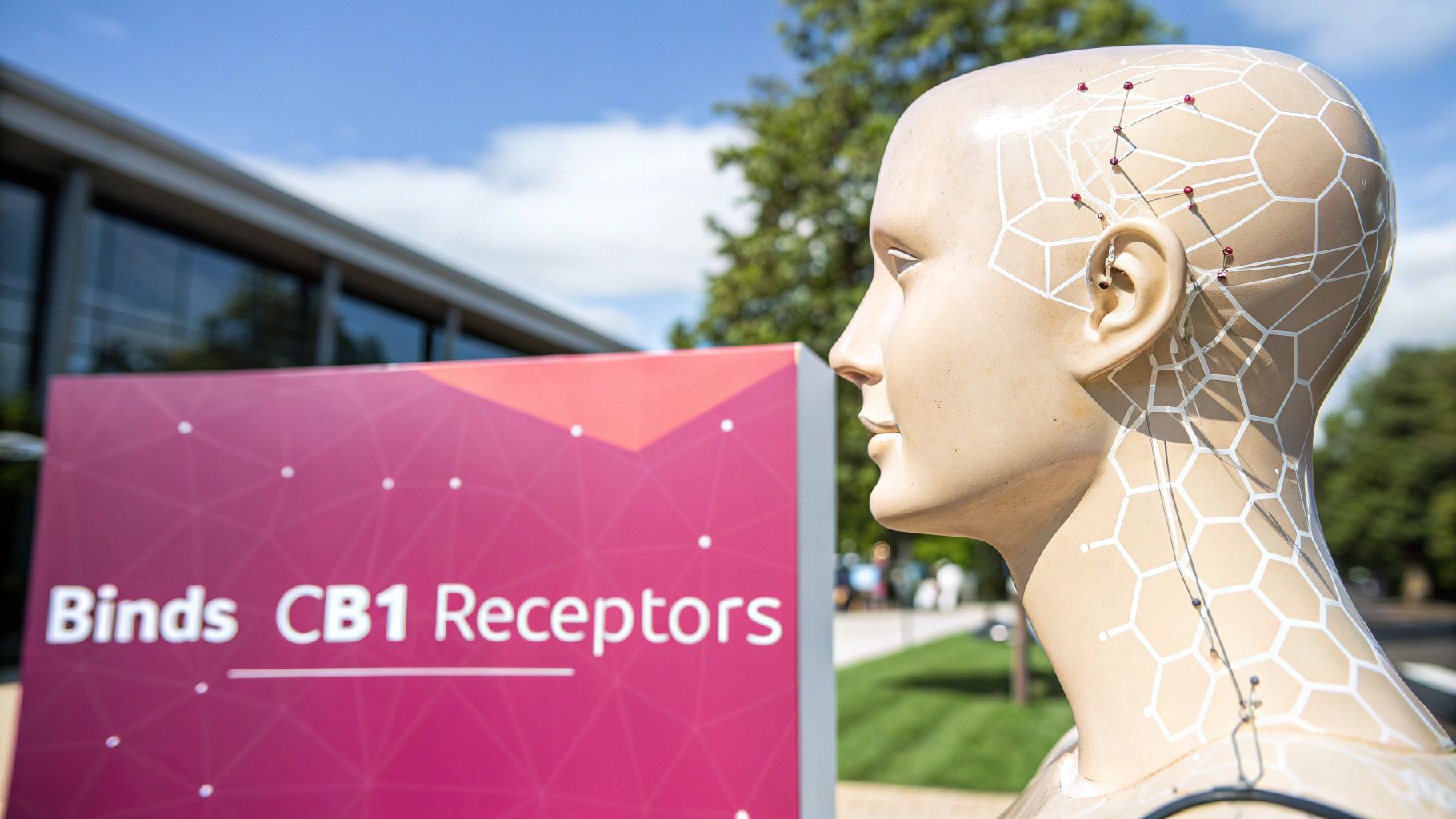
The Science Behind the Sensation
When Delta-9 THC clicks into those CB1 receptors, it temporarily changes the way your brain cells talk to each other. One of the biggest impacts is a surge in dopamine, the neurotransmitter famous for creating feelings of pleasure, motivation, and reward.
That dopamine rush is the primary driver behind the euphoric "high" people associate with THC. But the interaction doesn’t stop there. It influences other parts of the brain, leading to a whole spectrum of experiences.
- Altered Perception: Senses can feel dialed up. Colors might seem richer, music more layered, and food more delicious.
- Mood Elevation: That dopamine at work often brings on feelings of happiness, ease, and deep relaxation.
- Memory Impairment: The hippocampus, your brain's hub for forming new memories, is loaded with CB1 receptors. THC's influence here can make it tricky to recall things in the short term.
This powerful connection with CB1 receptors is what makes Delta-9 so unique. It’s also what has sparked a massive global market, which was valued at USD 41.95 billion and is projected to hit USD 290.73 billion by 2033. Delta-9 is the star of the show, leading the market with an estimated 15.1% CAGR thanks to its sought-after effects. You can find more insights into the booming cannabis market on straitsresearch.com.
How You Consume Matters: Onset and Duration
Your experience with Delta-9 is shaped dramatically by how you consume it. The method dictates how quickly the effects kick in (onset) and how long they stick around (duration). It all depends on the path the THC takes to get to your brain.
Understanding the difference between inhalation and ingestion is key to managing your experience. One offers a rapid, short-lived effect, while the other provides a slower, more prolonged journey.
Let's break down the most common methods:
-
Inhalation (Smoking or Vaping): When you inhale THC, it’s a direct flight to your bloodstream via the lungs. This is the fastest method by far, with effects often felt within minutes. The experience usually peaks within 30 minutes and fades within 1 to 3 hours.
-
Ingestion (Edibles and Beverages): Consuming Delta-9 in a product like a gummy or a Day Dreamer sparkling water sends it on a detour through your digestive system. Your liver gets involved, converting it into an even more potent compound called 11-hydroxy-THC. This extra step means the onset is much slower, taking anywhere from 30 minutes to 2 hours. The trade-off? The effects are often stronger and last much longer—typically 4 to 8 hours.
This slower, steadier release is precisely why THC beverages are gaining so much popularity. They offer a gradual, sustained experience without the downsides of smoking. Knowing these timelines helps you plan ahead and dose responsibly, ensuring you get the positive experience you're looking for every time.
Comparing Delta 9 to CBD, Delta 8, and Delta 10
Not too long ago, the cannabis conversation was pretty simple—it was all about THC and CBD. Now, the family has grown, and it's easy to get lost in a sea of terms like Delta-8 and Delta-10. But don't worry, telling them apart is straightforward once you know what to look for. They're all related, but tiny tweaks in their chemistry lead to completely different experiences.
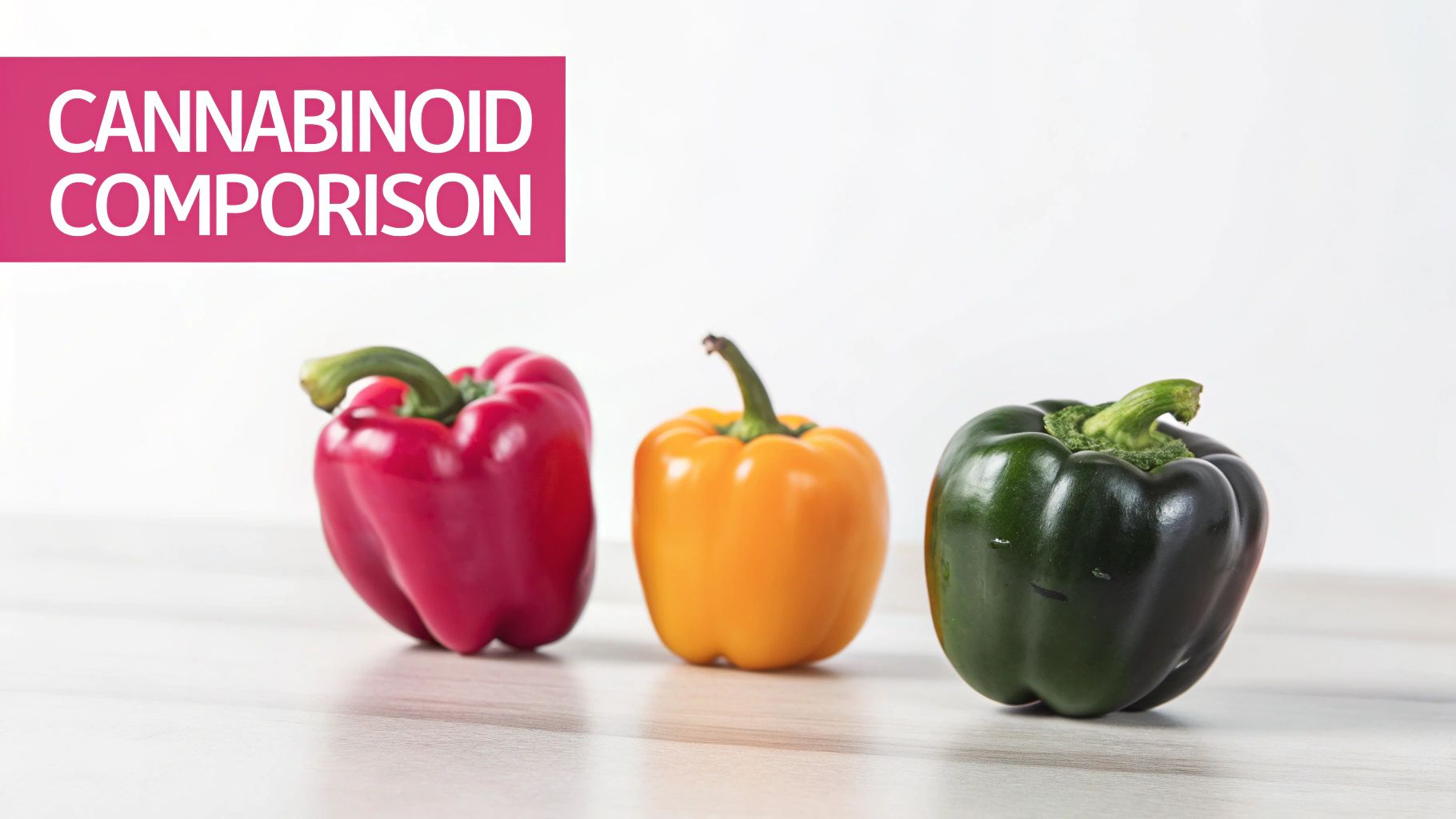
Think of it like this: cannabinoids are a bit like bell peppers.
- Delta-9 THC is the classic red bell pepper—bold, familiar, and exactly what you expect when you think of a pepper's core flavor. It defines the experience.
- Delta-8 THC is more like a yellow bell pepper. It's got a similar essence but is noticeably milder and a bit sweeter. You know it's a pepper, but the intensity is dialed back.
- CBD (Cannabidiol) is the green bell pepper. It shares the same plant heritage and offers plenty of its own wellness benefits, but it's missing that specific sweetness and flavor profile entirely.
This simple comparison gets to the heart of how these compounds work. Delta-9 sets the standard for psychoactive effects, while its cousins offer subtle variations for anyone looking for a different kind of vibe.
Unpacking the Molecular Differences
On a chemical level, Delta-9, Delta-8, and Delta-10 are practically identical. They have the same atoms in the same numbers, but the way they're arranged is just a little different. The "Delta" in their name actually points to the location of a specific double bond in their molecular structure.
- In Delta-9 THC, that double bond is on the ninth carbon atom.
- In Delta-8 THC, it’s moved over to the eighth carbon atom.
- In Delta-10 THC, you guessed it—it’s on the tenth carbon atom.
That tiny structural shift changes everything. It dictates how tightly the molecule can connect with the CB1 receptors in your endocannabinoid system, which in turn determines the strength of the psychoactive effect. Delta-9’s structure forms the strongest bond, which is why it produces that powerful, classic "high."
This is where the magic happens. A tiny, almost insignificant change in chemical structure creates a massive difference in how you feel, from the potent euphoria of Delta-9 to the gentle, non-intoxicating calm of CBD.
Because Delta-8 and Delta-10 don't bind as effectively, they deliver a much less intense experience—often described as more clear-headed and functional. And CBD? It interacts with those receptors in a completely different way, which is why it doesn't cause any intoxicating effects at all.
How the User Experience Varies
Because of those molecular quirks, each cannabinoid offers a completely unique experience. Knowing the difference is key to finding the right product for the right occasion, whether you’re looking to relax after work or add a little spark to a night out.
Delta-9 THC is the original. It’s known for delivering that potent, full-body experience: strong euphoria, deep relaxation, a shift in sensory perception, and a noticeable mood boost. It’s the benchmark for a traditional cannabis high.
Delta-8 THC is often called "THC's younger sibling" for a reason. It provides a much milder psychoactive effect that most people find calming, focused, and relaxing, but without the overwhelming intensity or anxiety that can sometimes come with Delta-9. It’s a popular choice for people who want to stay sharp and productive.
Delta-10 THC is a bit newer to the scene and is generally associated with a more uplifting, sativa-like buzz. Users often report feeling more creative, energized, and alert compared to the more relaxing Delta-8.
CBD is in its own category. It’s completely non-psychoactive, so its benefits are all about promoting wellness and balance. People turn to CBD for everything from managing daily stress and soothing post-workout soreness to simply finding a moment of calm.
To make it even clearer, here’s a quick rundown of how these popular cannabinoids compare.
Cannabinoid Comparison: Delta-9 vs. Delta-8 vs. CBD
| Cannabinoid | Psychoactive Potency | Primary Effects | Legal Status (Federal) |
|---|---|---|---|
| Delta-9 THC | High | Euphoric, relaxing, classic "high" | Legal if hemp-derived and under 0.3% by dry weight |
| Delta-8 THC | Mild to Moderate | Calming, clear-headed, less intense high | Legality varies by state; complex legal status |
| CBD | None | Non-intoxicating, promotes balance and calm | Federally legal if derived from hemp |
Ultimately, the right choice comes down to personal preference and the experience you're after.
How the Farm Bill Made Hemp-Derived Delta-9 Legal
For the longest time, the legal world of cannabis was a tangled mess. The line between what was considered legal hemp and illegal marijuana was murky, creating confusion for just about everyone. But that all changed with one landmark piece of federal legislation—the very law that makes products like Day Dreamer sparkling water possible.
The Agriculture Improvement Act of 2018, better known as the 2018 Farm Bill, finally drew a clear, scientific line in the sand. It federally legalized hemp cultivation and sales by defining it based on a simple chemical threshold, officially distinguishing it from marijuana for the first time under federal law.
So, what was the magic number? 0.3%. According to the bill, any cannabis plant with 0.3% or less Delta-9 THC by dry weight is legally defined as hemp. If a plant crosses that line, it's still considered marijuana, a Schedule I controlled substance. This seemingly small distinction blew the doors wide open for a new generation of wellness products.
The "Dry Weight" Rule: How It All Works
This "dry weight" standard is where the magic really happens, creating what many call a legal loophole. It simply means that the total Delta-9 THC in a product can't exceed 0.3% of the product's total weight after you've taken out all the water.
For a raw hemp flower, that’s pretty straightforward. But for products like edibles and drinks, the implications are huge. A heavier item can legally contain a noticeable, psychoactive dose of Delta-9 THC and still fall well within that federal limit.
Think of it like a cocktail. The law doesn't cap the total amount of alcohol in the glass; it limits the concentration, or the proof. The Farm Bill works the same way—it’s all about the concentration of Delta-9 THC, not the total milligrams in the final product.
Here’s a simple breakdown using a common example:
- A standard 5-gram gummy weighs 5,000 milligrams. To be legal, its Delta-9 THC content must be 0.3% or less of that total weight.
- The math is simple: 5,000 mg x 0.003 = 15 mg.
- The result? That gummy can legally pack up to 15 mg of hemp-derived Delta-9 THC and be sold across the country because it meets the concentration requirement.
This is exactly how THC-infused beverages can offer a standard 5mg or 10mg dose in every can, giving you a consistent and enjoyable experience while staying 100% compliant with federal law.
Federal vs. State Laws: It's Not the Same Everywhere
While the 2018 Farm Bill was a federal game-changer, it’s important to remember that states still have the final say. The bill gave each state the power to set its own rules for hemp. Some states simply adopted the federal guidelines, but others have passed much stricter laws or even banned certain hemp-derived products altogether.
This creates a legal patchwork across the country, meaning a product available in one state might be illegal just across the border. Before you buy any Delta-9 product, it's always a good idea to check your local and state regulations. It’s the responsible way to ensure you're staying safe and on the right side of the law.
The Farm Bill became law on December 20, 2018, kickstarting a market that is exploding in growth—projected to jump from USD 57.18 billion in 2023 to USD 444.34 billion by 2030. You can explore more projections on the legal cannabis market to see just how fast this industry is moving.
Dosing, Side Effects, and How to Consume Safely
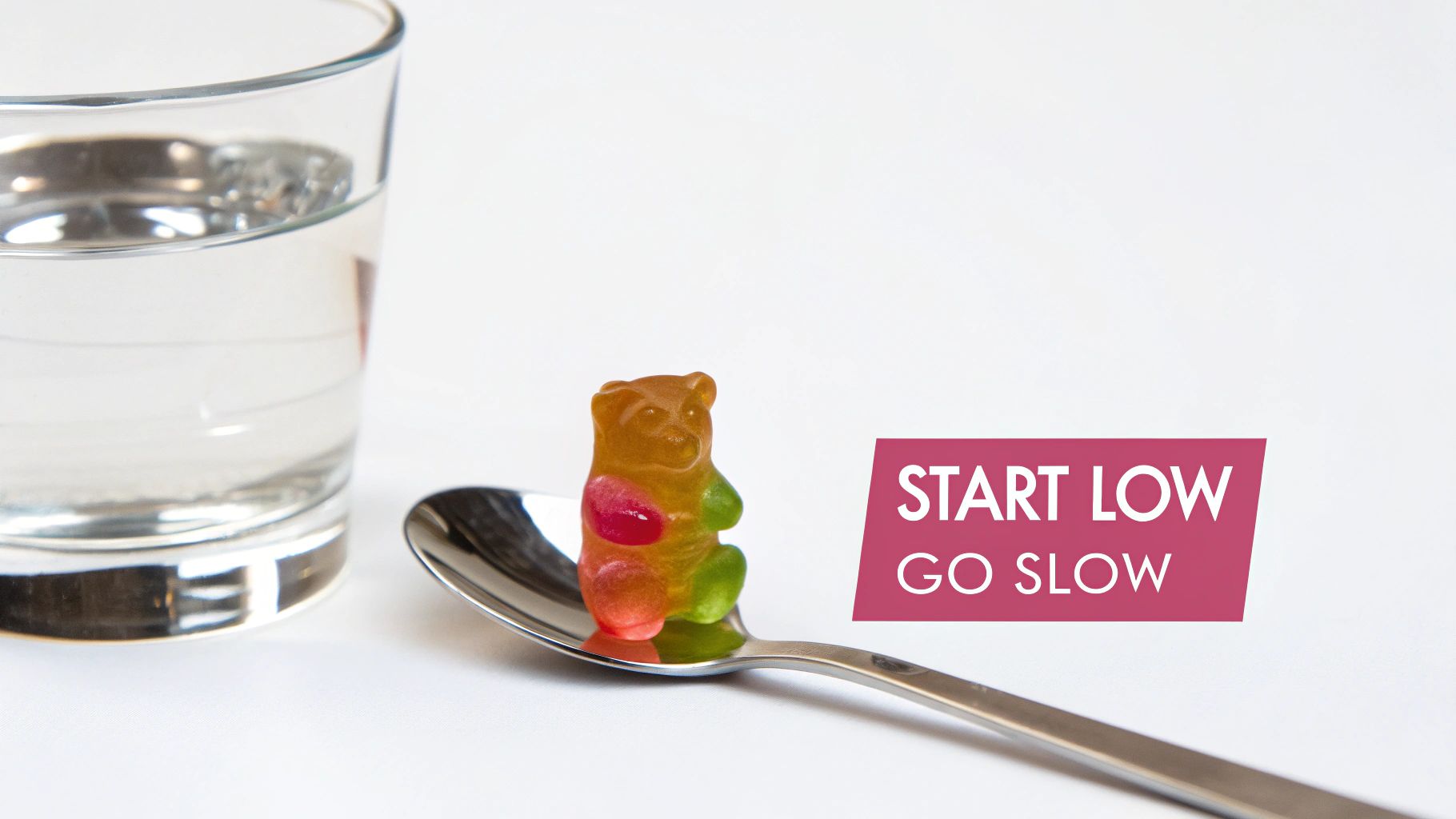
Having a great experience with Delta-9 THC really comes down to one thing: control. You have to know your limits and listen to your body. There’s a golden rule everyone in the cannabis world knows, and it’s especially true for edibles and THC drinks: start low and go slow.
This isn't just a catchy phrase—it's practical advice. When you eat or drink THC, your body has to digest it before you feel anything. That process can take anywhere from 30 minutes to a full two hours. The classic rookie mistake is getting impatient and taking a second dose before the first one has even hit. That's a surefire way to have a bad time.
Finding Your Sweet Spot
There’s no magic number for the "perfect dose" because we’re all built differently. Your metabolism, body weight, tolerance, and even what you ate for lunch can all influence how you’ll feel. But we can work with some solid guidelines to help you find a comfortable starting point.
Think of these as stepping stones for your first few experiences:
- Microdose (1 – 2.5 mg): This is where you want to start if you're brand new to THC. The effects are super subtle—think a little mood boost, a sense of calm, or mild pain relief without any real "high." It's the perfect way to dip your toes in.
- Standard Dose (5 – 10 mg): This is the sweet spot for most casual consumers. A single can of Day Dreamer falls right into this range. You'll likely feel noticeable euphoria, heightened senses, and a nice wave of relaxation. This dose is what most people are looking for when they want the classic THC benefits.
- High Dose (10 – 25+ mg): Leave this territory to the seasoned pros. Doses this high are for people with a significant tolerance and can produce very powerful psychoactive effects. If you're new to this, steer clear.
The most important thing to remember is that you can always take more, but you can never take less. Start with a microdose, give it at least two hours to see how you feel, and then decide if you want to try a bit more next time.
What to Expect: Potential Side Effects
While most people handle Delta-9 THC just fine, taking too much can definitely lead to some temporary, uncomfortable side effects. The good news? These are almost always tied to your dose. If you stick within your comfort zone, you can usually avoid them altogether.
Knowing what might happen if you overdo it helps you stay calm and manage the experience.
Here are the most common culprits:
- Dry Mouth: You might hear people call it "cottonmouth." It's super common and easy to fix. Just keep some water (or another Day Dreamer) nearby to stay hydrated.
- Anxiety or Paranoia: This is the big one. High doses can sometimes make people feel anxious or on edge, especially if they aren't used to it. It’s the number one reason we preach "start low."
- Increased Heart Rate: THC can make your heart beat a little faster for a short while. It’s typically harmless, but it can feel a bit alarming if you’re not expecting it.
- Impaired Coordination: Your motor skills will take a hit, making you a bit clumsy. This is why you should never, ever drive or operate machinery after consuming Delta-9.
If you ever find yourself feeling overwhelmed, the best thing to do is find a quiet, cozy spot, sip some water, and just remind yourself that the feeling is temporary. It will pass. By making "start low and go slow" your mantra, you put yourself in the driver's seat for a safe, controlled, and genuinely enjoyable experience every single time.
How to Choose High Quality Delta 9 Products
With so many Delta 9 products flooding the shelves, figuring out what’s high-quality and what’s just hype can feel like a guessing game. But here’s the good news: you don’t need a chemistry degree to be a smart shopper. Your single most powerful tool is the Certificate of Analysis, or COA.
Think of a COA as a background check for your cannabis product. It’s an official report from an independent, third-party lab that spells out exactly what’s inside. Any brand worth your money will make their COAs easy to find, usually with a QR code right on the package. It's your proof that the label isn't just marketing.
Reading a Certificate of Analysis
A COA is like a product’s report card, and learning to read one is the best way to protect yourself and ensure you’re getting what you paid for. When you scan that QR code, you’re looking for a few key things.
First, find the cannabinoid profile. This section breaks down all the active compounds and their exact amounts.
- Potency Verification: Does the amount of Delta-9 THC on the COA line up with what’s advertised? A can that says 5 mg of THC should have a lab result right around that number.
- Legal Compliance: This is the big one. The report must confirm the Delta-9 THC concentration is at or below the federal limit of 0.3% by dry weight. That’s the detail that makes it legal.
Next, you’ll want to check the safety and purity tests. A great product isn't just potent and legal; it's also clean. The COA should give you a passing grade on several crucial tests.
A clean COA is a brand's promise of transparency and safety. If a company doesn't provide one, or if the report is incomplete or outdated, that’s a major red flag.
The most important safety screenings include:
- Pesticides: Confirms that no nasty agricultural chemicals are in the final product.
- Heavy Metals: Checks for contaminants like lead, mercury, and arsenic, which the hemp plant can pull from the soil.
- Microbials and Mycotoxins: Verifies the product is free from mold, bacteria, and other gross microorganisms.
Exploring the World of Delta 9 Products
The variety of Delta-9 products available today is truly amazing. We’re in the middle of a massive boom—the global cannabis extract market is on track to jump from USD 16.56 billion in 2025 to USD 73.28 billion by 2034. A huge slice of that growth comes from full-spectrum extracts that feature Delta-9 THC. You can dive deeper into the rapid expansion of the cannabis extract market over at Precedence Research.
Of course, you can still find Delta-9 in classic forms like flower and gummies, but innovative new options are popping up all the time. THC-infused beverages, like our Day Dreamer sparkling water, are quickly becoming a favorite. They offer a sophisticated, smoke-free way to enjoy a precise dose, making them a fantastic alternative to alcohol for a social buzz or a quiet night in.
For those who prefer concentrates, remember that your gear is just as important as the extract itself. To get the best experience, you need a quality consumption device. If you're heading down that path, check out a guide to choosing dab rigs to make sure you're set up for success. By learning how to read a COA and understanding the landscape of products out there, you can navigate the world of Delta-9 with total confidence, knowing you’re choosing safe, legal, and effective products every single time.
Your Delta 9 THC Questions, Answered
Stepping into the world of hemp-derived cannabinoids can bring up a lot of questions. It's totally normal. Getting clear, straightforward answers is the best way to feel confident about what you're trying. We’ve gathered some of the most common questions we hear about Delta 9 THC to clear things up for you.
Is It Actually Legal to Buy Hemp-Derived Delta 9 Online?
Yes, it is federally legal to buy hemp-derived Delta 9 THC products online. This is all thanks to the game-changing 2018 Farm Bill. This piece of legislation carved out a legal space for hemp products, as long as they contain less than 0.3% Delta 9 THC by dry weight.
That said, the rules aren't the same everywhere. While it's fine on a federal level, some states have their own specific laws and restrictions on hemp products. It's always a good idea to check your local and state regulations before you buy anything, just to be sure you're in the clear.
Will Delta 9 THC Show Up on a Drug Test?
Yes, it absolutely will. It's critical to understand that standard drug tests don't make a distinction between legal hemp-derived THC and marijuana. They are simply designed to detect THC metabolites in your system, regardless of the source.
If you are subject to drug testing for your job, sports, or any other reason, you should steer clear of all Delta 9 THC products. Even if the product is 100% legal, a drug test will almost certainly come back positive.
How Is a 10mg Delta 9 Gummy Even Legal?
This is probably the most common question we get, and it really highlights how the "dry weight" rule from the Farm Bill works. It’s not about the total amount of THC in a single serving; it’s about the concentration of THC relative to the product's total weight.
Let's walk through the math with a real-world example.
- Imagine a standard gummy that weighs about 5 grams. That's the same as 5,000 milligrams.
- To be legal, the Delta 9 THC can’t make up more than 0.3% of that total weight.
- Let’s do the calculation: 5,000mg x 0.003 = 15mg.
So, a 5-gram gummy could legally contain up to 15mg of Delta 9 THC. A gummy with 10mg of Delta 9 THC is well under that limit, making up only 0.2% of its total weight. The same logic applies to THC drinks, which allows for a meaningful, effective dose while staying completely compliant with federal law.
Ready to experience a clean, modern buzz? Day Dreamer offers precisely dosed, hemp-derived THC sparkling waters crafted for clarity and good times. Explore our refined flavors and elevate your routine by visiting our shop.


