
Alcohol replacement drinks have arrived to fill the gap between zero proof and social rituals. Imagine a pint that feels like beer but won’t leave you foggy tomorrow, or a bubbly tonic spiked with adaptogens instead of ethanol.
Health-conscious drinkers and party-goers alike are discovering how satisfying these substitutes can be. From nuanced flavors to functional benefits, they’re redefining the art of social sipping.
Quick Overview Of Alcohol Replacement Drinks
Most options fall into four main camps, each bringing its own twist:
• Non-Alcoholic Beers & Wines
These mimic classic hop, malt, or tannin profiles without the buzz (capped at 0.5% ABV). You get the familiar notes—crispy lagers or robust reds—minus the morning-after regrets.
• Adaptogenic Tonics
Botanicals like ashwagandha and reishi star here, aimed at calming nerves or sharpening focus. These elixirs deliver flavor and a gentle lift (0% alcohol), perfect for winding down or dialing in at work.
• Hemp-Infused Sparkling Waters
Brands like Day Dreamer microdose CBD or THC, offering light euphoria alongside refreshing bubbles. It’s a playful alternative for those curious about hemp’s effects without spiking your blood alcohol.
• Ready-to-Drink Substitutes
Think pre-mixed concoctions with herbs, spices, and nootropics packed in sleek cans. They’re all about convenience and ceremony—shake, sip, repeat (0% alcohol).

This mocktail image captures the essence of the ritual: layers of color, thoughtful garnishes, and the anticipation that comes with a well-crafted drink—minus any ethanol.
Below is a quick side-by-side look at these categories.
Summary Of Alcohol Replacement Categories
| Category | Description | Typical Alcohol Content | Key Benefits |
|---|---|---|---|
| Non-Alcoholic Beers and Wines | Flavor profiles similar to traditional drinks | <0.5% | Familiar taste without intoxication |
| Adaptogenic Tonics | Herbal blends with calming or focus-enhancing effects | 0% | Stress relief and mood support |
| Hemp-Infused Sparkling Waters | Microdosed CBD/THC with natural flavors | 0% (CBD/THC trace) | Gentle relaxation and novelty |
| Ready-to-Drink Substitutes | Pre-mixed botanical and functional formulations | 0% | Convenience and ceremony in a can |
Use this table as a jumping-off point. Whether you’re chasing fullness of flavor, a focused calm, or a hint of hemp’s chill, there’s a zero-proof option ready to become your new go-to.
Understanding Key Concepts
Think of alcohol replacement drinks as familiar companions that skip the buzz. They borrow the flavors and mouthfeel of beers, wines or cocktails but leave out the ethanol.
You still get those hop, malt or tannin notes—and the ritual of raising a glass—without waking up with a headache. In other words, you keep the tradition but not the next-day fog.
“It’s about keeping the tradition while removing the buzz,” says a leading beverage formulator.
Here’s a quick overview of the main categories:
- Nonalcoholic Beers and Wines deliver classic taste with <0.5% ABV.
- Adaptogenic Tonics blend herbs like ashwagandha for a calm mind.
- Hemp-Derived Waters use CBD/THC isolates for a gentle lift.
These points highlight the core options and help you scan for what matters most.
How Ingredients Work
Beyond flavor, functional ingredients bring unique effects to the party. Adaptogens—think ashwagandha or reishi—work like a personal stress manager. They nudge cortisol levels down, offering a smoother emotional ride.
Botanicals and vitamins can sharpen focus or promote relaxation. Imagine sipping a tonic that feels like a mini spa visit after a hectic morning.
CBD and THC isolates act as volume controls for your mood. Instead of a sudden spike and crash, you get a gradual dial-down of anxiety.
- Identify Your Goal (relaxation, focus, ritual).
- Match Ingredients (ashwagandha for calm, CBD for mild euphoria).
- Check Dosage (start low, then adjust slowly).
Comparing Drink Types
When you break it down, each category shines in its own way:
| Category | Key Perk |
|---|---|
| Nonalcoholic Beer & Wine | Flavor mimicry for social occasions |
| Adaptogenic Tonics | Stress relief and mental clarity |
| Hemp-Derived Sparkling Water | Subtle mood adjustment with a fizzy kick |
Pick a beer-style soda for happy hour rituals, a tonic for an afternoon reset, or a CBD-infused sparkle to experiment with something new.
Why Consumers Choose These Options
Health-minded folks often replace sugary sodas or conventional cocktails with alcohol-free alternatives. 73% of users report waking up with more energy and zero hangover.
Less sugar and fewer calories blend well with dietary goals. These drinks serve various lifestyles:
- Sober Curiosity
- Focus Sessions
- Social Catch-Ups
Practical tip: Serve them in cocktail glasses and garnish with fruit or herbs to preserve the familiar ritual. Pair a nonalcoholic red with a hearty stew or enjoy a tonic alongside a light salad.
Key Insight: Alternating between different categories keeps your routine fresh and engaging.
This progressive breakdown shows how flavor, function, and form come together. Next, you’ll know which type aligns with your goals.
Exploring Drink Categories
Imagine laying out a spread where your usual beers and wines stand shoulder to shoulder with zero-proof newcomers. You’ve got crisp nonalcoholic lagers, silky dealcoholized reds, earthy herbal tonics, and fizzy Day Dreamer hemp waters all mingling together.
Global demand for low- and no-alcohol beverages is on fire right now. Valued at USD 25.7 billion in 2024, this market is projected to climb to USD 46.5 billion by 2034—growing at a 6.2% CAGR. For a detailed look at these forecasts, check out the InsightAceAnalytic Report.
Below is a quick comparison of the three biggest players in the alcohol-replacement world.
Comparison Of Replacement Drink Types
Discover how nonalcoholic beer and wine, adaptogenic tonics, and hemp waters differ in flavor and function.
| Type | Examples | Flavor Profile | Use Case |
|---|---|---|---|
| Nonalcoholic Beer/Wine | Athletic Brewing, Ariel | Malty, fruity, crisp | Happy hour, dinner pairing |
| Adaptogenic Tonics | Three Spirit Nightcap | Herbal, bitter | Pre-work meeting, wind-down |
| Hemp Waters | Day Dreamer, Kola Labs | Light, citrus | Social events, movie night |
Use this snapshot to zero in on the drink that fits your next gathering or quiet evening.
Nonalcoholic Beer And Wine Comparison
Nonalcoholic beers and dealcoholized wines capture all the taste cues of their alcoholic counterparts—minus the ethanol. Think a hoppy IPA poured in a frosty pint or a tannic cabernet alongside your favorite steak.
These options stick under 0.5% ABV by removing alcohol through gentle methods that guard aroma and mouthfeel.
Key production steps:
- Vacuum distillation extracts alcohol at low temperatures
- Carbon filtration strips unwanted compounds
- Blending back flavor extracts restores the original aroma
In practice, guests often can’t tell the difference. Serving an alcohol-free stout with chocolate cake, for example, nails the dessert-wine vibe without the buzz.
Adaptogenic Tonics And Real Life Use
Adaptogenic tonics are like tiny herbal retreats in a bottle. By blending roots and mushrooms—ashwagandha, reishi or ginseng—these drinks promise calm, focus, or a gentle lift.
Real-world pick-up: sipping a reishi tonic before a big presentation takes the edge off without inducing drowsiness.
When selecting a tonic, consider:
- Ingredient potency (milligrams per serving)
- Taste notes (earthy, citrus, spicy)
- Desired effect (stress relief, clarity, sleep support)
“A sip of adaptogenic tonic can feel like a moment of calm in a hectic day,” notes wellness coach Dana Liu.
Hemp Waters And Gentle Relaxation
Hemp-derived sparkling waters deliver 5–10 mg of Delta-9 THC or CBD per can, offering a light, effervescent buzz. Picture friends passing citrus-tinged seltzers at a picnic, each person savoring a soft glow of relaxation.
This category shines when you want subtle mood shifts without heavy impairment. Pair a Day Dreamer can with tapas or a cheese board for an elevated snack experience.
“Sipping a THC sparkling water feels like a relaxed toast without the fog,” says a Canadian mixologist.
Practical tip: Start with one can to gauge the effect before popping open another. It’s a simple way to capture a cocktail vibe while keeping things gentle and zero-proof.
Weighing Benefits And Downsides
Alcohol-replacement beverages live in that sweet spot between a night out and a clear-headed morning. They promise no groggy awakenings and a fraction of the calories, yet every silver lining comes with a shadow.
On the upside, removing alcohol almost always means waking up refreshed. Toss in adaptogens or botanicals, and you get a gentle nudge toward calm or focus without feeling sedated. Plenty of people report sharper concentration at work and a smoother transition to sleep.
Designated drivers, too, often feel more a part of the celebration. Fresh fruit-infused tonics can even outshine a standard soda. And let’s face it—skipping the bloat and dehydration is a win.
- Zero to Low Calories can trim hundreds off your daily tally.
- No Hangover equals 100% productivity on busy mornings.
- Functional Ingredients like adaptogens support calm or focus.
- Inclusivity lets sober-curious friends join in the fun.
Benefits In Real Life
Swap that post-work beer for a CBD sparkling water, and you might notice quicker recovery after a run. One marathoner replaced his pint with a hemp-derived tonic and shaved precious hours off his stiffness. It’s a simple way to match your drink choice with fitness goals.
Non-alcoholic options are also booming. The global market is set to balloon by USD 294.8 billion between 2025 and 2029, growing at a 5.4% CAGR. North America alone accounts for 36% of that surge as health-minded drinkers seek natural, low-sugar elixirs with perks like hydration and ethical sourcing. For a deeper dive, check out the Technavio report.
That chart shows 82% of people would trade a bit of flavor for a hangover-free morning.
Potential Drawbacks
Not everything is sunshine and sparkles. Pull out the alcohol, and some drinks lose body or warmth. Overdo adaptogens and you might feel a touch of drowsiness or an upset stomach. And yes, premium ingredients often come with premium prices.
- Muted mouthfeel compared to traditional brews.
- Possible nausea or fatigue from high adaptogen levels.
- Higher price tag—$5–8 per can or bottle.
- Limited regional availability for certain hemp-infused blends.
- Occasional digestive irritation from botanical complexes.
“I loved the concept, but the flavor felt watered down compared to my favorite IPA,” says one nonalcoholic beer enthusiast.
In the end, it’s your goals that matter. If beating a hangover outweighs a slight taste compromise, an alcohol-replacement drink could be your new go-to.
Legal Safety And Dosing Guidance
When you try an alcohol replacement drink, understanding the legal side helps keep everything on track. Different regions treat CBD and THC levels in drinks in very distinct ways.
Reading the label might feel tedious, but it's the smartest first step. Look for:
- ABV (alcohol by volume) percentage
- CBD/THC amount per serving (in mg)
- Batch numbers tied to third-party lab tests
- Official compliance logos or symbols
If you’re new to adaptogens or hemp extracts, start small. A good rule of thumb is 5 mg THC or 20 mg CBD, then adjust gradually.
Regional Limits And Labeling
Label rules shift from country to country. In the U.S., the 2018 Farm Bill limits THC to 0.3% by dry weight. Across the European Union, that drops to 0.2%.
| Region | THC Limit | CBD Limit |
|---|---|---|
| United States | 0.3% dry weight | No federal cap |
| European Union | 0.2% | No federal cap |
| Canada | 10 mg per serving | 10 mg per serving |
Knowing these numbers before you buy means fewer surprises when you cross borders or switch brands.
Dosing Best Practices
Pairing your drink with food can make effects smoother. Always wait at least two hours before sipping another.
- Kick off with 5 mg THC or 20 mg CBD
- Space out doses by 2 hours
- If needed, raise by 5 mg increments
Watch out for interactions with medications, caffeine, or other intoxicants.
This chart underlines why starting at 5 mg THC and a two-hour pause helps you dial in your comfort zone.
“Sticking to minimal doses first avoids overconsumption and unpredictable outcomes,” advises a cannabis safety expert.
Safety Tips And Interactions
Mixing hemp-based sips with ED meds or sedatives can backfire. You might notice:
- Lightheadedness or a racing pulse
- Extreme drowsiness beyond the buzz
- Nausea that goes past mild stomach upset
- Unexpected anxiety or mood shifts
At the first sign of trouble, pause and get medical advice.
Label Checks Before Purchase
A quick label scan guards against under-dosing or unwanted ingredients. Always:
- Verify expiration dates and storage advice
- Scan QR codes for detailed lab reports
- Look for allergen alerts (gluten, nuts, etc.)
- Make sure safety seals are intact
This extra step turns every bottle into a known quantity in your wellness toolkit.
Key Takeaway: Reading labels and sticking to dosing guidelines prevents unwanted effects and ensures a consistent, reliable experience over time.
Choosing Drinks Based On Personal Goals
Picking the right alcohol-replacement beverage starts with knowing what you want to get out of it. Maybe you’re chasing a clear-headed morning. Maybe you crave a calming sip after work. Whatever your aim, there’s a non-alc or functional option built for it.
Ready-to-drink nonalcoholic beverages have exploded onto shelves. In the US alone, NA RTDs jumped 36% in 2023, contributing to a 29% surge in the non-alcoholic market—outpacing low-alc’s 7% growth. Discover more insights about RTD trends.
Here’s a look at four common motivations and what to consider when you shop:
- Sober Curiosity: You want rich, layered flavors without the buzz. Seek non-alcoholic beers or wines offering depth and complexity.
- Stress Relief: Your goal is calm. Adaptogenic tonics with ashwagandha or reishi can gently ease tension.
- Social Enjoyment: Presentation matters. Hemp-derived sparkling waters like Day Dreamer deliver elegant bubbles and subtle effects.
- Designated Driving: Zero compromise on clarity. Crisp, non-alcoholic RTDs with 0.0% ABV let you join the party without risk.
Choosing Drinks By Personal Goals
Below is a table mapping common goals to recommended drink types and the key factors to keep in mind.
| Goal | Recommended Type | Key Considerations |
|---|---|---|
| Sober Curiosity | Nonalcoholic Beer & Wine | Authentic taste, <0.5% ABV, varied styles |
| Stress Relief | Adaptogenic Tonics | Ingredient potency, flavor balance |
| Social Enjoyment | Hemp-Derived Sparkling Waters | Microdose level, packaging elegance |
| Designated Driver | Non-Alcoholic RTDs | Portability, consistency, no alcohol label |
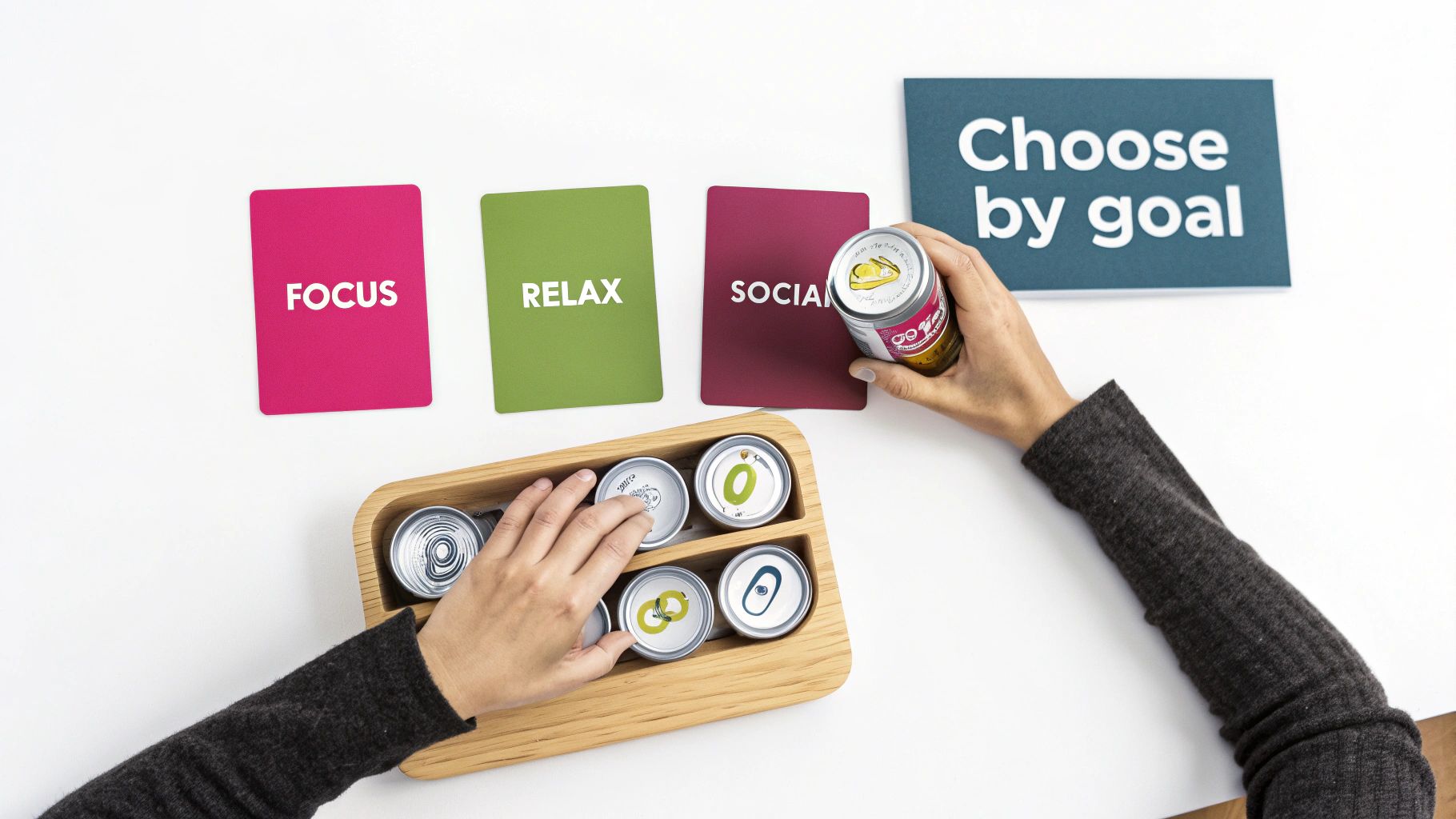
Use this quick reference to match your mindset—whether it’s flavor, function, or form that matters most.
Tips For Pairing And Presentation
When you host, display alcohol-replacement options alongside traditional pours. It invites curiosity and makes everyone feel included.
Pair thoughtfully to amplify both drink and dish:
- Chill cans or bottles to the ideal serving temperature.
- Serve in glassware with a twist of citrus or fresh herbs.
- Label each option clearly so guests know what they’re sipping.
“Presentation matters as much as taste when replacing alcohol,” notes a hospitality expert.
For a laid-back afternoon, sip an herbal tonic next to a light salad or sushi. Planning a cozy evening in? Arrange a selection of RTDs in an ice bucket for that sleek bar-style vibe. By aligning flavor, function, and flair, you’ll craft memorable moments that honor your personal goals.
Frequently Asked Questions
This FAQ cuts through the noise to answer your top questions about alcohol-replacement drinks. Each response is short, clear, and packed with practical tips—whether you’re sober-curious, health-focused, or simply hunting for new flavors.
What Distinguishes Nonalcoholic And Low Alcohol Drinks
Nonalcoholic beverages clock in at 0.5% ABV or less, capturing beer and wine aromas without any buzz.
Low-alcohol options top out around 1.2% ABV, delivering a gentle warmth and light lift.
- Under 0.5% ABV: All the classic flavor, zero intoxication
- Up to 1.2% ABV: Mild tingle and subtle comfort
How Do Adaptogens Enhance Functional Beverages
Adaptogens like ashwagandha and reishi go beyond flavor, helping your body manage stress and fine-tune mood.
“Each sip feels like a mini retreat—calming the mind without dulling it.”
- Ashwagandha eases cortisol spikes for a grounded sense of calm
- Reishi supports deep, restorative sleep without morning fog
Are Hemp Derived Drinks Legal And Safe
Hemp beverages must comply with regional THC limits established by the 2018 Farm Bill. Always look for a third-party lab report to verify what’s inside.
- Check for lab certification showing CBD/THC breakdown
- Confirm THC stays beneath legal thresholds
- Ensure no banned additives or artificial dyes
- Verify the farm follows organic or regenerative practices
These steps guarantee you’re getting a safe, transparent product.
How To Find The Right Dosing For CBD And THC Drinks
Start low—follow the label’s minimum dose and wait at least two hours before trying more. Tracking each serving helps you pinpoint your ideal microdose without overshooting.
- Note how you feel after each dose
- Adjust increments by 5–10 mg until it’s just right
- Keep a simple journal to map effects over time
Explore Day Dreamer for clean, hemp-derived Delta-9 THC and CBD sparkling waters that elevate any occasion. Visit Day Dreamer to learn more.


