
The short answer is yes, THC drinks can be legal in the United States, but it's a bit of a maze. Everything hinges on a few specific federal rules that draw a sharp line between what's considered a legal hemp product and what's still a regulated marijuana product.
It all comes down to where the THC comes from and how much of it is in the final product.
Unpacking the Legality of THC Drinks
If you’ve noticed THC-infused seltzers and sodas popping up in places you wouldn’t expect—like online stores or even local smoke shops—you're seeing a direct result of a single piece of legislation: the 2018 Farm Bill. This law completely changed the game by creating a legal distinction between two types of cannabis plants: hemp and marijuana.
The difference isn't about the plant's appearance but its chemical makeup. For any cannabis plant to be legally defined as hemp, it must contain no more than 0.3% Delta-9 THC on a dry weight basis. This one rule is the entire bedrock of the legal THC beverage market.
The "Dry Weight" Loophole Explained
So, how can a liquid product meet a "dry weight" standard? This is the clever bit of legal interpretation that makes these drinks possible.
The total weight of a beverage is mostly water, making it quite heavy. Because the 0.3% limit is calculated against this total weight, manufacturers can infuse a meaningful dose of THC—typically 2mg to 10mg—into a can while keeping the overall concentration well below the legal threshold.
Think of it this way: It’s like adding one drop of very strong food coloring to a gallon of water. The color is definitely there and has an effect, but its concentration relative to the huge volume of water is incredibly small. This is how brands can create drinks that produce a noticeable buzz while staying on the right side of federal law.
This legal framework is why you can often buy hemp-derived THC drinks online and have them shipped to your door, whereas traditional marijuana products are stuck in state-licensed dispensaries and remain federally illegal.
To help clear things up, here’s a quick summary of the key factors that decide if a THC drink is legal.
THC Drink Legality at a Glance
| Factor | Federally Legal Status (Hemp-Derived) | Federally Illegal Status (Marijuana-Derived) |
|---|---|---|
| Source of THC | Extracted from the hemp plant. | Extracted from the marijuana plant. |
| THC Concentration | Below 0.3% Delta-9 THC by dry weight. | Above 0.3% Delta-9 THC by dry weight. |
| Federal Law | Protected under the 2018 Farm Bill. | Classified as a Schedule I controlled substance. |
| Availability | Can be sold online and in many retail stores. | Restricted to state-licensed dispensaries. |
This table shows the federal baseline, but remember, states can—and do—create their own rules.
Key Factors We'll Explore
Getting a complete picture of whether a specific THC drink is legal means looking at both federal and state laws. Here are the core concepts we'll dive into throughout this guide:
- The 2018 Farm Bill: The landmark federal law that kicked this all off.
- The 0.3% Dry Weight Rule: The specific chemical limit that separates hemp from marijuana.
- Hemp-Derived vs. Marijuana-Derived: Why the source of the THC molecule matters so much.
- State-by-State Regulations: The complicated patchwork of local laws that can add another layer of rules.
How the 2018 Farm Bill Opened the Floodgates for Legal THC Drinks
The entire market for THC-infused seltzers and sodas we see today hinges on a single, game-changing piece of legislation: the 2018 Agriculture Improvement Act, better known as the 2018 Farm Bill. Before this law passed, the federal government lumped all cannabis plants together—hemp, marijuana, it didn’t matter—and classified them as illegal Schedule I drugs.
The Farm Bill drew a bright, clear line in the sand. Think of it like distinguishing between a wolf and a chihuahua based on one specific genetic marker. For cannabis, that marker became THC content. The bill defined hemp as any part of the cannabis plant with 0.3% or less Delta-9 THC on a "dry weight basis." Anything over that magic number is still considered federally illegal marijuana.
That one distinction created a legal pathway for a brand-new industry. By removing hemp from the controlled substances list, the bill suddenly allowed farmers to grow it and companies to create and sell hemp-derived products nationwide, as long as they played by that 0.3% rule.
The "Dry Weight" Rule in a Liquid World
This is where things get interesting. You're probably thinking, "How can a 'dry weight' measurement possibly apply to a can of seltzer?" It’s a great question, and the answer is the secret sauce behind how a federally compliant THC drink can still deliver a noticeable buzz.
It all comes down to math and total volume. A standard 12-ounce can of liquid weighs roughly 355 grams (355,000 milligrams). If you calculate 0.3% of that total weight, you get a surprisingly high number—up to 1,065 milligrams of THC.
This isn't some sneaky loophole; it's a direct application of the law's text. It means a beverage can contain a meaningful dose—usually 2mg to 10mg of THC—and still be comfortably under the 0.3% concentration threshold.
This is exactly how brands operate within the legal framework. They meticulously formulate their drinks so the THC concentration never crosses that federal line, which is what makes them completely different from the high-potency products you'd find in a state-licensed marijuana dispensary.
The Economic Boom That Followed
The 2018 Farm Bill wasn't just a legal shift; it was an economic catalyst. It unlocked a market that has been growing at a breakneck pace, allowing brands like Day Dreamer to innovate with clean, sparkling THC and CBD waters. This federal go-ahead has supercharged the market. According to Allied Market Research, the global cannabis food and beverage sector went from $427 million in 2018 to a projected $2.632 billion by 2026.
That explosive growth is a direct reflection of consumer curiosity and demand, all made possible by the legal foundation laid by the Farm Bill.
Why This Legal Foundation is Everything
To really get a handle on the question, "Are THC drinks legal?" you have to start with the 2018 Farm Bill. It’s the bedrock the entire industry is built on. Without it, these products would be confined to state-run cannabis programs, period.
This single piece of legislation established the two pillars holding up the legal THC drink market:
- A Legal Source: It reclassified hemp from a controlled substance to an ordinary agricultural crop.
- A Compliance Test: It set the 0.3% Delta-9 THC by dry weight standard as the official dividing line between legal hemp and illegal marijuana.
This is the baseline knowledge you need to have. But the Farm Bill is just the first chapter. The story gets more complex when we start looking at the differences between THC from hemp versus THC from marijuana, because legally, they are worlds apart.
Understanding Hemp Delta-9 vs. Marijuana THC
So, you see a can of THC seltzer on the shelf. Your first, most important question should be: where did this THC come from? It's a bit of a head-scratcher because, on a molecular level, the Delta-9 THC from a hemp plant is the exact same as the Delta-9 THC from a marijuana plant.
But in the eyes of the law? They might as well be from different planets. This single distinction is the secret key to understanding why you can buy some THC drinks online and have them shipped to your door, while others are only sold behind the counter at a state-licensed dispensary.
Think of it like this: diamonds from a mine and lab-grown diamonds. Chemically, they are identical. But their origin stories, the regulations around them, and how they get to market are completely different. The same goes for THC—the plant it came from determines its entire legal journey.
The Tale of Two Plants
Everything changed with the 2018 Farm Bill. This piece of federal legislation drew a bright line in the sand, legally splitting the cannabis plant into two different categories based on one simple metric: its THC concentration.
-
Hemp-Derived Delta-9 THC: This is the stuff you'll find in THC drinks sold online or in your local grocery or liquor store. It comes from hemp plants, which are legally defined as cannabis containing no more than 0.3% Delta-9 THC by dry weight. Since the plant is federally legal, the THC that comes from it is too, provided the final product also stays under that 0.3% threshold.
-
Marijuana-Derived THC: This is the THC in products sold at state-licensed cannabis dispensaries. It’s pulled from marijuana plants—defined as any cannabis plant with more than 0.3% Delta-9 THC. Federally, this kind of cannabis is still a Schedule I controlled substance. Its sale is only legal within the bubble of a state-regulated medical or recreational program.
This is exactly why you might find a 5mg THC drink at a smoke shop, but a 100mg THC beverage requires a trip to a dispensary in a state where cannabis is legal. Same molecule, totally different legal worlds.
How The Source Affects Where You Can Buy
For you, the consumer, this all boils down to one thing: access.
Hemp-derived THC drinks operate in a federally compliant space, which means they can be produced and sold across state lines, just like a can of soda or a bag of coffee. This is how a brand like Day Dreamer can offer its clean, sparkling THC waters directly to people in most states.
Marijuana-derived products, on the other hand, are stuck in a maze of state-specific rules. They can only be grown, made, and sold within the borders of a single legal state. That means dispensary regulations, hefty taxes, and absolutely no shipping over state lines.
The bottom line is simple but powerful: If you're buying a THC drink anywhere other than a state-licensed dispensary, it is almost certainly a hemp-derived product playing by the rules of the 2018 Farm Bill.
Grasping this one concept is the first step to confidently navigating the booming world of cannabis beverages. It doesn't just answer the question of legality; it makes you a smarter shopper, helping you understand a product's legal standing, what to expect from its dosage, and where you can safely and legally buy it.
Navigating the Patchwork of State Laws
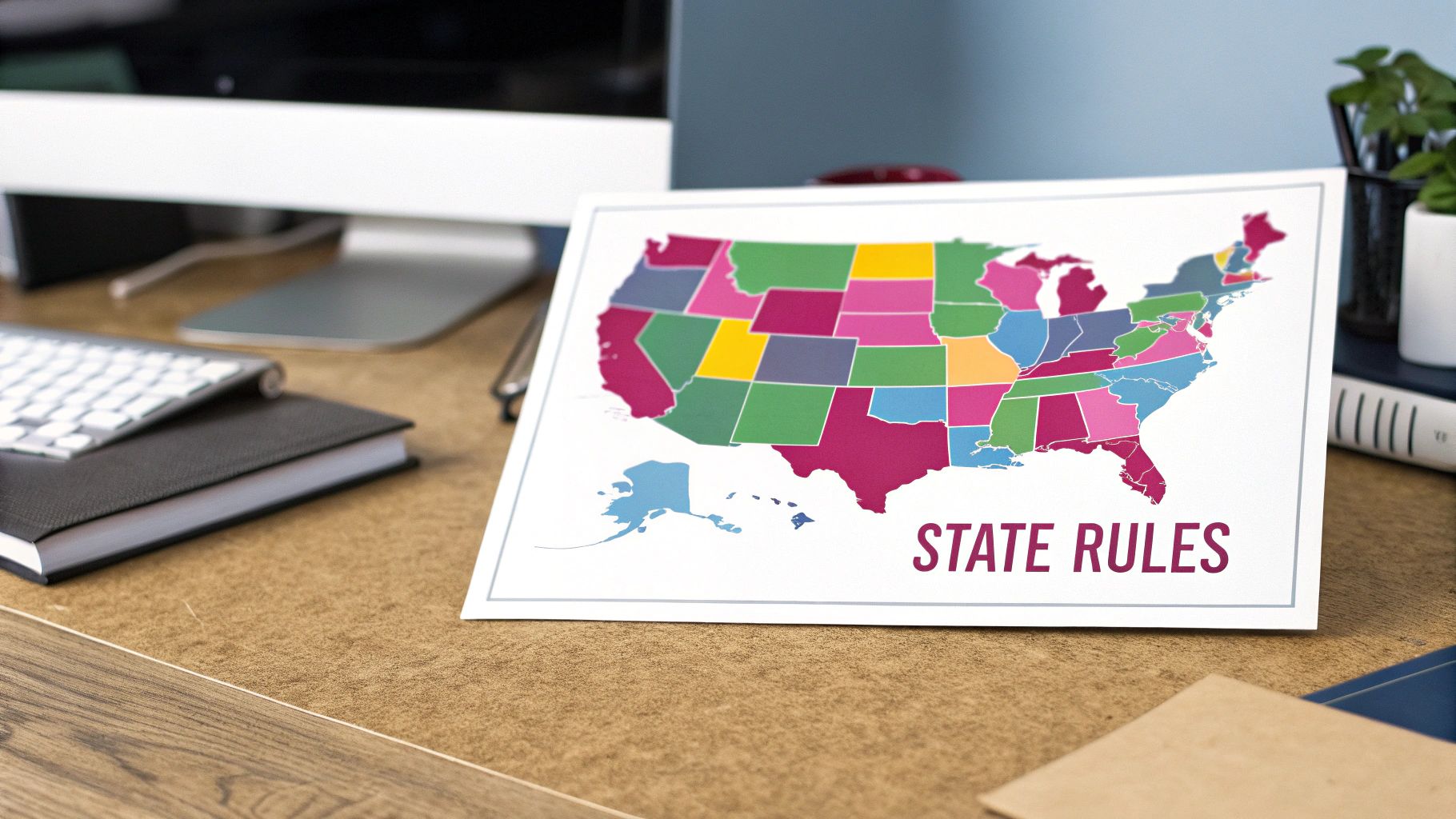
While the 2018 Farm Bill opened the door for hemp-derived products on a federal level, it also gave each state the authority to draw its own map. This is where things get complicated. The legal landscape for THC drinks isn't a single, straight highway; it's a messy patchwork of state and local roads.
Think of it this way: even if a THC beverage is perfectly legal under federal law, its status can change the second you cross a state line. Some states have welcomed hemp-derived THC with open arms, sticking closely to the Farm Bill's guidelines. Others have slammed on the brakes, creating their own set of stricter rules.
To understand why a state can do this, you need to know a bit about what constitutes jurisdiction in law. This core legal principle is why a state government can pass laws that are much tougher than federal ones, directly controlling whether a THC seltzer is legal to buy and sell within its borders.
Different Strokes for Different States
There's no single, one-size-fits-all answer to whether THC drinks are legal. The approaches states are taking are all over the place, which means you have to stay on your toes. What's perfectly fine in one state could be completely illegal just one state over.
Let's look at a few real-world examples to see how this plays out:
- The "Green Light" States: Take Minnesota. Lawmakers there have specifically legalized and created a regulated market for hemp-derived beverages. They set clear rules on THC limits per serving and per container, creating a stable and predictable environment for products like THC seltzers.
- The "Grey Area" States: Plenty of states haven't bothered to pass specific laws about hemp-derived THC at all. In these places, companies operate based on the federal Farm Bill, but this lack of state-level clarity creates a lot of uncertainty for everyone involved.
- The "Red Light" States: Then you have states that are actively cracking down. Ironically, states with huge recreational marijuana markets like Colorado and California have banned or severely restricted these hemp-derived products. They're trying to protect their own highly regulated (and highly taxed) dispensary systems from the competition.
The bottom line is that you have to do your homework before buying or traveling with these drinks.
Why You Must Check Local Laws
It's no secret that the THC beverage market is exploding. In 2023, North America held 21.14% of the global cannabis beverages market share. This industry, valued at $2.04 billion worldwide, is projected to skyrocket to an incredible $117.05 billion by 2032.
Here in the U.S., THC beverage sales are expected to hit $2.8 billion by 2028. This growth is fueled by massive legalization waves—by 2023, 24 states plus D.C. had given recreational cannabis the green light.
But this kind of rapid growth gets noticed, and state regulators are scrambling to keep up. Lawmakers are constantly reviewing and updating their rules to manage this booming industry.
The most important thing to remember is this: Federal law is the starting point, not the final word. It’s the state, county, or even city laws that have the last say on whether you can legally buy and enjoy a THC drink.
A product you can easily buy online and ship to a friend in one state might be considered an illegal substance where you live. Ultimately, the responsibility is on you, the consumer, to know your local rules. Ignorance isn't an excuse, and the penalties for breaking the law can be serious. Before you buy, a quick search for your state’s hemp or CBD regulations can save you a ton of trouble.
How to Safely Shop for Legal THC Drinks
Navigating the world of THC drinks is exciting, but let’s be real—it’s still a bit of a wild west. Knowing the law is one thing, but actually finding a safe, high-quality, and legal product on the shelf requires a bit of know-how.
The market is booming, and with that growth comes a mix of excellent brands and some, well, not-so-great ones. Since this space is still largely unregulated, the responsibility to sort the good from the bad often falls squarely on your shoulders. Luckily, you have a powerful tool to help you do just that.
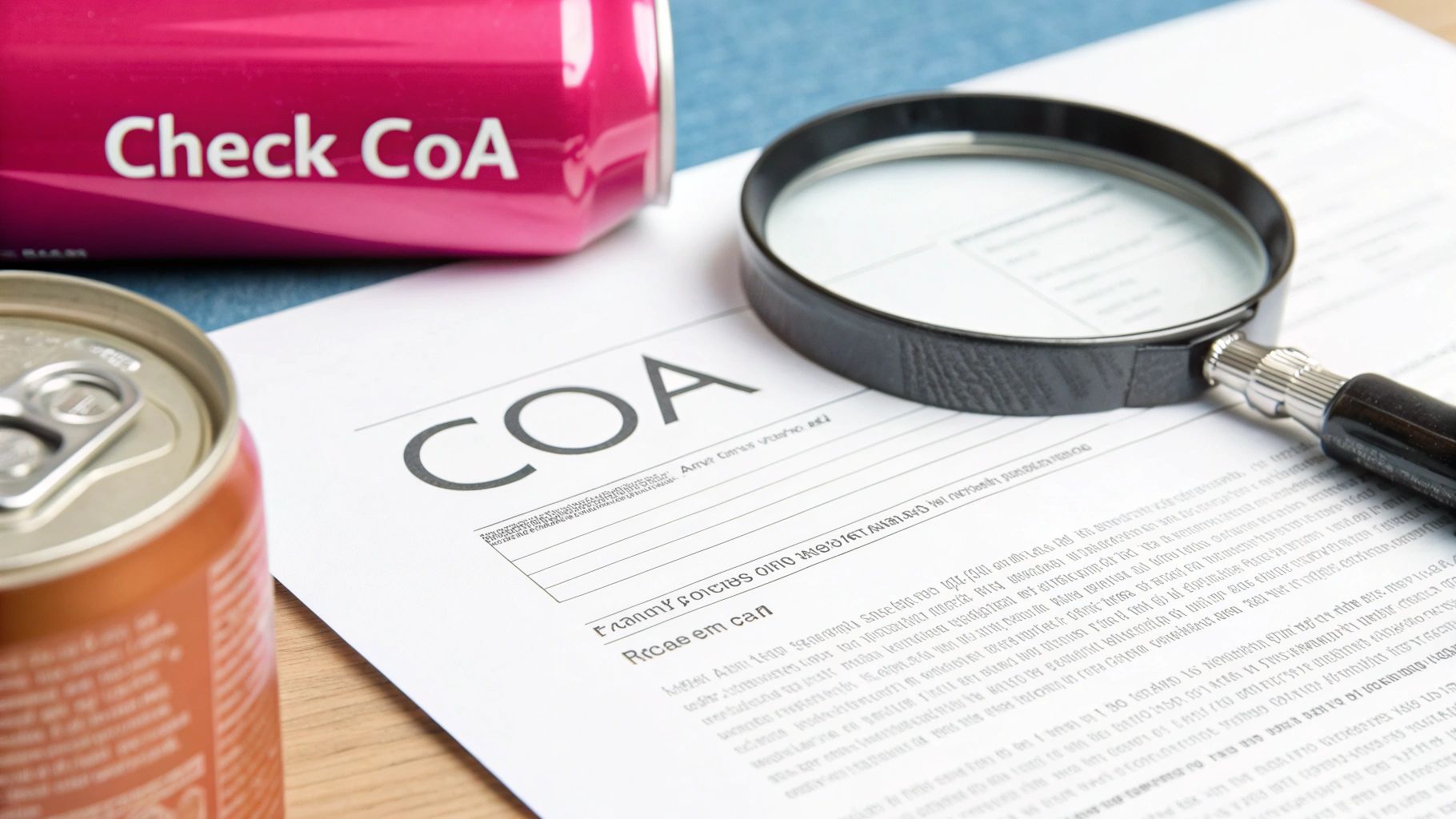
It's called a Certificate of Analysis, or COA.
Your Most Important Tool: The Certificate of Analysis
Think of a COA as the product's official report card, issued by an unbiased third-party lab. It's definitive proof of what’s actually inside that can you’re holding.
Any brand that stands by its product will make its COAs easy to find. You’ll often see a QR code on the can or a clear link on their website. It’s a sign of transparency and a commitment to quality.
What if you can't find one? That’s a massive red flag. A missing COA usually means one of two things: the company never bothered to test its products, or it did test them and didn't like the results. A reputable company like Day Dreamer will be proud to show you their lab reports.
Learning how to quickly scan a COA is the single best skill you can have. It lets you personally confirm that a drink is both legal and safe.
Here's what to look for on any COA:
-
Check the Lab's Info: The first thing you should see is the name and contact information for the testing lab. This proves the report is legitimate and not just something the brand typed up themselves.
-
Match the Batch Number: The report needs to list the specific product name and batch number. Make sure it matches what’s on the can—this confirms you're looking at the results for the exact drink in your hand, not an old or different product.
-
Confirm the THC Potency: This is where you verify legality. Find the cannabinoid profile, which lists all the cannabinoids detected. You're looking for one thing in particular: Delta-9 THC. For the drink to be federally compliant, its concentration must be 0.3% or less by dry weight.
-
Scan for Contaminants: A good COA goes beyond just potency. It also screens for nasty stuff you don’t want to be drinking. Look for these four key safety tests:
- Pesticides: Shows the hemp was grown cleanly.
- Heavy Metals: Checks for toxins like lead, arsenic, and mercury.
- Microbials: Screens for mold, bacteria, and other microorganisms.
- Residual Solvents: Ensures no harmful chemicals are left over from making the THC extract.
By checking the COA, you are taking control of your experience. You are personally verifying that the product is legal, accurately dosed, and free from contaminants, turning you from a passive buyer into an informed consumer.
Red Flags to Watch Out For
Once you get the hang of checking COAs, spotting a shady product becomes second nature. A missing lab report is the most obvious warning sign, but here are a few other things to be wary of.
If a brand makes wild health claims, uses vague language about its ingredients, or just seems to be hiding information, it's probably best to move on.
Shopping for THC drinks is all about asking the right questions. A trustworthy company will have no problem answering them. By sticking with transparent brands that prioritize third-party testing, you can confidently and safely explore everything this amazing new category has to offer.
What's Next for Cannabis Drinks and Regulations?
If there's one thing you can count on in the world of cannabis beverages, it's change.## What's Next for Cannabis Drinks and Regulations?
If there's one thing you can count on in the world of cannabis beverages, it's change. This isn't a static industry. As more people discover THC drinks and the market finds its footing, the laws that govern them are constantly playing catch-up. Both federal agencies and state lawmakers are taking a hard look at the framework laid out by the 2018 Farm Bill, which means the rules of the game are almost guaranteed to shift.
For anyone in this space—from the brands creating new products to the consumers enjoying them—staying on top of these developments is crucial. The FDA still hasn't created a clear, official path for putting hemp-derived cannabinoids into food and drinks, which leaves a huge gray area. This federal silence has essentially forced states to create their own rules, resulting in the messy, state-by-state legal patchwork we have right now.
Keeping an Eye on Regulatory Changes
So, where could the next big change come from? It could happen at the federal level when Congress eventually revisits the Farm Bill. They might finally clarify the "dry weight" loophole as it applies to liquids. Or, we could see more states follow Minnesota's lead and build a regulated system for these drinks. On the flip side, some states might crack down with outright bans, especially if they feel hemp-derived products are undercutting their licensed marijuana programs.
Looking globally gives us a hint of what's to come. This isn't just a U.S. phenomenon.
The global market for cannabis-infused drinks is expected to explode, growing from $1.05 billion in 2025 to a staggering $4.3 billion by 2035. The U.S. is a huge piece of that puzzle, and this kind of rapid growth puts immense pressure on regulators to establish clear rules for an industry that's here to stay. You can dig into more market projections from Fact.MR.
Because the industry is still in a regulatory gray zone, businesses selling legal THC drinks often run into financial hurdles. They're typically labeled 'high-risk' by payment processors. If you're curious about how companies handle these challenges, it’s worth understanding high-risk merchant account solutions.
Your Core Takeaways on THC Drink Legality
Trying to keep all this straight can feel overwhelming, but a few core principles will always be your best guide. As you explore the world of cannabis beverages, just keep these key points in mind:
- The Farm Bill is the Starting Line: The 2018 Farm Bill opened the door by making hemp-derived products with less than 0.3% Delta-9 THC by dry weight federally permissible.
- The Source is Everything: Where the THC comes from—hemp or marijuana—is the single biggest factor determining a drink's legal status and where you can buy it.
- State Law is King: No matter what federal law says, your local and state rules have the final say. Always check what's allowed in your specific area.
- Shop Smart, Stay Safe: Stick with brands that are transparent. Look for up-to-date, third-party lab reports (COAs) to verify a drink is legal, potent, and pure.
With these fundamentals in your back pocket, you have everything you need to confidently and legally navigate the exciting, ever-evolving world of THC-infused drinks.
Your Top Questions About THC Drink Legality, Answered
Alright, so we've waded through the federal and state laws, but what does this all mean for you when you're thinking about trying a THC seltzer? Let's break down some of the most common questions people have.
Can I Order These Drinks Online and Get Them Shipped to My House?
For the most part, yes. Thanks to the 2018 Farm Bill, hemp-derived products are federally legal, which means they can be shipped across state lines just like any other e-commerce product. This is how so many brands can sell directly to consumers online.
But here’s the crucial catch: your local state laws are the final word. A handful of states have put their own restrictions or outright bans on hemp-derived THC, overriding the federal green light. So, before you click that "buy now" button, you absolutely must check your state's and city's regulations.
The Bottom Line: Federal law opens the door for shipping, but your state decides if you can actually walk through it. A quick check of your local laws is non-negotiable.
If I Drink One of These, Will I Fail a Drug Test?
Almost certainly, yes. You have to remember that a standard drug test isn't sophisticated enough to tell the difference between THC from a legal hemp drink and THC from marijuana. It simply flags the presence of THC metabolites in your system.
Even a single drink with a low dose of Delta-9 THC can be more than enough to trigger a positive test. If your job, sport, or any other part of your life involves drug testing, the safest bet is to steer clear of all THC products, including these hemp-derived beverages.
How Much THC Is Actually in One of These Drinks?
Most of the THC drinks you'll find on the shelf contain somewhere between 2mg and 10mg of Delta-9 THC per serving. This range is often called a "microdose" or a standard low dose, perfect for unwinding or adding a little buzz to a social gathering without going overboard.
This is all possible because of the "dry weight" calculation. Since a drink is mostly water, its total weight is pretty high. This allows producers to infuse a meaningful amount of THC while keeping the total concentration well under the legal 0.3% threshold. Always, always check the label or the product's Certificate of Analysis (COA) to know exactly what you're drinking.
Ready to see what clean, compliant cannabis beverages are all about? Day Dreamer makes premium THC & CBD sparkling waters designed for today's world—zero sugar, low calories, and a serious focus on pure, simple ingredients. It's time to discover a better way to unwind.
Explore the Day Dreamer collection now.
The statements made regarding these products have not been evaluated by the Food and Drug Administration. The efficacy of these products has not been confirmed by FDA-approved research. These products are not intended to diagnose, treat, cure, or prevent any disease. All information presented here is not meant as a substitute for, or alternative to, information from healthcare practitioners. Please consult your healthcare professional about potential interactions or other possible complications before using any product. The Federal Food, Drug, and Cosmetic Act requires this notice. All products on this website contain 0.3% THC or less.


