

In a world that seems to be moving faster every day, finding a reliable way to handle daily pressures is more important than ever. For a growing number of people, using CBD for stress relief has become a go-to, plant-based method for finding a sense of balance and calm. It’s a natural compound that offers a way to soothe the mind, often without the significant side effects that can come with other options.
Finding Calm in a World of Chaos
Let's be real—modern life often feels like a non-stop juggling act. Between work demands, family life, and the constant buzz of our phones, feeling overwhelmed is practically the new normal. If you've been looking for a natural way to navigate this pressure, you're definitely not alone. The wider shift toward holistic wellness has put cannabidiol (CBD) firmly in the spotlight as a powerful ally.
This guide is here to meet you where you are. We’ll walk through the science-backed reasons why CBD might help you feel more grounded and centered. It's not about finding an escape hatch from reality; it’s about giving yourself a tool that helps your body’s own systems manage life's curveballs.
Think of CBD as a gentle tune-up for your nervous system. It won’t make your stressors disappear, but it can help turn down the volume on the internal chatter. This gives you the space to respond to challenges with clarity and calm, rather than reacting from a place of anxiety.
The Rise of Natural Stress Solutions
The growing interest in CBD for stress isn't just talk—the numbers back it up. A remarkable 60% of American adults have tried CBD at some point, and a full 49% of them use it specifically to address stress and anxiety. That puts it right behind pain relief as one of the most common reasons for use, highlighting a clear shift toward plant-based support for mental well-being.
This trend signals a collective desire for solutions that work with our bodies, not against them. People are actively seeking out ways to support their mental health that feel proactive and empowering. CBD fits neatly into this mindful approach, offering a subtle yet effective way to maintain a state of equilibrium.
Of course, CBD is just one piece of the puzzle. Combining it with other practices can make a huge difference. It’s always a good idea to explore various relaxation techniques to build a well-rounded toolkit for finding your inner peace.
Why People Choose CBD for Stress Management
Here's a quick look at the main reasons people are incorporating CBD into their daily routines for stress.
| Key Reason | What It Means for You |
|---|---|
| Plant-Based and Natural | You're using a compound derived from the hemp plant, which appeals to those seeking holistic wellness. |
| Non-Intoxicating | Unlike THC, CBD doesn't produce a "high," allowing you to stay clear-headed and functional. |
| Supports Body's Balance | It works with your endocannabinoid system to help regulate mood, sleep, and your stress response. |
| Subtle, Gentle Effects | The goal is a gentle return to equilibrium, not a drastic or sedative feeling. |
| Versatile and Accessible | It comes in many forms (oils, edibles, drinks), making it easy to fit into any lifestyle. |
Ultimately, choosing CBD is about finding a supportive, natural tool to help you navigate the ups and downs of life with a bit more ease.
How CBD Works with Your Body's Stress Response
To really get how CBD can help with stress, we need to talk about a remarkable system already running inside you: the endocannabinoid system (ECS). Think of the ECS as your body's master conductor, constantly working behind the scenes to keep everything in balance—a state scientists call homeostasis.
This incredible network helps regulate just about everything, from your mood and sleep cycle to your appetite and how you feel pain. When chronic stress barges in, it can throw the whole orchestra out of tune, leaving you feeling frazzled, irritable, and completely overwhelmed. This is where CBD for stress relief can step in to offer support.
CBD, or cannabidiol, has a unique way of interacting with your ECS. It doesn't bind to the main receptors the same way THC does. Instead, it acts more like a helpful stage manager, encouraging your body to produce more of its own natural cannabinoids (called endocannabinoids) and slowing down their breakdown. This helps your ECS do its job more effectively.
Taming the Stress Hormone Cortisol
One of the clearest ways CBD seems to influence our stress response is through its effect on cortisol. You've probably heard of cortisol as the "fight or flight" hormone. It’s essential for getting you through a crisis, but when stress is constant, cortisol levels stay high, leading to a whole host of problems like anxiety, poor sleep, and even inflammation.
Early research suggests that CBD may help dial down the secretion of cortisol. By potentially lowering these chronically elevated levels, CBD helps your body shift gears. It can guide your nervous system out of that high-alert, sympathetic state and into a more relaxed, parasympathetic one.
This hormonal balancing act is a big reason why many people report feeling a sense of calm and groundedness after using CBD. It’s not about erasing the source of your stress, but about helping your body react to it in a much healthier, more manageable way.
By influencing the body's stress response at a chemical level, CBD may help reduce cortisol levels. This can help manage feelings of anxiety and promote a sense of overall relaxation, allowing you to better cope with daily pressures.
Enhancing Mood with Serotonin Support
Beyond the ECS and cortisol, CBD also interacts with other key players in the brain. One of the most important is its connection to serotonin receptors. Serotonin is often called the "feel-good" chemical for good reason—it’s a neurotransmitter that plays a huge role in regulating our mood, happiness, and feelings of anxiety.
Low serotonin activity is often linked to conditions like anxiety and depression. While CBD doesn't magically make your body produce more serotonin, it's thought to interact with a specific receptor called the 5-HT1A serotonin receptor. This interaction might help your brain's receptors respond more efficiently to the serotonin you already have.
By supporting better serotonin signaling, CBD can contribute to a more stable, positive mood. It’s a key part of how it works as a tool for managing the mental grind of day-to-day stress.
A Multifaceted Approach to Calm
The real beauty of how CBD works is that it’s not a one-trick pony. It brings support on several fronts to gently nudge your system back toward a state of balance.
- Anxiety Reduction: By interacting with those serotonin receptors, CBD may help quiet the racing thoughts and general unease that so often come with stress.
- Sleep Improvement: We all know the vicious cycle of stress and poor sleep. CBD's calming effects can promote a sense of relaxation, making it easier to fall asleep and get the deep rest your body needs to handle stress.
- Reduced Inflammation: Chronic stress doesn't just feel bad emotionally; it causes physical inflammation. CBD has well-documented anti-inflammatory properties that can help reduce the physical toll stress takes on your body.
Ultimately, CBD works with your body's own systems. It’s a supportive compound that helps your internal conductor find its rhythm again, allowing you to face life's challenges from a place of greater calm and resilience.
Choosing Your Preferred Form of CBD
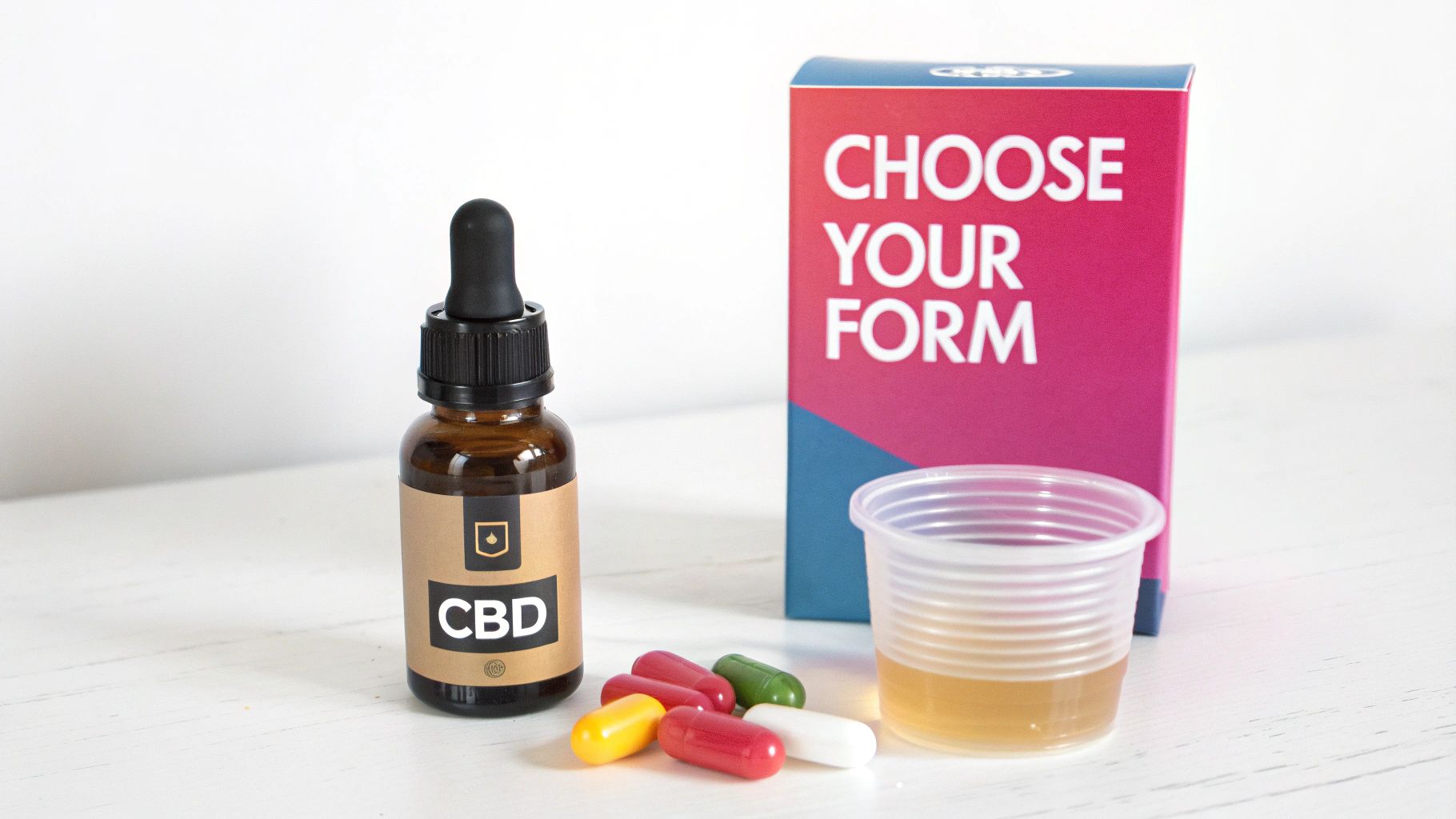
Walking into the world of CBD can feel a little overwhelming at first. You're met with a huge variety of options, from oils and tinctures to gummies and sparkling waters. This isn't a bad thing—it just means there's a perfect match out there for pretty much any lifestyle. The real question isn't "what's the best CBD?" but rather, "what's the best CBD for me?"
The answer really comes down to your daily rhythm and personal preferences. Are you looking for a quick sense of calm before a stressful meeting? Or would you prefer a slow, steady wave of relief to carry you through a hectic day? Figuring this out is the first step.
The market's growth shows just how many people are looking for better ways to unwind. Products for anxiety and stress relief made up 21.2% of all CBD revenue back in 2021, and online sales are on track to reach $4 billion by 2026. It's obvious people are searching for cleaner, more modern solutions to manage the pressures of daily life. You can explore more of these CBD market trends and statistics to see the bigger picture.
Oils and Tinctures: For Fast-Acting Support
When most people think of CBD, they probably picture oils and tinctures. These are liquid extracts that you take by placing a few drops under your tongue and holding them for about 30 to 60 seconds before you swallow.
This method, called sublingual absorption, is popular for a reason. It lets the CBD enter your bloodstream directly through the capillaries under your tongue, bypassing your digestive system entirely. The upside is a much faster onset—you'll typically feel the effects within 15 to 45 minutes, making oils a go-to for handling sudden, intense moments of stress. The only potential downside for some is the natural, earthy taste, though many brands now offer flavored versions.
Edibles and Capsules: For Lasting Calm
If you're after something more discreet and straightforward, edibles and capsules are a fantastic choice. Whether it's gummies or softgels, you get a perfectly measured dose every single time, so there’s no guesswork involved.
Because you're swallowing them, the CBD has to travel through your digestive system and get processed by your liver first. This means it takes longer to feel the effects, usually somewhere between 45 to 90 minutes.
But here’s the trade-off: while they take longer to start working, the calming effects of edibles and capsules last much longer—often for four to six hours. This makes them ideal for sustained, all-day stress management instead of immediate relief.
Beverages: For A Modern Ritual
One of the newest and most exciting ways to enjoy CBD is through infused beverages like sparkling waters. This approach weaves seamlessly into your existing habits, turning a simple refreshment into a moment of functional wellness. It’s like leveling up your afternoon seltzer or evening mocktail.
Similar to edibles, beverages are processed through your digestive system, so the onset time is comparable. What sets them apart is the experience. Cracking open a chilled Day Dreamer sparkling water can be a simple, mindful act of self-care—perfect for decompressing after a long day or for socializing without the alcohol.
This form really resonates with anyone looking for a clean, sophisticated way to incorporate CBD for stress relief into their routine without feeling like they're taking a supplement.
To make things even clearer, here's a side-by-side comparison of these common CBD formats. This should help you choose the one that best suits your personal needs and lifestyle.
Comparing CBD Methods for Stress Relief
| CBD Form | Onset Time | Duration | Best For |
|---|---|---|---|
| Oils & Tinctures | 15–45 minutes | 2–4 hours | Quick relief for acute stress; precise dosing control. |
| Edibles & Capsules | 45–90 minutes | 4–6 hours | Long-lasting, all-day support; discreet and easy to dose. |
| Beverages | 30–90 minutes | 3–5 hours | A social, enjoyable ritual; lifestyle integration. |
Ultimately, the best method is the one you'll actually use and enjoy. Whether you need the rapid response of an oil or the sustained calm of a gummy, there's an option that fits right into your life.
Finding Your CBD Sweet Spot: Dosage, Timing, and Routine
So, how much CBD should you actually take for stress? It’s the first question on everyone's mind, and the answer isn't as simple as reaching for an aspirin. There's no universal dose. The right amount is incredibly personal, and finding it is more about listening to your body than following a chart.
This whole process is about finding your unique “sweet spot”—that perfect dose where you feel the calm you’re looking for without any unwanted side effects. The best and safest way to get there? A simple method called "start low and go slow." It takes the guesswork out of the equation and puts you in control.
Think of it like adding seasoning to a new recipe. You wouldn't just dump in a tablespoon of chili powder. You’d start with a tiny pinch, taste it, and slowly add more until it’s just right. Finding your ideal CBD dose is exactly the same.
The "Start Low and Go Slow" Method
This straightforward, three-step approach is the foundation of a great CBD routine. It’s all about patience and paying attention to your body, ensuring your experience is a good one.
-
Start with a Low Dose: Kick things off with a very small amount, usually somewhere between 5 to 10 milligrams (mg) of CBD per day. This lets your body get acquainted with CBD without being overwhelmed.
-
Monitor and Observe: After that first dose, just pay attention. How do you feel over the next few hours? Is there a subtle sense of ease? Is that tightness in your shoulders a little looser? It can be helpful to jot down a few notes—the dose, the time, and any effects you notice.
-
Adjust Gradually: Give your starting dose a fair shot—stick with it for at least three to five days. If you’re not quite feeling the relief you want, increase your daily dose by another 5 mg. Keep up this slow, steady process until you find that sweet spot: the smallest amount that gives you the best results.
Patience is everything here. Rushing it or starting with a huge dose makes it impossible to figure out what's actually working. The goal isn't to take a lot of CBD; it's to find your effective dose.
What Shapes Your Perfect Dose?
Your ideal dosage depends on a handful of personal factors, which is precisely why a one-size-fits-all number doesn't work. Knowing what these are can help you dial things in.
- Body Weight and Metabolism: Just like with other supplements or even caffeine, your weight and how fast your body processes things matter. Someone with a higher body weight or a quicker metabolism might need a bit more to feel the same effects as someone smaller.
- The Severity of Your Stress: Are you dealing with low-grade daily annoyances or more persistent, heavy-duty stress? The level of support you're looking for will naturally guide how much CBD feels right.
- Your Body's Unique Chemistry: This is the big one. Everyone’s endocannabinoid system is wired a little differently. Your personal sensitivity to CBD will ultimately be the deciding factor.
Timing is Everything: When to Take Your CBD
Once you’ve figured out how much, the next piece of the puzzle is when. You can time your CBD to work for you, whether you need to get ahead of stress or handle it in the moment.
For proactive support, taking your CBD in the morning can help set a calm, focused tone for the day. Think of it as building a buffer, making you feel more equipped to handle whatever comes your way.
For reactive relief, you might turn to CBD right when you need it—like before a big presentation or after a tense meeting. For this, fast-acting options like tinctures are great. Or, you can make it a ritual. Kicking back with a CBD beverage, like a Day Dreamer sparkling water, in the evening is a perfect way to signal to your body and mind that the day is done and it’s time to unwind.
How to Select a High-Quality CBD Product
Walking into the world of CBD can feel a bit like navigating a huge, unfamiliar grocery store. There are countless brands, flashy labels, and everyone seems to be shouting for your attention. It's easy to get lost. But honestly, becoming a smart CBD shopper is simpler than you might think. It all comes down to knowing what to look for, so you can be sure you're getting a safe, effective product that actually helps with your stress.
Think of it this way: you're becoming a detective for your own well-being. You’re not just grabbing something off the shelf; you’re making an investment in your health. A little bit of know-how will empower you to see past all the marketing hype and choose with confidence. You'll know that what's inside the bottle is just as good as what’s promised on the outside.
The Three Main Types of CBD
Before you can really dial in on a product, you need to get the basics down. There are three main types of CBD extract, and each one offers a slightly different experience because of the unique blend of compounds it contains from the hemp plant. Understanding the difference is your first step to finding the perfect match for your goals.
-
Full-Spectrum CBD: This is the whole-plant option. It contains all the goodies naturally found in hemp—CBD, of course, but also minor cannabinoids, terpenes, and a tiny, legally compliant amount of THC (always under 0.3%). Many experts believe these compounds create an "entourage effect," where they all work together to produce better results than any single one could on its own.
-
Broad-Spectrum CBD: Think of this as the middle ground. It has all those beneficial cannabinoids and terpenes you find in full-spectrum, but the THC has been completely removed. It’s a great choice if you want the synergy of the entourage effect but need to avoid THC for personal or professional reasons.
-
CBD Isolate: This is the purest form of CBD you can get. Everything else from the plant has been stripped away, leaving a product that is 99% pure cannabidiol. This is ideal for people who might be sensitive to other cannabinoids or simply want to be absolutely certain there is zero THC in their product.
Your Guide to Reading a COA
The single most important document in the CBD world is the Certificate of Analysis, or COA. This is just a fancy name for a lab report from an independent, third-party lab that proves what's in the product. Any brand worth its salt will make its COAs easy to find, often with a simple QR code right on the package.
A COA might look a little technical at first glance, but you only need to check a few key things to make sure a product is clean and accurately labeled.
What to Check on a COA:
-
Cannabinoid Potency: Find the section that lists out all the cannabinoids (CBD, THC, CBG, etc.). First, does the amount of CBD listed match what the label says? This is also where you'll confirm for full-spectrum products that the THC is below that legal 0.3% limit.
-
Pesticide Analysis: Hemp is a plant, and like any crop, it can be exposed to pesticides. This part of the test ensures the final product is free from any harmful chemicals that could undermine its benefits.
-
Heavy Metals Testing: This test confirms the product is free from nasty contaminants like lead, mercury, arsenic, and cadmium. This is a crucial check for any clean, high-quality product.
-
Solvent and Microbiological Screens: These tests look for any leftover solvents from the extraction process and check for things you definitely don’t want, like mold or bacteria.
If a brand can't—or won't—provide a recent, comprehensive COA from a third-party lab, that's a massive red flag. Transparency isn't just a buzzword here; it's the non-negotiable standard for safety and quality.
By taking just a few minutes to get familiar with these basics, you can go from being a hopeful buyer to a truly informed consumer. This knowledge doesn't just help you find a great product for stress; it gives you peace of mind. You can finally relax knowing you’ve chosen something clean, safe, and effective, which lets you focus on what really matters—finding your calm.
Integrating CBD into a Holistic Wellness Plan
While CBD can be an incredible ally against daily pressures, it's rarely a magic bullet. For real, lasting results, it’s best to see it as one valuable player on a much larger wellness team. Lasting resilience doesn't come from a single source; it's built by supporting your mind and body from every angle.
Think of it this way: using CBD for stress relief becomes even more effective when you pair it with other healthy habits. This creates a powerful synergy where each element makes the others work better, helping you build a life that feels more balanced and in control.
Building Your Wellness Toolkit
When you weave CBD into a routine with other proven stress-management techniques, you can amplify its calming benefits. The idea is to create a foundation of habits that consistently nourish you, with CBD acting as a support system to enhance those efforts.
Here are a few practices that pair beautifully with CBD:
-
Mindfulness and Meditation: These techniques are all about training your brain to stay present, which robs anxious thoughts of their power. Taking a little CBD before you sit down to meditate can help quiet that mental chatter, making it easier to sink into a calm, focused state.
-
Regular Physical Activity: You can't beat exercise for a natural mood lift. It floods your body with feel-good endorphins and helps burn off stress hormones. Even a brisk walk or a gentle yoga session can make a huge difference, and CBD can aid post-workout recovery by helping with inflammation.
-
Balanced Nutrition: What you put on your plate has a direct line to your mood and mental clarity. A diet centered on whole foods gives your brain the high-quality fuel it needs to manage stress, creating a stable internal environment where CBD can do its best work.
Think of your wellness plan like building a sturdy chair. Each leg—CBD, exercise, mindfulness, and nutrition—provides crucial support. If you only rely on one, the whole thing feels wobbly. But with all four firmly in place, you’ve got a solid base to rest on.
Expanding Your Support System
Creating a truly robust approach to well-being means staying open to other natural compounds that work in harmony with your body. While CBD is a fantastic starting point, it’s not the only plant-based option known for its stress-reducing properties.
For instance, ashwagandha is a well-known adaptogenic herb that helps the body become more resilient to stressors. You also have essential oils like lavender and chamomile, which have long been used in aromatherapy for their calming effects. If you're curious to learn more, you can find great resources covering Australia's Best Supplements for Stress and Anxiety to discover what else might fit into your routine.
Ultimately, integrating CBD is about seeing the bigger picture. It’s a catalyst that can make your other wellness habits even more effective, helping you cultivate a life where you feel centered, in control, and ready for whatever comes your way.
Common Questions About CBD for Stress
It's totally normal to have questions when you're thinking about trying CBD for stress. Getting solid, straightforward answers is the best way to feel comfortable and confident. Let's walk through a few of the things people ask most often.
This section is all about giving you those quick, practical insights so you can decide what's right for your own wellness routine.
Will Taking CBD for Stress Make Me Feel High?
This is usually the first question on everyone's mind, and the answer is a simple, resounding no. CBD, or cannabidiol, is non-psychoactive. It won't produce the "high" that people associate with THC.
In fact, for a CBD product to be legal, it has to be derived from hemp and contain less than 0.3% THC. That’s a tiny, trace amount—nowhere near enough to cause impairment. What people usually feel is a sense of gentle calm, a bit of relaxation, or even clearer focus. Think of it as finding your balance, not checking out.
How Quickly Will I Feel the Effects of CBD?
How long it takes to feel the effects really comes down to how you take it. The method you choose changes how fast your body can absorb the compound.
- Sublingual Oils and Tinctures: When you place CBD oil under your tongue, it gets absorbed directly into your bloodstream. This is one of the fastest ways, and you'll typically feel the effects within 15 to 30 minutes.
- Edibles, Capsules, and Beverages: Anything you swallow has to go through your digestive system first. This takes a little more time, so expect to feel something in about 45 to 90 minutes. The upside? The calming sensation often sticks around longer.
Can I Take CBD with My Other Medications?
This is a really important one. CBD can interact with certain prescription medications. The main concern is how it affects enzymes in your liver, which are responsible for breaking down many common drugs—especially those that come with a "grapefruit warning."
Because it can influence liver enzymes, CBD may alter the concentration of other drugs in your system. It is absolutely essential to consult with your doctor before adding CBD to your routine if you are taking any medications. This conversation ensures your approach to stress relief is both safe and effective.
Your doctor is the only one who can give you personalized advice based on your health and prescriptions. A quick chat can give you the peace of mind to move forward safely.
Ready to find your moment of calm in a can? Day Dreamer offers a sophisticated way to unwind with our clean, hemp-derived CBD + Delta-9 sparkling waters. Crafted for clarity and good times, it's the perfect lifestyle upgrade. Discover your new favorite ritual at https://enjoydaydreamer.com.
The statements made regarding these products have not been evaluated by the Food and Drug Administration. The efficacy of these products has not been confirmed by FDA-approved research. These products are not intended to diagnose, treat, cure, or prevent any disease. All information presented here is not meant as a substitute for, or alternative to, information from healthcare practitioners. Please consult your healthcare professional about potential interactions or other possible complications before using any product. The Federal Food, Drug, and Cosmetic Act requires this notice. All products on this website contain 0.3% THC or less.


