
Before you can successfully change your relationship with alcohol, you first need to get brutally honest about what that relationship actually looks like. This isn't about judgment; it's about gaining the kind of self-awareness that fuels real, lasting change. Think of it as gathering intel for a big project—the more you know, the better your plan will be.
Getting Real About Your Relationship With Alcohol
Most of us drink on autopilot. A glass of wine after work, a beer with friends on Friday—it just happens. The first step to quitting on your own is to switch off that autopilot and start paying attention. For a little while, your job is simply to observe, like a researcher studying a fascinating subject: yourself.
This isn't about forcing yourself to stop just yet. It's about understanding the why, when, and how behind every drink. This clarity will be your most powerful ally as you move forward.
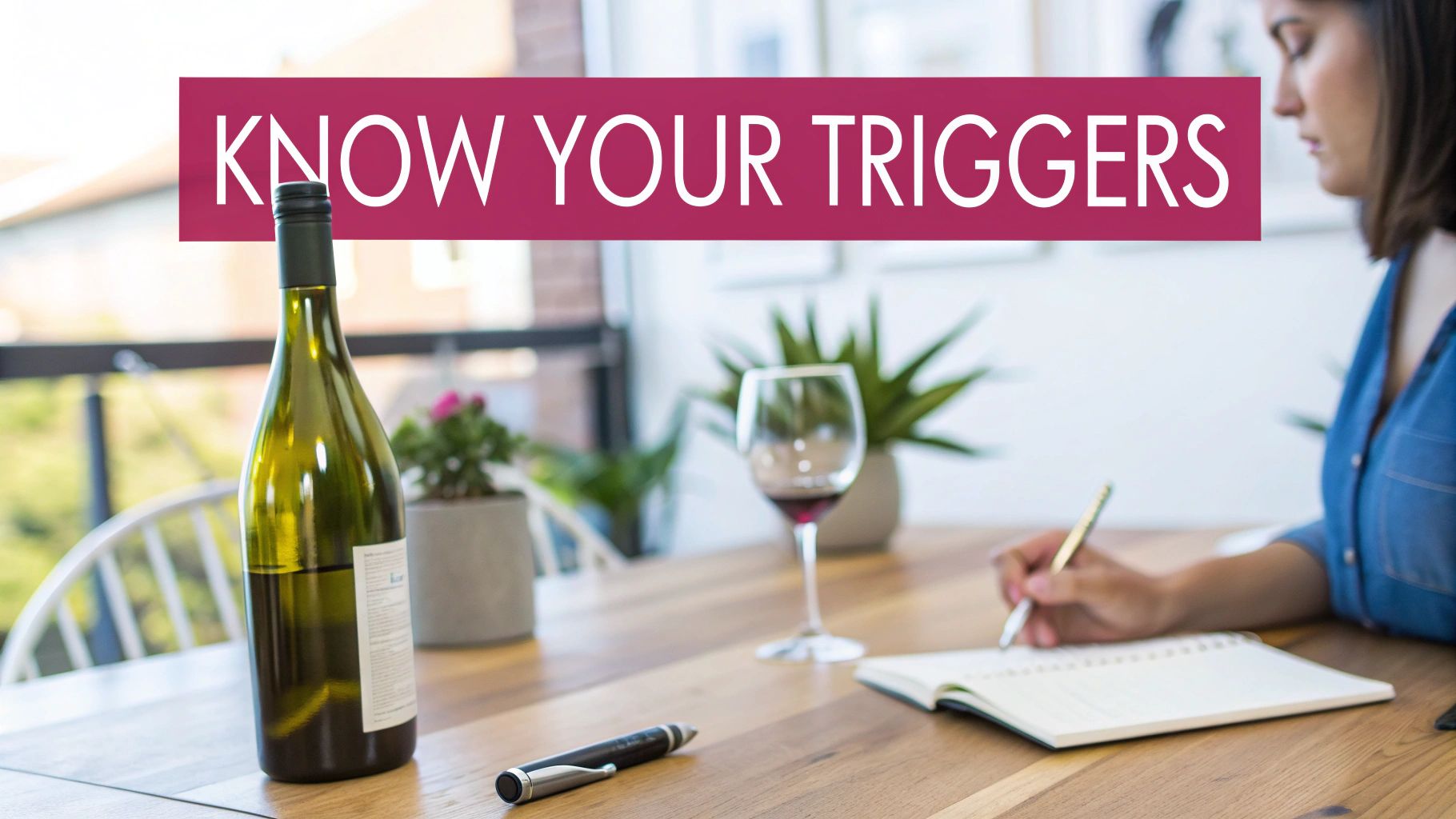
Uncovering Your Personal Drinking Patterns
To truly understand your habits, you need to see them written down. For the next week or two, keep a simple, honest log of your drinking. You can use a dedicated notebook or just the notes app on your phone.
The goal isn't to make you feel bad; it's to collect clues. Each time you have a drink, make a quick note of:
- What and how much you drank: Was it one light beer or three IPAs? A standard 5oz pour of wine or was the glass filled to the brim?
- The time and place: Were you at home on the couch? Out at a specific restaurant? Note the time of day and your surroundings.
- How you felt right before: This one is huge. Were you bored, stressed from a meeting, lonely, or celebrating something?
- Who you were with: Were you drinking alone? With a partner? Or with that one group of friends where drinking is always the main event?
After just a week of this, you’ll start to see patterns you never noticed before. Maybe stress at work is a bigger driver than you thought, or perhaps weekend boredom is your real Achilles' heel. This information is pure gold.
Identifying Your Unique Triggers
Triggers are those specific cues—feelings, places, people, or thoughts—that flick the "I need a drink" switch in your brain. Pinpointing them is a game-changer because once you see them coming, you can prepare a different response.
Everyone's triggers are different, but they usually fall into a few buckets:
- Emotional Triggers: Feeling anxious about a deadline, sad after an argument, or even just really happy after a good day.
- Social Triggers: Attending parties where everyone is drinking, happy hour with coworkers, or feeling pressure to "keep up."
- Environmental Triggers: Driving past your favorite bar, seeing a liquor ad on TV, or even just the sound of a bottle opening.
- Mental Triggers: Those automatic thoughts like, "I've earned this," or believing you need a drink to unwind or be social.
The table below can help you start organizing your thoughts and recognizing these patterns in your own life.
Self-Assessment Drinking Pattern Checklist
Use this checklist to reflect on your drinking habits over the past month to identify patterns and triggers.
| Question to Consider | Your Reflection (Examples) |
|---|---|
| When do I most often crave a drink? | “Usually around 5:30 PM after a stressful workday.” or “Friday nights when I don’t have any plans.” |
| What emotions typically lead me to drink? | “Anxiety is a big one. Also, boredom and sometimes loneliness.” |
| Are there specific people I almost always drink with? | “My old college friends. It feels like our main activity.” or “My partner and I always open a bottle of wine with dinner.” |
| What places or situations make me want to drink? | “Going to concerts or sporting events.” or “Just being at home alone on a Saturday night.” |
| What thoughts go through my head right before I decide to have a drink? | “‘One drink won’t hurt.’ or ‘I need this to relax and turn my brain off.’” |
Taking the time to fill this out, even just mentally, gives you a real, tangible map of your own habits.
By understanding these cues, you can begin to break the automatic link between the trigger and the drink. You gain the power to choose a different response.
This personal inventory is the foundation of everything that comes next. And the stakes are high. The World Health Organization reports that alcohol contributes to over 3 million deaths each year globally. In the United States, alcohol-related deaths have surged by 70% in the last decade alone, a sobering reminder of the risks. You can read more about these alcohol abuse statistics and their impact. Being honest with yourself now gives you the motivation to build a healthier future.
Building Your Personal Quit Plan
Alright, you’ve done the hard work of looking at your drinking habits and identifying your triggers. Now comes the part where we turn that insight into a real, practical plan. Think of this less as a rigid set of rules and more as a roadmap—something to guide you when the path gets a little blurry.
This isn't just about "not drinking." It's about strategically building a new way of living that feels better and more authentic. We’ll do this by setting goals that actually mean something to you, tweaking your environment to make things easier, and deciding on the safest way to start this journey.
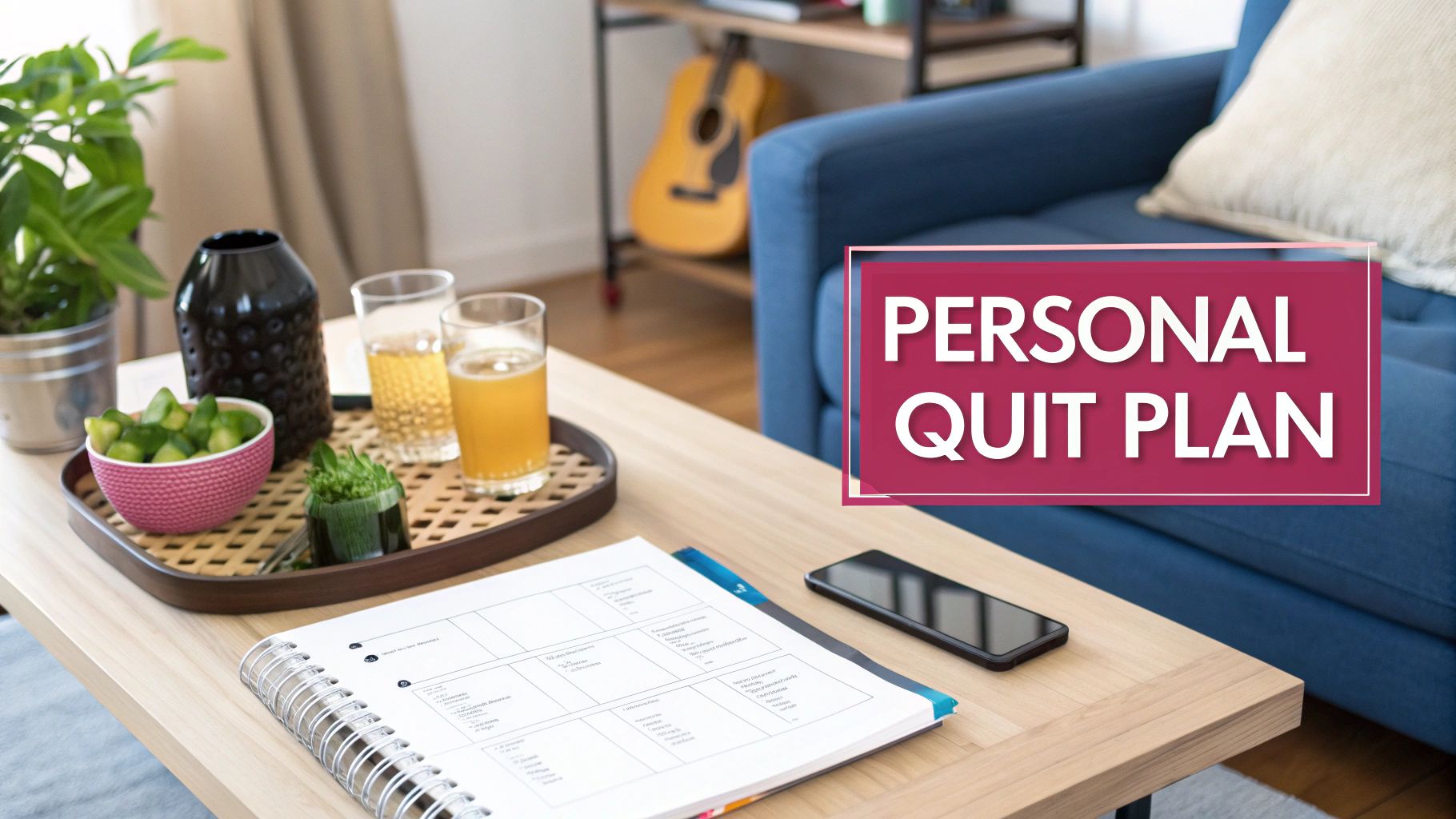
Set Meaningful and Realistic Goals
Let's be honest: "I should stop" isn't going to cut it when a powerful craving hits. To get through the tough moments, you need a deeply personal "why." Your goals are your anchor, so they need to be specific and genuinely inspiring to you.
Forget vague ideas like "be healthier." What does that actually look like in your life? Let's get specific.
-
Short-Term Wins (The First Few Weeks):
- "Wake up without a hangover for one full week."
- "Save the $75 I normally spend on alcohol this weekend and put it toward [something you want]."
- "Be totally present for movie night with the kids, without feeling fuzzy."
-
The Big Picture (What You're Working Toward):
- "Lose the 15 pounds I've gained from drinking and feel comfortable in my own skin again."
- "Get my energy back so I can start training for that 5k I've been talking about."
- "Work on rebuilding trust in my relationship with [partner/friend/family member]."
Write these down. Seriously. Stick them on your bathroom mirror, make them your phone's lock screen—put them somewhere you can't ignore. Seeing them every day is a powerful reminder of what you’re fighting for.
Engineer Your Environment for Success
Your home needs to be your safe harbor, not a minefield of temptation. One of the most effective things you can do right away is to create an alcohol-free space that supports your new life.
Start by going through your house and getting rid of all the alcohol. The beer in the back of the fridge, that half-full bottle of wine, the dusty liquor cabinet—it all has to go. If you live with others, have an honest chat about your goals and ask for their support, even if it just means they keep their stuff out of sight.
Next, it’s time to stock up on good alternatives. You need a go-to beverage you genuinely enjoy for those moments you'd usually reach for a drink.
Pro-Tip: Create a "sobriety toolkit" of appealing drinks. Think sparkling water with fresh lime, interesting herbal teas, fancy craft sodas, or some of the high-quality non-alcoholic beers and spirits on the market now. Having these ready to go eliminates the "what do I drink now?" panic.
This simple bit of prep work makes a world of difference. When that 5 PM stress hits, reaching for a cold, refreshing seltzer can become your new, healthier ritual.
Tapering Off vs. Quitting Cold Turkey
This is a big one, and it's all about safety. Deciding whether to stop drinking gradually or all at once depends entirely on how much and how often you've been drinking.
-
Quitting Cold Turkey (Abrupt Cessation): This can work well for people who drink moderately or less frequently. If you’re a weekend binge drinker or someone who has a couple of glasses of wine with dinner, you might be able to stop completely without major physical issues.
-
Tapering Off (Gradual Reduction): If you are a heavy or daily drinker, quitting abruptly can be dangerous. Alcohol withdrawal is serious and can lead to life-threatening symptoms, like seizures. Tapering means you slowly reduce how much you drink over a few days or weeks, giving your body a chance to adjust.
A tapering plan might look like cutting back by one drink each day, or adding in a couple of "no-drink" days during the week. But if you have been a heavy, long-term drinker, the safest way to do this is with a doctor's guidance. They can help you create a plan that minimizes the risks of severe withdrawal.
Ultimately, remember that your quit plan is a living document. It's about setting the stage for success by clarifying your motivation, taking control of your surroundings, and choosing the safest possible path to begin.
Navigating Withdrawal and Early Cravings
Let's be real: the first few days and weeks after you stop drinking can be the toughest part of the whole journey. Your mind and body are essentially recalibrating, and that process often kicks up a storm of physical withdrawal symptoms and intense psychological cravings. This is when you need to be prepared, patient, and incredibly kind to yourself.
Knowing what's coming can make this phase feel so much less overwhelming. The goal here isn’t to just grit your teeth and power through. It's about using smart, practical strategies to handle whatever comes your way. Getting through this initial period is how you build a solid foundation for the life you want.
What to Expect from Alcohol Withdrawal
When your body gets used to having alcohol around, it's going to put up a fight when it’s gone. That reaction is withdrawal, and the symptoms can range from mildly annoying to downright serious.
For many, the common, milder symptoms feel like a hangover from hell. You might experience:
- Anxiety and Irritability: Feeling jumpy, on edge, or snapping at things that normally wouldn’t bother you is very common.
- Headaches and Fatigue: A dull, persistent headache and a sense of bone-deep tiredness often set in.
- Shakiness: You might notice your hands have a slight tremor.
- Sweating and Nausea: Feeling clammy and having an upset stomach are typical as your body detoxes.
- Insomnia: Tossing and turning or waking up constantly is a frequent and frustrating complaint.
For people who were moderate drinkers, these symptoms usually peak within 24 to 72 hours and then start to fade over the next week or so. But it's absolutely crucial to know when withdrawal crosses the line into a medical emergency.
Safety First: If you start experiencing severe symptoms like a high fever, deep confusion, hallucinations, or seizures, you need immediate medical attention. These are potential signs of a life-threatening condition called delirium tremens (DTs), which requires professional care. Quitting on your own is only a safe option if your withdrawal is manageable.
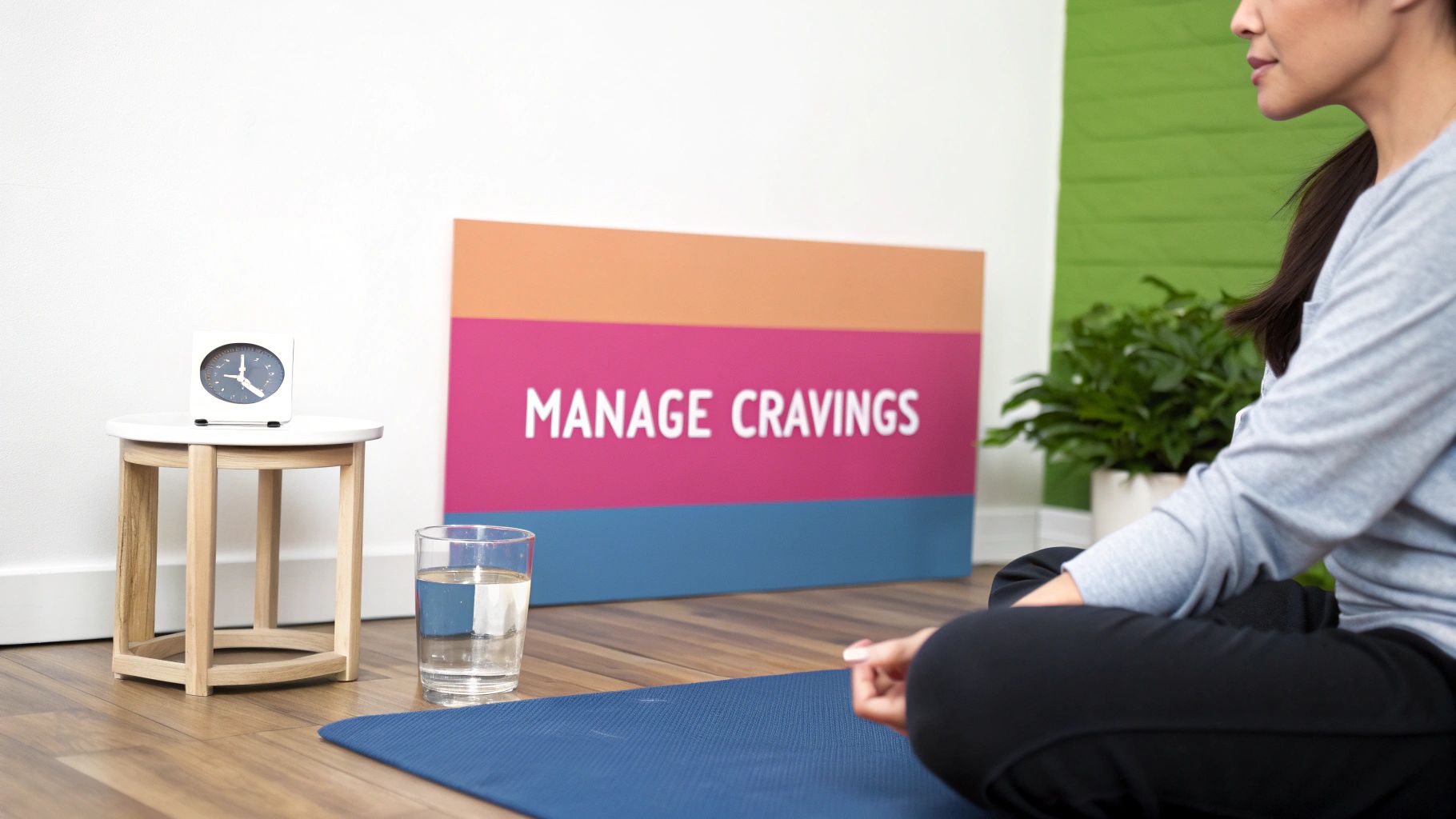
Practical Techniques to Manage Cravings
Cravings are those intense, sometimes all-consuming urges to drink. They're a completely normal part of this process, but you need a plan for them. Instead of trying to fight them head-on, the trick is to learn how to ride them out.
One of the most effective techniques I've seen is called urge surfing. Think of your craving as an ocean wave. It builds, it peaks, and then it always subsides on its own. Your job is to stay on your metaphorical surfboard until it passes. The good news? Cravings rarely last more than 15-20 minutes if you don’t give in to them.
Here are a few in-the-moment strategies that really work:
- Delay and Distract: The second a craving hits, tell yourself, "I'll just wait 15 minutes." Then, immediately get busy. Go for a brisk walk around the block, call a friend to talk about anything but drinking, or tackle a small chore you've been avoiding.
- Engage Your Senses (The 5-4-3-2-1 Method): This is a grounding technique that pulls you back into the present moment. Name five things you can see, four things you can feel, three things you can hear, two things you can smell, and one thing you can taste. It shifts your focus from the internal noise of the craving to your external environment.
- Play the Tape Through: This one is powerful. When you feel the urge, don't just think about the temporary relief of that first sip. Play the entire tape through to the end—the hangover, the anxiety, the regret, and the disappointment you'll feel with yourself tomorrow. Remember the full picture.
Building New Routines and Healthy Substitutes
Alcohol often fills a specific time or role in our daily lives—the drink to unwind after work, the glass of wine with dinner, the beer while watching a game. That leaves a void, and proactively filling it with new, healthier habits is one of the best ways to keep cravings from taking over.
Try creating a new "wind-down" ritual. Instead of reaching for a drink, you could:
- Brew a really nice cup of calming herbal tea.
- Put on a specific podcast or a relaxing playlist.
- Spend 10 minutes doing some gentle stretching or yoga.
- Take a long, hot shower or a bath with Epsom salts.
Having great non-alcoholic options on hand is also a total game-changer. Stock your fridge with things you genuinely enjoy, like sparkling water with a squeeze of lime, kombucha, or interesting craft sodas. The simple act of sipping a cold, flavorful drink can often satisfy that ritualistic part of the habit, no alcohol needed.
The early days are a challenge, but remember that the intensity of cravings often peaks within the first 72 hours. Stick with it. It’s worth noting that studies on alcohol abuse statistics and recovery rates show that after one year, 35% of people who quit on their own have outcomes matching those who went through formal treatment. You can absolutely do this.
Creating a Fulfilling Sober Lifestyle
Staying sober for the long haul isn't just about what you remove from your life; it's about what you add to it. The real magic happens when you start building a life you're genuinely excited about—a life you don't feel the need to escape from. This is the shift from just surviving sobriety to truly thriving in it.
This next chapter is all about intentionally redesigning your daily routines and rewiring your automatic responses to life's curveballs. It’s about finding new, healthy ways to navigate the stress, boredom, or social anxiety that a drink used to cover up.

Developing Healthy Coping Mechanisms
For many of us, alcohol becomes a shortcut for dealing with tough emotions. Stressed after a long day? A drink feels like the answer. Lonely on a Friday night? Alcohol can feel like a companion. To build a lasting sober life, you need a new toolkit of healthier coping strategies.
This doesn't have to be some monumental task. Start small and figure out what actually works for you. Your new go-to stress relievers could be simple things like:
- Physical Movement: Even a quick, brisk walk around the block when you feel that tension rising can work wonders.
- Mindfulness Practices: Taking just five minutes for a guided meditation or some deep breathing exercises can completely reset your nervous system.
- Creative Outlets: Putting your feelings into a journal, sketching, or even just noodling on a guitar can channel that energy into something productive.
The trick is to have these alternatives ready before the craving hits. When you feel that old, familiar urge bubbling up, you can consciously choose a new, healthier response instead of defaulting to the old one.
Rediscovering Hobbies and Passions
Let's be honest: boredom can be a massive trigger. Once you stop drinking, you’ll probably be surprised by how much extra time and mental energy you have. This is a golden opportunity to fill that space with things that genuinely light you up.
What did you love to do before drinking took center stage? Maybe it was hiking, painting, getting lost in a good book, or playing a sport. Now is the perfect time to reconnect with those old joys. Or, maybe it's time to try something completely new you've always been curious about.
By actively replacing the habit of drinking with new, engaging activities, you're doing more than just distracting yourself. You're fundamentally rewiring your brain and restructuring your life, making alcohol's role smaller and smaller.
This isn’t just a nice idea—it's backed by solid research. Behavioral studies show that swapping drinking habits for fulfilling activities can cut the risk of relapse by up to 40%. You can dig deeper into these findings on relapse prevention to see the data for yourself.
Navigating Social Situations with Confidence
Social events can feel like walking through a minefield when you first quit. That fear of being pressured or just feeling awkward is completely valid, but it's also something you can absolutely manage with a bit of prep. A solid game plan is your best friend here.
First off, always have a non-alcoholic drink in your hand. It's a simple trick, but it works—it stops people from offering you one and gives you something to hold.
More importantly, have a few go-to replies ready for when someone inevitably asks why you aren't drinking. You don't owe anyone your life story. Keep it simple, direct, and polite.
Simple Scripts for Declining a Drink:
| Scenario | Confident Response |
|---|---|
| A casual offer from a friend | "No thanks, I'm good for now." or "I'm sticking with sparkling water tonight." |
| Someone being a bit pushy | "I appreciate it, but I'm not drinking." (Just repeat it if you have to.) |
| If you feel comfortable sharing | "I'm taking a break from alcohol for health reasons, and honestly, I'm feeling great." |
Remember, this is your choice. The people who matter will respect it. I promise, navigating these situations gets so much easier with practice. Before you know it, you'll be enjoying parties and dinners out even more, all with a clear head.
Building Your Support System and Relapse Plan
The idea of "quitting drinking on your own" can feel a little isolating, but it doesn't have to be. While you're absolutely in the driver's seat of your journey, going it completely alone is rarely the most effective strategy. The real power comes from intentionally building a support network—surrounding yourself with people and resources that genuinely have your back.
This is also the point where we switch from defense to offense. Instead of just reacting to cravings and tough moments as they come, we're going to get proactive and build a solid relapse prevention plan. Think of it as your personal playbook for navigating those inevitable tricky situations.
Assembling Your Personal Support Team
Your first line of support is often right there in your existing circle of friends and family. The trick is to be deliberate about who you let into this core group. Think about a few people you truly trust—the ones who are supportive, won't judge, and genuinely want to see you thrive.
Once you've identified them, have an honest and direct conversation. You don't need to pour out every detail of your story. Often, a simple, "Hey, I'm making some big changes for my health and I've decided to stop drinking. I'd really appreciate your support on this," is more than enough. It sets a clear boundary and lets them know how they can help, whether that’s suggesting coffee instead of cocktails or just being an ear when you need to talk.
Beyond your immediate circle, don't overlook the power of digital connection.
- Online Communities: Anonymous forums like Reddit’s r/stopdrinking offer incredible 24/7 peer support from thousands of people who are in the exact same boat.
- Sobriety Apps: There are fantastic apps that help you track progress, connect with others, and get a daily dose of motivation. These accountability tools really work; users often report 25% longer streaks of sobriety. Some studies even show that daily monitoring can slash alcohol consumption by 30-50% in just a few weeks.
- Virtual Meetings: Groups like SMART Recovery and Tempest offer online meetings that give you structured support without ever having to leave your home.
Crafting a Proactive Relapse Prevention Plan
A relapse plan isn't about planning to fail; it's about being too prepared to fail. It's a strategy you design when you're feeling clear-headed and strong, outlining exactly what you'll do when a craving hits or you find yourself in a high-risk situation. The goal is to make your next move almost automatic, so you don't have to rely on willpower in a moment of weakness.
So, what does this look like in practice? A solid plan starts with mapping out your personal landscape. You need to get really honest with yourself about what trips you up.
Here is a simple framework to get you started. Take some time to actually write this down—the act of putting pen to paper (or fingers to keyboard) makes it real.
Your Relapse Prevention Plan
A template to help you identify triggers and create a proactive plan for managing high-risk situations.
| My High-Risk Triggers | Early Warning Signs | My Action Plan |
|---|---|---|
| Example: Friday afternoon after a stressful work week. | Feeling irritable, restless, "I deserve a drink" thinking. | Leave work on time. Drive a different route home. Go for a 30-min walk with a podcast. Call my sister. |
| Example: Social gatherings where everyone else is drinking. | Feeling anxious, left out, focusing on others' drinks. | Have my NA drink ready. Set a time limit for staying. Have an exit excuse prepared. Text a support friend. |
| Example: Feeling lonely or bored on a weekend night. | Endless scrolling, romanticizing past drinking days. | Go to a movie. Work on my hobby project. Do an at-home yoga video. Journal about my "why". |
Your own triggers and plans will be unique to you. The key is to be specific and actionable. A vague idea like "I'll just resist" is not a plan. A detailed, step-by-step escape route is.
Having a pre-written plan short-circuits that internal negotiation that often leads to a slip. You’ve already made the decision; now you just have to follow your own instructions.
Even with the best-laid plans, it's wise to be self-aware. As you navigate this path, it's important to recognize when professional support might be beneficial, even if you're committed to managing your recovery on your own terms.
Reframing Relapse as a Learning Opportunity
Let's be clear: if a slip happens, it is not a moral failing. It doesn't mean you're back at square one, and it certainly doesn't erase all the progress you've made.
The most powerful thing you can do is reframe it. A slip is just data. It’s a signal that shows you a weak spot in your plan that needs a little reinforcement.
Instead of letting shame and guilt take over, get curious. Ask yourself: What really happened here? What trigger did I underestimate? What can I add to my plan to handle this exact situation better next time?
The goal is to get back on track immediately. Don't let one drink turn into a week-long slide. The moment you realize what's happened, reach out to someone on your support team, review your relapse plan, and reconnect with your "why." Every single day you recommit is a win.
Answering Your Biggest Questions About Quitting Drinking
When you decide to stop drinking on your own, a flood of questions is completely normal. You're sorting through a ton of information, trying to set realistic expectations, and figuring out what this whole journey actually looks like. Let's tackle some of the most common concerns head-on.
Can I Really Do This by Myself?
This is usually the first thing people ask, and the answer is absolutely, yes. While formal treatment programs are a fantastic resource for many, they aren't the only way to get sober. You might be surprised to learn just how many people successfully quit drinking on their own.
Believe it or not, long-term studies have shown that about 92% of people who recover from an alcohol use disorder do so without entering a formal treatment program. They get there through sheer determination and their own personalized strategies. These alcohol abuse recovery statistics really drive home the power of personal commitment.
What Should I Do If I Feel Overwhelmed?
Feeling overwhelmed is part of the process, especially early on. It’s a sign that you’re making a major, positive change. The trick is to have a simple game plan ready for when that feeling hits, so it doesn't knock you off course.
Instead of letting the panic set in, ground yourself with a quick, simple action:
- Just breathe. Seriously. Take five slow, deep breaths. It’s amazing how this can calm your nervous system right down.
- Get moving. A simple change of scenery can work wonders. Step outside, walk into another room, or do a few stretches.
- Reach out. You don't have to carry the weight alone. Fire off a quick text to a friend who gets it, or hop onto an online community like the r/stopdrinking subreddit.
The feeling will pass. The goal isn't to avoid feeling overwhelmed forever; it's to build the skills to handle it without reaching for a drink.
Are Non-Alcoholic Drinks a Good Idea?
This is one of those things where there’s no universal right answer—it’s deeply personal. For a lot of people, non-alcoholic (NA) beers, wines, and mocktails are a total lifesaver. They can satisfy that habitual, ritualistic part of drinking, like cracking open a cold one after a long day, just without the booze.
On the other hand, for some people, these drinks are a major trigger. They can taste just similar enough to make the craving for the real thing unbearable. It all comes down to being brutally honest with yourself about how they affect you. It's helpful to get informed by resources understanding the nuances of non-alcoholic beer to see how it might fit into your plan.
The bottom line: If an NA drink helps you feel normal in a social setting and keeps you on track, it's a great tool. If it just makes you want the real deal, it's best to steer clear and find another substitute.
How Long Will It Take to Feel Better?
Patience will be your best friend here. The toughest physical withdrawal symptoms usually hit their peak within 72 hours and start to fade within a week or two for most people. The mental and emotional side of things, however, is more of a marathon than a sprint.
It's common to go through a "pink cloud" phase early on where you feel euphoric, but this can be followed by periods of feeling down, irritable, or just plain flat. That's all just your brain and body chemistry getting back to a healthy baseline. Most people say they notice a real, lasting improvement in their mood and energy after the first few months. Hang in there—what's waiting for you on the other side is more than worth it.


