
Ready to rethink your relationship with alcohol? The secret to actually drinking less isn't about white-knuckling it through cravings. It’s about getting honest about your triggers, making a real plan you can stick to, and finding new drinks you’re genuinely excited about. This isn't a guide to deprivation; it's about taking back control and finding a healthier, more intentional balance that feels right for you.
Your Starting Point for Mindful Drinking
Making the decision to cut back is a huge first step toward feeling better, both mentally and physically. Maybe you’re a college student trying to navigate a party-heavy social scene, a busy professional whose nightly glass of wine has become a non-negotiable ritual, or you're just sober-curious. Whatever the reason, that desire for a change is where it all begins. It’s incredibly common to realize a casual habit has become more automatic than you’d like, leaving you with restless nights, sluggish mornings, and a nagging feeling that you're not quite at your best.
The great news? Learning how to reduce alcohol intake doesn't mean you have to go all-or-nothing. For most people, a gradual, mindful approach is far more realistic and sustainable than quitting cold turkey. It gives you the space to build new routines, figure out your real motivations, and sidestep that feeling of missing out.
Building a Foundation of Awareness
Before we jump into specific tactics, let's start with a shift in perspective. It's all about becoming more mindful—paying attention to your thoughts, feelings, and actions without judging yourself.
Instead of just grabbing a drink on autopilot, you’ll learn to hit the pause button and ask why. Am I stressed? Am I bored? Am I just celebrating? Understanding the "why" is the key. To get a better handle on this, it can be really helpful to explore the core ideas of mindfulness in therapy.
Ultimately, this process is about empowerment and self-discovery. By making deliberate choices, you won't just cut back on alcohol—you'll start building a life that feels more aligned with what you actually want for your health and happiness.
The goal isn't just to remove something from your life, but to add more of what truly nourishes you—whether that’s better sleep, clearer mornings, or more meaningful connections.
To give you a clear picture of how we’ll get there, here’s a quick summary of the core strategies we'll be covering. Think of it as a blueprint for your journey.
Your Roadmap to Drinking Less
This table breaks down the core strategies covered in this guide, providing a quick-reference framework for your journey.
| Strategy | Key Action | Primary Benefit |
|---|---|---|
| Understand Your Patterns | Track when, where, and why you drink to identify personal triggers. | Gains clarity on subconscious habits, enabling targeted changes. |
| Build a Realistic Plan | Set specific, measurable goals like "three alcohol-free days per week." | Creates a clear path to success instead of vague intentions. |
| Navigate Social Events | Prepare polite "no, thanks" responses and order appealing NA drinks. | Boosts confidence and removes the social pressure to drink. |
| Find Great Alternatives | Explore high-quality NA beers, mocktails, or hop waters. | Makes reducing feel like an act of discovery, not sacrifice. |
With these strategies in your back pocket, you'll have a solid foundation to start making meaningful changes.
Understanding Your Personal Drinking Patterns
Before you can change a habit, you have to get to know it first. This isn't about judgment or guilt; it’s about honest self-discovery to understand the real story behind your drinking. This clarity is the bedrock for learning how to cut back in a way that actually sticks.
Think of yourself as a friendly detective investigating your own life. The goal is simply to gather the facts and see your habits for what they are, no blame attached. Doing this will help you finally pinpoint the specific triggers that make you reach for a drink, often on complete autopilot.
Try Keeping a Drinking Diary
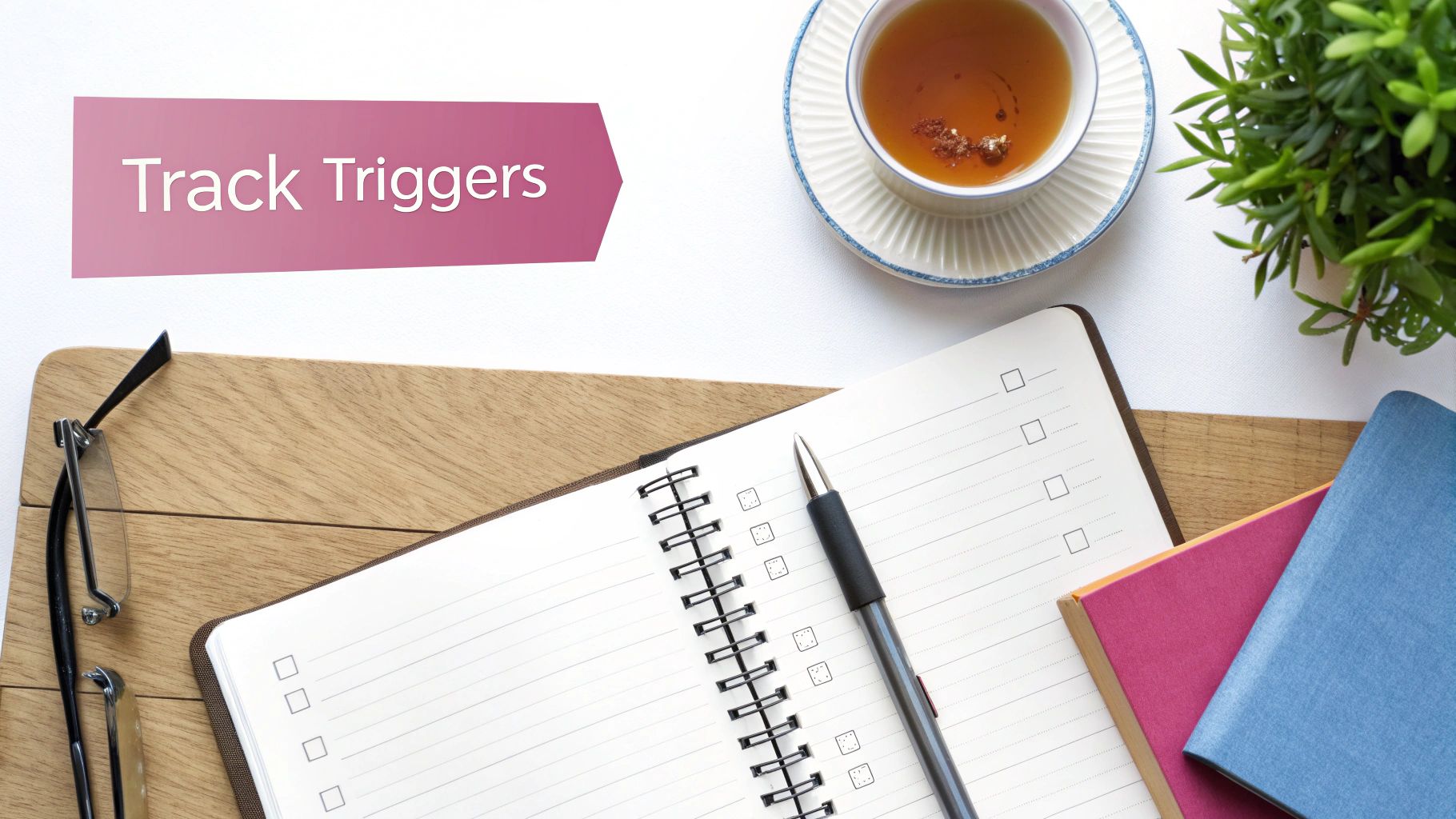
The best tool for this kind of investigation is a simple "drinking diary." For just one week, make a commitment to track not just what you drink, but the whole story around it. This is where vague feelings turn into real, actionable insights.
Your diary can be a note on your phone, a small journal, or even a spreadsheet—whatever is easiest for you to stick with. For every drink you have, take a moment to jot down a few key details.
- What time was it? Was it a 3 PM slump, a 6 PM post-work ritual, or a late-night habit?
- Where were you? At home on the couch, at your favorite restaurant, or at a friend's place?
- Who were you with? Were you by yourself, with your partner, or with a specific group of friends?
- How were you feeling right before? Stressed, bored, happy, anxious, celebratory? Get honest with yourself.
After just a few days, you'll probably start to see patterns emerge. You might realize your desire for a drink has less to do with the alcohol itself and more to do with creating a boundary between your work day and your evening, dealing with social anxiety, or just fighting off boredom.
Identifying Your Unique Triggers
Triggers are those specific cues—internal feelings or external situations—that signal to your brain that it's time for a drink. They are incredibly personal, and figuring yours out is an absolute game-changer.
Most triggers fall into a few common buckets:
- Emotional Triggers: Feeling frazzled after a tough meeting, anxious about a deadline, or even just a little lonely.
- Social Triggers: The classic happy hour with coworkers, watching the game with friends, or going to a family party where everyone else is drinking.
- Environmental Triggers: Walking past a certain bar on your way home from work, opening the fridge and seeing a six-pack, or even just the clock hitting 5 PM.
- Celebratory Triggers: Finishing a huge project, celebrating a birthday, or that "I deserve this" feeling on a Friday night.
Understanding these cues allows you to see them coming and plan a different response, breaking that automatic chain of Trigger → Craving → Drink. This is where you start to take back control.
By recognizing your triggers, you move from being a passenger in your habits to being the driver. You can see the turn coming and consciously choose a different route.
It can also be helpful to see the bigger picture. In the United States, the average annual consumption is 9.8 liters of pure alcohol per person, which is significantly higher than the global average of 5.8 liters. Some European countries have even higher rates. Knowing these wider trends can help put your own habits into perspective. You can explore more data on worldwide alcohol consumption from the World Population Review to see how different places compare.
Turning Awareness Into Action
After a week of observing your habits, set aside some time to review what you wrote down. Look for the most common answers to the "who, what, where, when, and why" in your diary.
Ask yourself:
- What situations most consistently lead me to drink?
- Are there specific people I almost always drink with?
- Which emotions are my most powerful triggers?
This self-awareness is your new superpower. It’s the essential first step that informs everything else you'll do on this journey. With this knowledge in hand, you're ready to build a plan to cut back that is actually designed for you—not a generic set of rules, but a real strategy based on a true understanding of your own life.
Building a Realistic Alcohol Reduction Plan
Alright, you’ve done the hard work of looking at your own drinking habits. Now it’s time to turn those insights into an actual plan. A vague goal like "drink less" is a recipe for frustration because it gives you no real direction and no way to know if you're actually making progress. The secret to successfully cutting back is building a framework that’s ambitious enough to matter but realistic enough to stick with when life gets in the way.
This is where you shift from just thinking about it to actively doing something. A solid plan is your roadmap. It guides your choices and keeps you from getting discouraged when you hit a bump in the road. Remember, this isn't about being perfect—it's about making small, intentional decisions that add up to big changes over time.
Set SMART Goals for Clear Direction
To make "drinking less" a real thing, you need to get specific. The best way to do this is by setting what’s known as a SMART goal—one that is Specific, Measurable, Achievable, Relevant, and Time-bound. This simple framework turns a fuzzy wish into a clear, actionable target.
So instead of just saying, "I want to cut back," you create a goal that looks more like this:
- Specific: "I will have three alcohol-free days this week: Monday, Tuesday, and Thursday."
- Measurable: "I’ll stick to a maximum of two drinks when I go out with my friends this Saturday."
- Achievable: If you drink every day right now, aiming for just one alcohol-free day is a fantastic starting point. Don't set yourself up for failure by trying to go from seven drinking days to zero overnight.
- Relevant: How does this goal support your bigger "why"? Is it to improve your sleep, save some money, or just have more energy for your weekend hikes?
- Time-Bound: "For the next month, I'm not going to drink alcohol at home during the week."
When you have a clear, measurable goal, you have something real to work toward. It’s incredibly motivating to look back at your week and see that you actually hit your mark.
Choose a Reduction Strategy That Works for You
There is no single "right" way to cut back on alcohol. The best method is the one that actually fits your life, your personality, and the triggers you’ve already figured out. What feels manageable and sustainable for you?
Here are a few proven strategies people have a lot of success with:
-
The Stair-Step Method: This is all about slow and steady reduction. If you typically have three glasses of wine with dinner, try cutting back to two for a week. The next week, try just one. This gradual approach helps you avoid feeling deprived and gives your mind and body plenty of time to adjust to the new normal.
-
Bookending Your Week: This is a great one if most of your drinking happens on weeknights out of habit. You simply make a rule that you only drink on the weekends. Committing to a dry Sunday-through-Thursday schedule creates a clear boundary that makes daily decision-making a whole lot easier.
-
The "One Less" Rule: This one is beautifully simple. In any situation where you'd normally have a drink, just commit to having one less than you usually would. If a typical happy hour means three beers, make it two. It’s an easy rule to remember and put into practice on the fly.
The best plan isn't the most extreme one; it's the one you can actually stick with. Choose a strategy that feels like a genuine lifestyle shift, not a short-term punishment.
Create an Environment That Supports Your Goals
Let's be honest: willpower is a muscle, and it gets tired. You can make things so much easier on yourself by setting up your environment to do the heavy lifting for you. The goal is to make the choice you want to make the easiest choice available.
Start with a few simple but powerful tweaks at home.
- Stock Up on Good Alternatives: Don’t just get rid of the alcohol; replace it with something you're genuinely excited to drink. Fill your fridge with interesting options like flavored sparkling water, craft kombucha, or some of the surprisingly good non-alcoholic beers on the market now. For those who enjoy a different kind of wind-down, a low-calorie cannabis seltzer can be a great substitute.
- Out of Sight, Out of Mind: If you live with people who drink, create a designated spot for all the alcohol—a specific cabinet or a shelf in the pantry. Not seeing a bottle of wine every time you open the fridge removes that powerful visual cue that can trigger a craving.
- Keep the Ritual, Change the Drink: Sometimes it’s the ritual you crave more than the alcohol itself. Try pouring your sparkling water into a nice wine glass or your hop water into a beer stein. You might be surprised how much this simple act satisfies that end-of-day ceremony.
Bring a Trusted Friend Into the Loop
Making a big change is so much easier when you don't feel like you're doing it alone. You don’t have to post about it on social media, but telling one trusted friend, your partner, or a family member can be a game-changer.
Let them know what you’re up to and why it’s important to you. A true friend can be your biggest cheerleader, help keep you accountable, and act as your ally in social settings. They might suggest a hike instead of a happy hour, or just be the person you can text when a craving hits hard. Sharing your goal with someone builds a little support system that can get you through the tough moments.
How to Handle Social Events and Peer Pressure
Let’s be honest: social gatherings can feel like a minefield when you're cutting back on alcohol. The questions, the unspoken pressure, and just the simple habit of holding a drink can make it incredibly tough to stick to your plan. But socializing while sober-curious doesn't mean you have to become a hermit. It’s all about walking in with a strategy and the right mindset.
This isn’t about ditching your friends; it’s about figuring out how to enjoy their company on your own terms. Try shifting your internal script from a restrictive "I can't drink" to an empowered "I'm choosing not to drink tonight." That small reframe can make a world of difference—it puts you firmly back in control.
Have a Few Responses Ready
One of the biggest sources of anxiety is that moment when someone asks, "What can I get you?" or worse, "Why aren't you drinking?" Feeling put on the spot is a surefire way to cave. The fix? Have a few go-to responses in your back pocket to take the pressure off.
Remember, you don't owe anyone a long-winded explanation. Keep it brief, friendly, and firm.
- Simple & Direct: "I'm good for now, thanks!" or "I'm sticking with sparkling water tonight."
- Health-Focused: "I'm taking a break from alcohol for a bit—just focusing on my health."
- The Early Morning Out: "No thanks, I've got an early start tomorrow and need to be sharp."
- The Humorous Deflection: "I'm retiring from my amateur drinking career."
Pick one or two that feel like you and practice them. The goal is to make your answer sound casual and natural, shutting down any further questions before they even start.
Know Your Go-To Drink Order
Walking up to a bar doesn't have to be a test of your willpower. The trick is having a non-alcoholic order ready that still feels like a proper drink. Holding a well-crafted beverage helps you feel part of the ritual without derailing your goals.
Next time you’re at the bar, try one of these:
- Club soda with a lime: Looks just like a vodka soda. No one will know the difference.
- A craft mocktail: A lot of bars now have fantastic alcohol-free cocktail menus. Just ask the bartender what they can whip up.
- Non-alcoholic beer: The NA beer scene has absolutely exploded with amazing options that taste just like the real deal.
- Something festive: A cranberry and soda with a lime wedge or a spicy ginger beer always feels like a treat.
Simply having a drink in your hand—alcoholic or not—is a powerful social tool. It signals you're settled in and stops people from constantly offering to get you another round.
A huge part of handling social pressure is just being prepared. Knowing what you'll say and what you'll order before you even walk through the door gives you an incredible confidence boost.
Set Yourself Up for Success
Beyond just what you say or drink, you can take a few steps to make social situations work for you, not against you. This is where you really take the reins and make choices that align with your goals.
One of the easiest moves? Volunteer to be the designated driver. It’s the perfect built-in, respectable reason for not drinking that absolutely no one can argue with. Your friends get a safe ride home, and your decision is made for you.
Another great strategy is to suggest activities that don't revolve around drinking. Instead of always defaulting to a bar, propose meeting up for a hike, trying that new coffee shop, going to a concert, or checking out a cool restaurant. This helps shift the focus of your friendships from drinking together to just spending quality time together. You might be surprised how refreshing it is for everyone when you’re the one who initiates a new, fun plan.
Discovering Great Alcohol-Free Alternatives
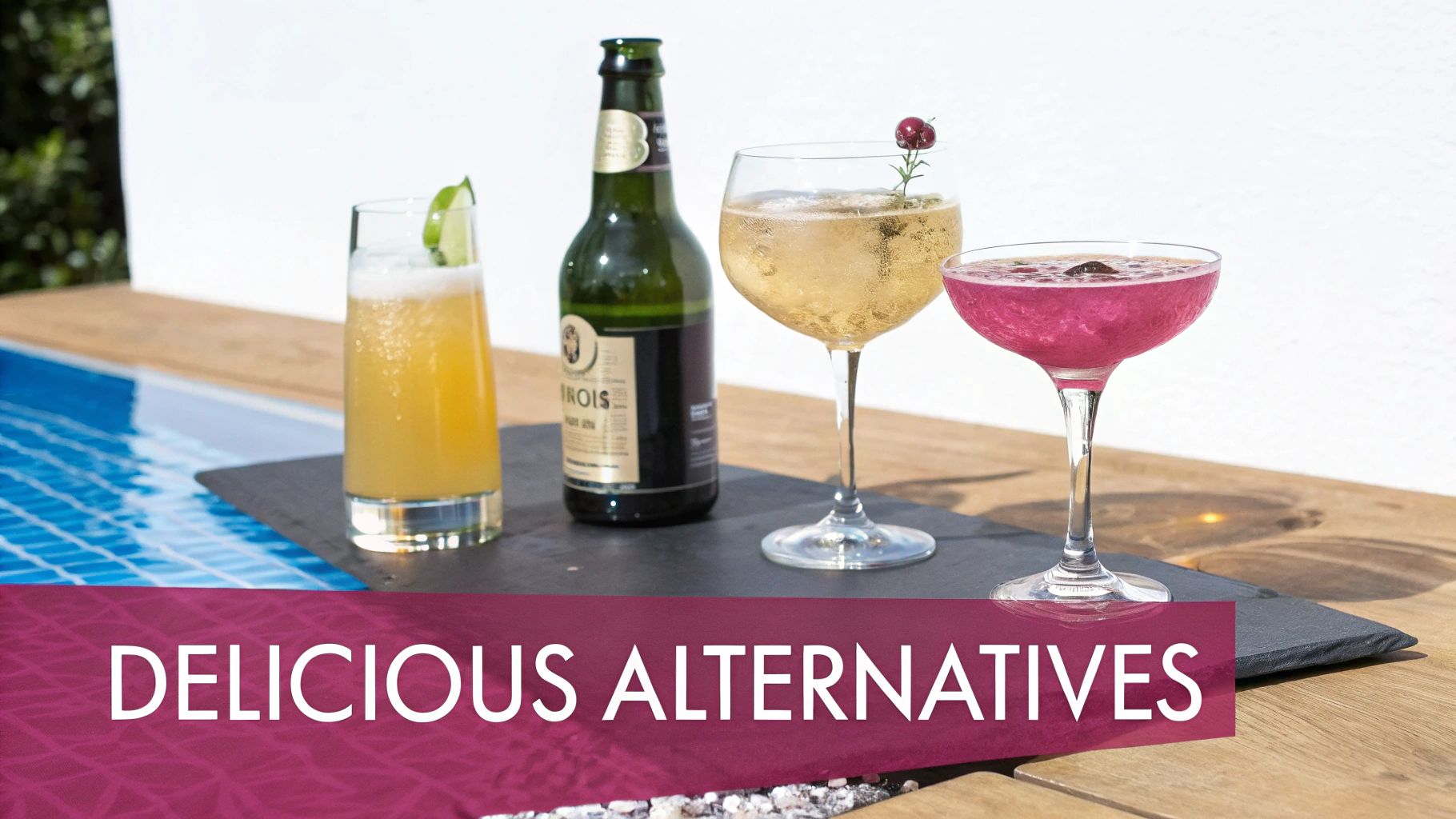
Learning how to cut back on alcohol is so much easier—and way more fun—when you're not just taking something away, but adding something better to the mix. Let's be honest, the days of settling for a boring, syrupy-sweet mocktail are over. The non-alcoholic (NA) beverage world is absolutely exploding right now, and there are some truly sophisticated and delicious options out there for any mood or occasion.
This is more than just finding a stand-in for your usual drink; it’s a chance to discover something new. I've noticed a real shift in how people approach drinking. It's less about quantity and all about quality. People want a better experience, whether that drink has alcohol in it or not.
Beyond Basic Club Soda
The market for grown-up, alcohol-free drinks has seriously expanded. Whether you miss the sharp bite of a good cocktail, the crispness of a beer after a long day, or just want something interesting to sip on, there's an option for you.
-
NA Spirits: These are game-changers. Crafted to mimic the complex flavors of gin, tequila, or whiskey, they're the perfect foundation for amazing cocktails. You get to keep the satisfying ritual of mixing a drink, just without the booze.
-
Hop Water & NA Beer: Beer lovers, rejoice! The quality of NA beers today is incredible, with rich, full-flavored IPAs, stouts, and lagers. Hop waters are another fantastic choice—they deliver that bitter, floral kick of hops in a refreshing, zero-calorie sparkling water.
-
Sparkling Teas & Kombuchas: If you want something with natural complexity and a bit of bubbly elegance, these are perfect. They feel celebratory and sophisticated, especially when served in a nice wine glass.
-
Cannabis-Infused Seltzers: For those who want a different kind of buzz, these low-calorie seltzers with hemp-derived THC offer a gentle, relaxing lift. They’re a great way to unwind and be social without the next-day haze.
The best advice I can give is to approach this with an open mind. Think of it like exploring a new wine region or a craft brewery. You might just stumble upon a new favorite that you genuinely prefer.
It's clear that health and financial reasons are pushing this change. An IWSR Global Trends Report even pointed out that premium beverage sales grew by 3%, with people consciously choosing to drink less, but better. This isn't just about status anymore; it's a mindful choice.
Crafting Your Own Impressive Mocktails
One of the most rewarding parts of this journey is becoming your own mocktail mixologist. It’s surprisingly simple, a ton of fun, and gives you total creative control.
You just need a few key players to get started:
- A Solid Base: Grab some high-quality sparkling water, tonic, or a fiery ginger beer.
- Fresh Citrus: This is a must. Freshly squeezed lemon, lime, or grapefruit juice and a twist of peel can transform a simple drink.
- Herbs & Spices: Muddle some fresh mint or rosemary for an aromatic punch. A dash of bitters can also add incredible depth.
- A Hint of Sweetness: A tiny bit of agave or simple syrup can bring all the flavors together, but don't overdo it.
Exploring recipes for things like Mojito Mint Mocktails is a great way to see just how sophisticated and delicious these creations can be.
Finding Your Perfect Alcohol Alternative
With so many options, how do you choose? It often helps to match the drink to the moment. Here’s a quick guide to help you find the right fit for whatever you're craving.
| Alternative Type | Best For... | Flavor Profile | Example Occasion |
|---|---|---|---|
| NA Beer | That classic "cold one" feeling after a long day or with a meal. | Malty, hoppy, and crisp, with styles from lagers to IPAs. | Watching the game with friends or a backyard barbecue. |
| NA Spirits | Crafting a sophisticated drink for a special evening in. | Botanical, smoky, or herbaceous, designed for mixing. | A weekend night when you'd normally mix a cocktail. |
| Hop Water | A zero-calorie, refreshing kick when you crave bitterness. | Floral, citrusy, and bubbly with a distinct hop bite. | An afternoon refresher or a post-workout drink. |
| THC Seltzer | A social lubricant and a way to unwind without alcohol. | Lightly fruity, crisp, and clean with a gentle lift. | A casual get-together or relaxing on the patio. |
By experimenting with these amazing alternatives, you can successfully reduce your alcohol intake—not by focusing on what you're losing, but by celebrating all the new tastes you're discovering.
How to Handle Cravings and Stay on Track
So, you’ve made a plan. That’s a huge first step. But let's be real—the real challenge often shows up unannounced, in the form of a powerful craving. Staying the course is mostly a mental game, and learning how to navigate those sudden urges is a skill you absolutely can build. It’s not about gritting your teeth and white-knuckling it; it’s about having a smarter, more mindful toolkit.
Cravings feel urgent, but they aren't commands. Think of them as temporary signals from your brain that, while intense, usually peak and pass within a few minutes. The trick is to have your strategies ready before they appear, so you can respond thoughtfully instead of falling back on old habits.
Mindful Techniques for Managing Urges
One of the most effective ways to deal with a craving is a technique called urge surfing. Instead of fighting the feeling, you just... watch it. Acknowledge it's there without judgment. Notice how it feels in your body. And remind yourself that, like a wave, it will rise, crest, and eventually fade away. You just have to ride it out.
Another game-changing approach is to get curious and try to figure out what the craving is really telling you. Ask yourself: what do I truly need in this moment?
- Am I just thirsty? It sounds too simple, but we often mistake thirst for a craving for something else. Before you do anything, try drinking a big glass of ice water.
- Am I stressed or just plain exhausted? That urge for a drink might just be your body asking for a break. Instead of pouring a glass, could you take a quick 10-minute walk? Or maybe put on a favorite song and do some deep breathing exercises?
- Am I bored? Let's face it, sometimes reaching for a drink is just a habit born out of boredom. This is where having a pre-made list of distractions becomes your secret weapon. Call a supportive friend, get lost in a good book, or even just knock out a small, nagging task you've been avoiding.
It also helps that we're living in a golden age of non-alcoholic drinks. The volume of NA beverages consumed in the U.S. has shot up by 20% recently, and it's expected to keep growing by 17% annually. Having a genuinely tasty NA beer or a complex, grown-up mocktail on hand can satisfy that ritual of pouring a "special" drink, keeping your goals intact. You can find more details on these changing alcohol and beverage trends on Escoffier.edu.
Resilience Is Your Superpower
This is probably the most important part: a slip-up does not equal failure. It's just information. If you have a drink when you didn't intend to, please don't let a wave of guilt wash you away. Instead, get curious. What was going on? How were you feeling? Use that moment as a lesson to better understand your triggers for the next time.
Progress is never a straight line. The real goal is to learn from the detours, not let them derail the entire trip. Every day you stick with your plan is a win.
Don't forget to celebrate those wins, no matter how small they seem. Got through a tough Tuesday without your usual glass of wine? Acknowledge it. Found a new NA spirit you actually love? That's a huge victory. These little moments of self-recognition are what build momentum and help cement your new, healthier patterns for good.
Still Have Questions About Drinking Less?
When you decide to cut back on alcohol, it’s only natural for a few questions to pop up. Let’s tackle some of the most common ones.
What if I slip up and have a drink?
First off, don't panic. A single drink doesn't undo all the progress you've made. This journey isn't about perfection; it's about making more mindful choices over time.
Think of it this way: if you’re eating healthy and you have one cookie, you don’t throw in the towel and eat the whole box, right? Same thing here. Just acknowledge what happened, don't beat yourself up, and get right back to your plan tomorrow.
How do I explain this to my friends?
This one can feel tricky, but it doesn't have to be. You don’t owe anyone a lengthy explanation. Often, a simple and direct approach works best.
Something like, "I'm just cutting back a bit to feel healthier," or "I'm taking a break from drinking for a while" is usually all you need to say. Most people will respect that. If they push, just hold your ground calmly.
Remember, this is your journey. The goal is to feel better, not to be perfect. Each mindful choice you make is a victory.
Do I have a serious problem?
It’s smart to ask this question. If you find that you truly can't control your drinking, or that trying to cut back is causing a lot of distress, it might be time to talk to someone. Reaching out to a doctor or a therapist isn't a sign of failure—it's a sign of strength. They can offer professional guidance tailored to your situation.
Ready to explore a sophisticated, alcohol-free way to unwind and socialize? Discover Day Dreamer’s line of clean, hemp-derived THC & CBD sparkling waters at https://enjoydaydreamer.com.


