
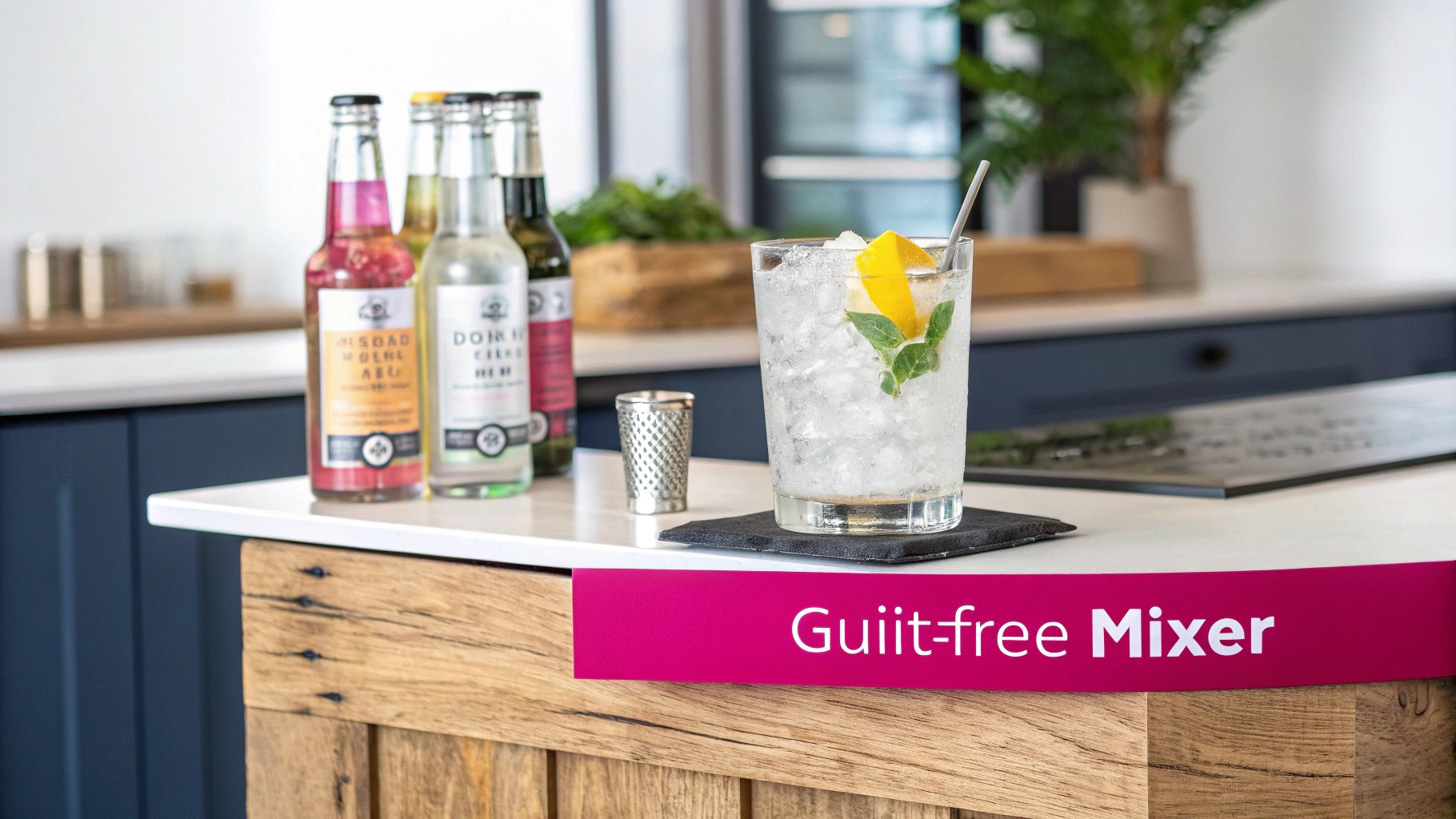
If you're hunting for the absolute lowest calorie tonic water, you're in luck. The best options are almost always labeled 'zero sugar' or 'diet,' and most of them contain exactly 0 calories per serving. Brands pull this off by swapping out sugar for non-caloric sweeteners, giving you that classic bitter kick without the extra calories. It's the perfect guilt-free mixer.
The Rise of Health-Conscious Mixers
Take a walk down the mixer aisle today, and you'll see a huge change. It wasn't long ago that your only choice was a single, sugar-packed tonic water. Now, a widespread shift toward wellness and more mindful drinking has people searching for healthier options in everything they consume, and that includes their cocktails and mocktails.
This isn't just a passing trend—it’s a real market shift. The global demand for low-calorie tonic water tells the whole story. Back in 2021, the market was already valued at a hefty $1,229.56 million. By 2025, it’s projected to climb to an estimated $1,699.6 million. That’s an incredible 38% increase in just four years, proving that people are actively swapping their old tonics, which often pack 70-80 calories per serving, for lighter alternatives. You can dig into more details on this growing market over at Cognitive Market Research.
What Drives This Shift?
So, what's behind this quest for the lowest calorie tonic water? A few key things are at play. The sober-curious movement has more people thinking about their drinking habits, while general wellness trends have made us all a bit more skeptical of ingredient lists and nutrition labels.
This has sparked a demand for mixers that deliver on a few key promises:
- Clean-Label Ingredients: People want natural flavors and sweeteners, not a list of artificial additives they can't pronounce.
- Low-Sugar Formulas: Mixers need to have drastically reduced or zero sugar to fit into modern health goals.
- Transparent Nutrition: Clear, honest labeling is a must, so people can feel good about what they're drinking.
This groundswell of consumer demand has forced brands to get creative and move beyond their classic, sugary recipes. What we have now is a fantastic, diverse market full of light, slimline, and zero-calorie tonic waters built for today’s drinker.
Think of this guide as your map for navigating this new world of mixers. I'll give you clear, straightforward advice to help you find the perfect low-calorie tonic, whether you're mixing a timeless gin and tonic or a fancy, non-alcoholic spritz.
Understanding Sweeteners and Nutrition Labels
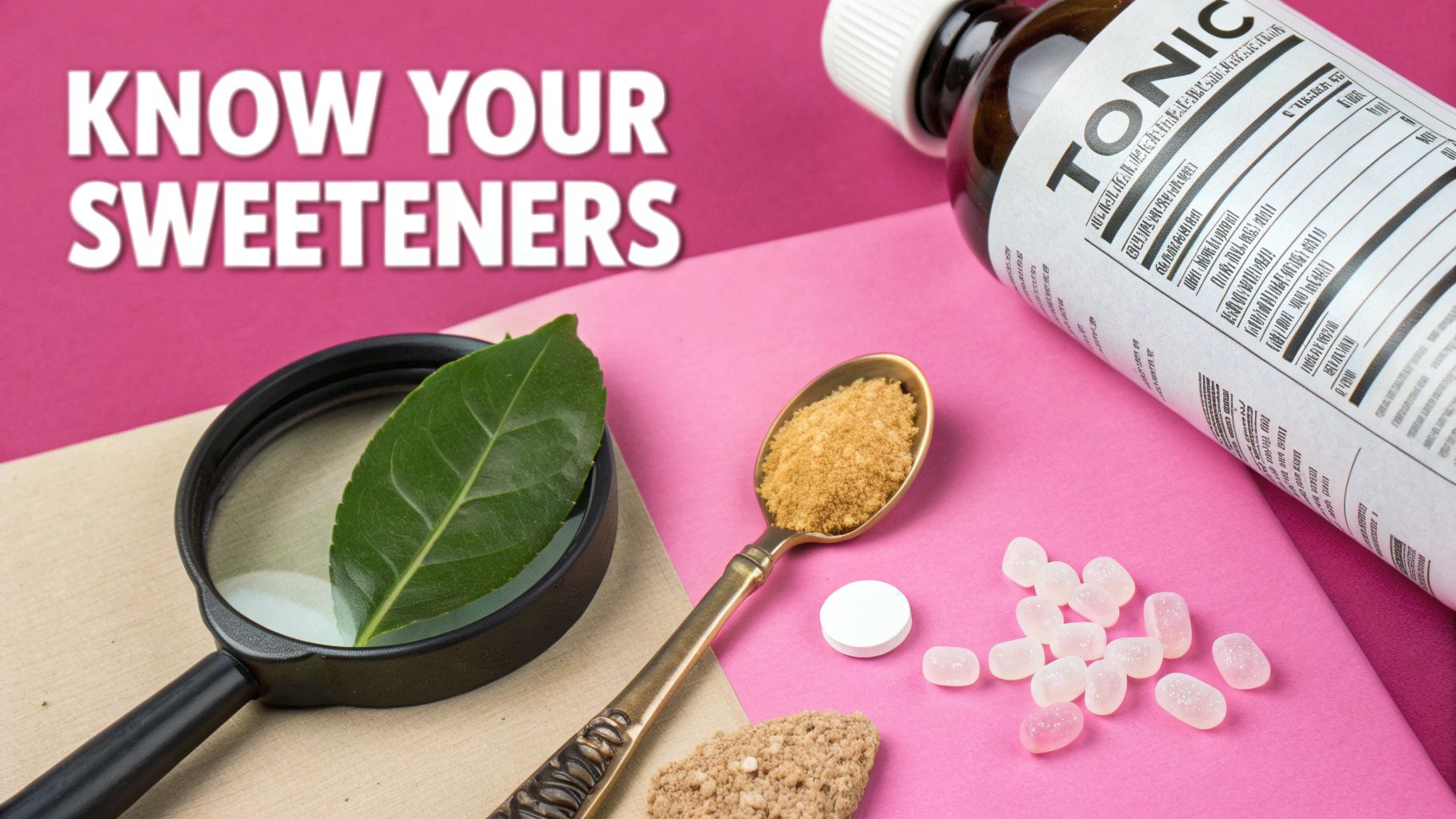
Trying to decipher the labels on low-calorie tonic water can feel like you're cracking a code. You'll see words like 'light,' 'slimline,' and 'diet' everywhere, but what do they really mean for your drink? The secret to these mixers isn't magic; it's all about the sweeteners they use instead of sugar.
Getting to know these sweeteners is the key to picking the lowest calorie tonic water that actually tastes good to you. Each one brings something different to the table, impacting both the flavor and the final nutrition stats. Once you know what you're looking for, you can ignore the flashy marketing on the front and get straight to the facts on the back.
The Sweetener Spectrum
When a brand takes sugar out, it has to put something else in to keep the sweetness. That's where sugar substitutes come in, and they generally fall into two camps: artificial and natural.
- Artificial Sweeteners: These are synthetic compounds created in a lab. You've probably seen names like aspartame and sucralose on ingredient lists. They pack a powerful sweet punch, so only a tiny amount is needed, which means they add virtually zero calories.
- Natural Sweeteners: As the name suggests, these are derived from plants and are a popular choice for anyone seeking a "cleaner" label. Stevia and sugar alcohols like erythritol are common go-tos. They're also either zero-calorie or very close to it and can taste remarkably similar to real sugar.
The biggest difference often comes down to the aftertaste. Some people find that artificial sweeteners like aspartame leave a distinct, slightly chemical note. In contrast, natural options like stevia are often described as having a cleaner finish, though some varieties can have a faint, licorice-like flavor.
Reading Between the Lines on Nutrition Labels
To find a genuinely low-calorie tonic, you have to be a bit of a detective. Brands can be sneaky with serving sizes and confusing language, leading you to drink more calories than you think.
First thing's first: always check the serving size. A bottle might proudly claim it has just 20 calories, but that could be for a tiny 100ml serving. If you're planning on using a standard 200ml bottle for your G&T, you've just doubled your intake without realizing it. It’s a classic trick to make a product look healthier than it is.
Next, look past the big calorie number and scan the ingredients. Some "light" tonic waters only reduce the sugar, not eliminate it, mixing what's left with a sweetener. These will always have more calories than a "zero sugar" or "diet" version, which relies entirely on non-caloric sweeteners and should land somewhere between 0-5 calories per serving.
Putting It All Together
Ready to make a smart choice next time you're at the store? Here’s a simple checklist:
- Know Your Goal: Are you looking for the absolute lowest calorie count possible (a zero-sugar option)? Or are you okay with a few calories in a "light" version for a taste that's a bit closer to the classic?
- Scan for Sweeteners: Glance at the ingredients to see if they're using your preference—be it natural like stevia or artificial like sucralose.
- Check the Serving Size: Make sure the calorie count aligns with how much you'll actually pour into your glass.
This strategy works for all kinds of drinks, not just tonic. If you want to dig deeper into the world of low-calorie beverages and sweeteners, this detailed guide to sugar-free energy drinks covers a lot of the same ground. By learning to read the label like a pro, you can make sure your mixer is the perfect match for both your taste buds and your health goals.
Comparing the Best Low Calorie Tonic Waters
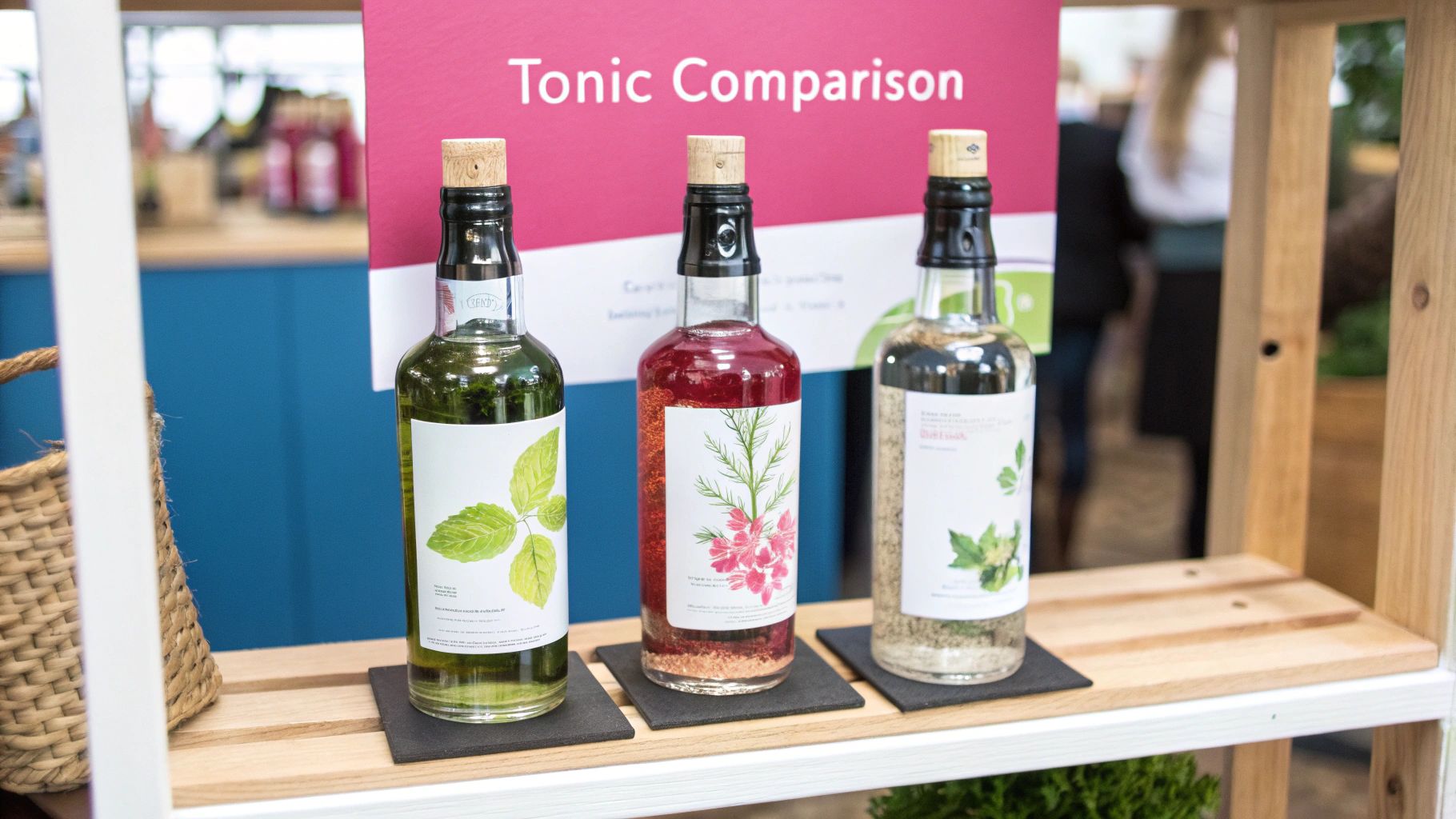
Walking down the mixer aisle can feel overwhelming. With so many brands offering "light," "slimline," and "zero-sugar" options, choosing the right one is about more than just grabbing the bottle with the lowest number on the label.
The best lowest calorie tonic water for you has to strike a perfect balance. It needs a solid nutritional profile, of course, but it also has to taste great and complement your drink, whether that’s a top-shelf gin or a simple, refreshing mocktail. To really get it right, we need to look past the marketing and compare what’s actually inside the bottle—the sweeteners, the flavor, and what it pairs with best.
Fever-Tree Refreshingly Light
Fever-Tree has earned its spot at the top of the premium mixer game, and their Refreshingly Light range is a masterclass in how to do "light" right. Instead of ditching sugar entirely, they use a touch of fruit sugars to achieve a lower calorie count without sacrificing quality.
This smart approach gives their light tonics a much more rounded mouthfeel, closely mimicking their classic versions. You get all of the quality and none of the thin, watery texture that can sometimes plague zero-sugar drinks.
- Calorie Count: Typically lands between 20-30 calories per 200ml serving.
- Sweetener: A carefully balanced blend of fruit sugars.
- Taste Profile: It's crisp, clean, and vibrant, with bright citrus notes and that signature quinine bitterness. There’s no synthetic aftertaste here, just well-rounded flavor.
- Best For: Gin lovers who want a lower-calorie option without compromising on the authentic taste of a premium G&T. It’s an absolute knockout with classic London Dry gins.
Q Mixers Light and Spectacular Diet
Q Mixers came onto the scene with a clear philosophy: a mixer should make the spirit shine, not just water it down. They use high carbonation and unique sweeteners like organic agave to create bold, assertive tonics, and their light options are no exception.
Their Spectacular Diet Tonic Water is a true zero-calorie option, sweetened with erythritol for a clean, crisp finish. What I love is the brand's focus on "more carbonation," which genuinely keeps your drink fizzier for longer. It's a small detail that makes a big difference.
- Calorie Count: Q Mixers Light has around 20 calories, while the Spectacular Diet Tonic Water comes in at 0 calories.
- Sweetener: Organic agave for the Light version; Erythritol for the Diet.
- Taste Profile: Decidedly less sweet than many others on the shelf, with a pronounced quinine bite and bubbles that don't quit.
- Best For: Craft cocktail fans who want a tonic that can stand up to complex, botanical-heavy gins or premium vodkas. The zero-calorie version is a go-to for anyone on a strict calorie budget.
The choice between a "light" tonic with some fruit sugar and a "diet" or "zero" tonic with non-caloric sweeteners often comes down to mouthfeel. Light versions feel fuller and closer to the original, while diet options offer the crispest, cleanest profile for zero calories.
Schweppes Slimline and Diet
You can't talk about tonic without mentioning Schweppes. As one of the original names in the business, their Slimline and Diet tonics are reliable, no-fuss workhorses you can find just about anywhere.
While they might not have the craft flair of some of the newer brands, their consistency is what keeps people coming back. They generally use artificial sweeteners like aspartame, which some people find leaves a distinct aftertaste. As you explore low-calorie mixers, it's also interesting to see what's happening in the broader wellness supplement space with products like the Sumatra Slim Belly Tonic, which takes a different approach to supporting health goals.
- Calorie Count: Essentially zero, at 0-2 calories per 200ml serving.
- Sweetener: Usually a mix of artificial sweeteners like aspartame and saccharin.
- Taste Profile: The classic, straightforward tonic flavor you’d expect—moderately bitter and sweet.
- Best For: Everyday mixing when you need something affordable and accessible. It’s a dependable choice for simple highballs.
Low Calorie Tonic Water At a Glance
To make the decision a little easier, here's a side-by-side look at the top contenders. This table breaks down the key factors—calories, sweeteners, and flavor—to help you find the perfect match for your glass.
| Brand | Calories (per 200ml) | Sweetener Used | Key Flavor Notes | Best For |
|---|---|---|---|---|
| Fever-Tree Refreshingly Light | 20-30 | Fruit Sugars | Balanced, crisp, natural citrus, no aftertaste | Premium gin pairings without compromise |
| Q Mixers Spectacular Diet | 0 | Erythritol | High carbonation, assertive quinine, less sweet | Craft cocktails and botanical-forward spirits |
| Schweppes Slimline | 0-2 | Aspartame, Saccharin | Classic, straightforward, moderate bitterness | Everyday use, budget-friendly mixing |
| Day Dreamer Light Tonic | 20 | Fruit Sugars, Stevia | Clean, subtle quinine, bright, smooth finish | Versatile mixing and mindful cocktails |
Choosing between these really depends on your priorities. If authentic taste is non-negotiable, Fever-Tree is your best bet. If you want zero calories without a chemical aftertaste, Q Mixers delivers. And for a reliable, budget-friendly staple, Schweppes has you covered.
It’s clear the demand for these "skinnier" mixers isn't just a trend; it's a movement. Standard tonics can pack 70-80 calories per 200ml, so when a brand like Fever-Tree creates a light version with just 20-30 calories, people notice. That success now accounts for a massive 18% revenue slice for the brand, and the entire low-calorie tonic market is poised for even more growth.
Market Innovators and Premium Tonic Trends
The tonic aisle today looks nothing like it did a decade ago. It’s a battleground of innovation, with brands scrambling to win over smarter, health-conscious drinkers. You’re not just buying a simple mixer anymore; you’re choosing an experience. This competition has completely redefined what we expect from a tonic water, especially when it comes to low-calorie options.
Brands like Fever-Tree and Q Mixers really kicked things off. They started treating tonic with the same reverence a craft distiller gives their gin. They figured out early on that people looking for the lowest calorie tonic water weren’t willing to sacrifice flavor or quality. Their whole game plan was built on premium ingredients and clean-label sweeteners, proving that "light" doesn't have to be an afterthought. This premium push set a new bar for everyone else.
The Rise of Botanical Infusions
One of the coolest things to come out of this is the move away from just plain old "Indian" tonic water. To stand out, brands are infusing their low-calorie tonics with some seriously sophisticated flavors.
- Elderflower: This adds a delicate, floral sweetness that's incredible with citrus-heavy gins.
- Yuzu: It gives you a bright, aromatic citrus hit that’s way more interesting than standard lemon or lime. Perfect for a sharp vodka tonic.
- Mediterranean Herbs: Think rosemary and lemon thyme. These create a savory, almost herbaceous profile that lets you build some truly unique cocktails.
These botanical tonics are an easy shortcut to a more complex drink without piling on sugar or fussing with a dozen other ingredients.
The market is fierce. It’s dominated by giants like Fever-Tree, Dr Pepper Snapple, and Nestlé, but there’s also room for nimble craft brands like Q Drinks. This constant churn is what pushes the category forward. Just look at Fever-Tree’s light versions—they brought in GBP 42 million, which is 18% of their total revenue, with tonics that have only 20-30 calories per 200ml. The global low-calorie tonic market is already worth $680 million and climbing. You can find additional insights on Data Insights Market to see just how fast it's growing.
It's not just the big names, either. Even store brands from major supermarkets are getting in on the action, making good-quality, low-calorie tonics more affordable and easier to find. For us, the consumers, this is a huge win. It means more choice, better ingredients, and creative new flavors hitting the shelves all the time.
How to Craft the Perfect Low Calorie Drink
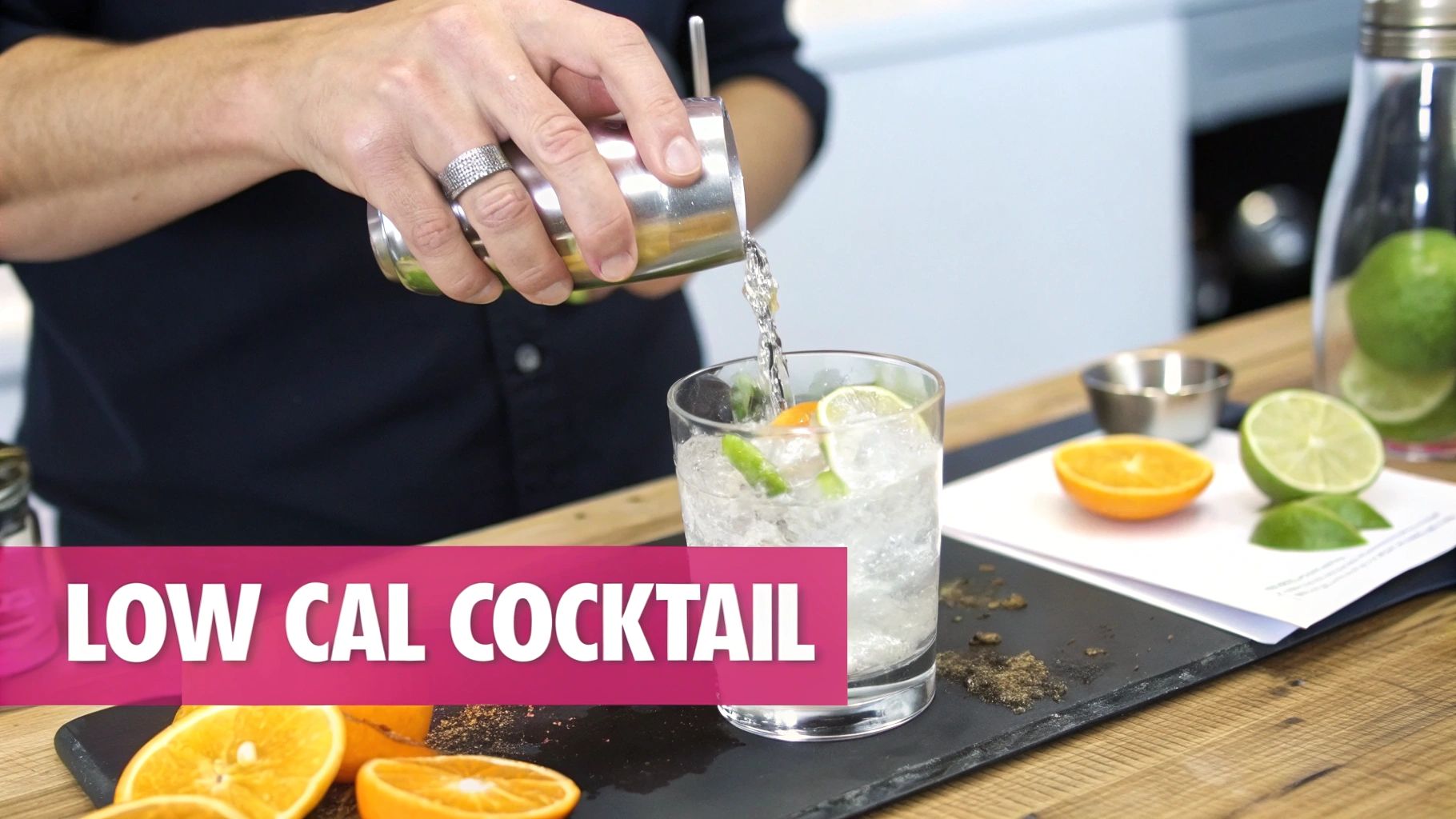
Picking out the lowest calorie tonic water is a great start, but that's just step one. The real magic happens when you actually start mixing. Crafting an amazing low-calorie drink is all about smart pairings and letting high-quality ingredients do the talking. The result? A cocktail or mocktail that’s sophisticated, packed with flavor, and completely guilt-free.
The goal is to enhance the spirit or other ingredients in your glass, not bury them. A well-chosen light tonic brings that essential bitterness and fizz without a heavy-handed dose of sugar or a weird synthetic aftertaste. This simple switch lets you create refreshingly complex drinks that fit perfectly with a modern, health-conscious lifestyle.
Pairing Your Tonic with the Right Spirit
Not all gins or vodkas are the same, and neither are tonics. The trick is to match the flavor profile of your spirit with a tonic that complements it, creating a drink that’s balanced and truly memorable.
- For a Classic London Dry Gin: These gins are all about that bold, juniper-forward character. You’ll want to pair them with a clean, crisp, and less sweet tonic, like Q Mixers Spectacular Tonic Water. It has the backbone to stand up to the gin without getting in the way of its botanical notes.
- For a Citrus-Forward Gin: When a gin leads with notes of orange, grapefruit, or lemon, it’s best to lean into it. A tonic with its own bright citrus profile, like Fever-Tree's Refreshingly Light Indian Tonic, elevates those flavors beautifully.
- For a Floral or Herbal Gin: If your gin has delicate notes of elderflower, lavender, or rosemary, you need a tonic that knows its place. A brand like Day Dreamer, with its clean profile, acts as the perfect canvas. It adds the necessary bitterness and bubbles without competing with the gin’s intricate aromatics.
- For a Premium Vodka: With vodka, you have a clean slate that demands a high-quality tonic. A great vodka tonic should be sharp and refreshing. Look for a highly carbonated, zero-calorie option that adds texture and a slight bitterness while letting the smoothness of the vodka shine.
The best low-calorie cocktails are built on a foundation of simplicity and quality. When you pair your spirit thoughtfully, you create a drink that tastes intentional and refined. It's proof that you don't need a ton of sugar to achieve exceptional flavor.
Beyond the Classic G&T Recipes
That bottle of low-calorie tonic water sitting in your fridge is more versatile than you might think. It’s a key ingredient for a whole range of light and refreshing drinks, with or without alcohol.
1. The Crisp Vodka Tonic with a Twist
A timeless classic, but lighter. The secret is using fresh, high-quality ingredients to pack in flavor without the calories.
- Ingredients: 1.5 oz premium vodka, 4 oz zero-calorie tonic water, a long peel of grapefruit zest.
- Method: Fill a highball glass with plenty of ice. Pour in the vodka, then top it off with the tonic water. Squeeze the grapefruit peel over the drink to release its fragrant oils, then drop it in.
2. The Elderflower Gin Spritz
This drink is light, floral, and absolutely perfect for a sunny afternoon.
- Ingredients: 1.5 oz floral gin, 0.5 oz elderflower liqueur (look for lower-sugar options), 3 oz light tonic water.
- Method: Combine the gin and elderflower liqueur in a wine glass filled with ice. Top with the light tonic and garnish with a sprig of fresh mint and a thin cucumber ribbon.
3. The Zero-Proof Citrus Fizz (Mocktail)
This proves you don't need alcohol to make a seriously sophisticated drink.
- Ingredients: 2 oz fresh-squeezed grapefruit juice, 4 oz low-calorie botanical tonic water, a fresh rosemary sprig.
- Method: Fill a glass with ice, add the grapefruit juice, and top with tonic. Give it a gentle stir and garnish with the rosemary sprig for a wonderful, herbaceous aroma.
Low-Calorie Tonic: Your Questions Answered
Let's be honest, diving into the world of low-calorie mixers can feel a bit overwhelming. When all you want is a great-tasting drink without the extra sugar, the last thing you need is confusion.
This section is designed to give you quick, no-nonsense answers to the most common questions we hear. Think of it as your cheat sheet for making smarter, more mindful choices for your next cocktail or mocktail.
Which Tonic Water Has the Lowest Calories?
For the absolute lowest calorie count, you'll want to look for tonic waters labeled "zero sugar" or "diet." These almost always ring in at 0 calories per serving.
Great examples include Q Mixers Spectacular Diet Tonic Water and Schweppes Slimline. They pull this off by swapping out sugar entirely for non-caloric sweeteners, so you get all that classic quinine bitterness and fizz without any of the calories. Just be sure to glance at the nutritional label to confirm.
Do Low-Calorie Tonics Taste Different Than Regular Ones?
Yes, they definitely can, and the difference almost always comes down to the sweetener. It's a very personal thing. Some people find that certain artificial sweeteners leave a distinct aftertaste that hangs around a bit too long.
On the other hand, tonics that use natural, non-caloric sweeteners like stevia or erythritol are often praised for having a cleaner, more crisp finish. "Light" versions that use a small amount of real sugar alongside a sweetener can often taste the most similar to the original.
The bottom line? The type of sweetener is the biggest factor in how a low-calorie tonic tastes. The best way to find your favorite is to try a few different brands and see what your palate prefers.
Can I Substitute Low-Calorie Tonic in Any Cocktail?
Absolutely. You can swap low-calorie tonic for regular tonic at a one-to-one ratio in any recipe. It's a perfect fit for a classic Gin and Tonic, a crisp Vodka Tonic, or any other drink that calls for it.
Making this simple switch is a fantastic way to slash the sugar and calorie count of your favorite cocktail without sacrificing the essential bitterness and carbonation that make the drink work. It also works beautifully with non-alcoholic spirits to create genuinely satisfying mocktails.
Are "Natural" Low-Calorie Sweeteners a Better Option?
Sweeteners like stevia and erythritol come from plant sources, which is why they're often seen as the go-to for anyone focused on clean, simple ingredients. They are "generally recognized as safe" (GRAS) by the FDA and, importantly, don't cause a spike in blood sugar levels.
Whether they're truly "better" is really a matter of personal choice. From a safety standpoint, both natural and artificial non-caloric sweeteners are considered perfectly fine for consumption within the recommended daily limits. It really just depends on what you feel most comfortable putting in your body.
Ready to find a cleaner, more elegant way to enjoy your favorite drinks? Day Dreamer is crafting a line of premium, low-calorie sparkling beverages for those who value quality and taste without compromise. Discover your new guilt-free favorite at https://enjoydaydreamer.com.
The statements made regarding these products have not been evaluated by the Food and Drug Administration. The efficacy of these products has not been confirmed by FDA-approved research. These products are not intended to diagnose, treat, cure, or prevent any disease. All information presented here is not meant as a substitute for, or alternative to, information from healthcare practitioners. Please consult your healthcare professional about potential interactions or other possible complications before using any product. The Federal Food, Drug, and Cosmetic Act requires this notice. All products on this website contain 0.3% THC or less.


