

Ever woken up feeling fuzzy, slow, and just… off after a night with cannabis? You’re not alone. That lingering grogginess is often called a THC hangover, and it’s a very real thing for many people, especially after indulging in high-potency products or edibles.
So, What Does a THC Hangover Actually Feel Like?
If you've experienced it, you know it's a world away from an alcohol hangover. Forget the splitting headache and overwhelming nausea. A THC hangover is more subtle—a dull, persistent sense that you're not quite firing on all cylinders. It's less about sharp pain and more about a heavy blanket of fatigue and mental fog.
A lot of people say it feels like being mentally stuck in first gear. Simple tasks can feel monumental, and focusing on anything important is a real challenge. This cognitive slowdown is often paired with a few physical symptoms that just add to the general sense of blah.
Common Symptoms You Might Experience
Everyone's body is different, so what you feel will depend on how much you consumed, your tolerance, and your unique biology. Still, a few classic signs tend to pop up again and again. Learning to spot them is the first step toward shaking them off.
- Brain Fog: This is the big one. It's that sluggish, cloudy feeling where your thoughts just won't connect. You feel slow, have a hard time concentrating, and can't seem to think clearly.
- Deep Fatigue: You might wake up feeling like you barely slept, even if you got a full eight hours. This isn't just being tired; it's a bone-deep lethargy that can drag on all morning.
- Dull Headaches: These aren't the pounding migraines you get from alcohol. Think more of a low-grade, nagging ache that just hangs around in the background.
- Dry Eyes and Mouth: That classic "cottonmouth" can easily stick around until the next day, leaving you feeling parched and uncomfortable.
To help you quickly identify what's going on, here's a simple breakdown of the most common symptoms and the remedies we'll cover in this guide.
THC Hangover Symptoms and Quick Fixes
| Symptom | Potential Cause | Quick Remedy (See Section) |
|---|---|---|
| Brain Fog | Lingering THC metabolites in the brain | Light exercise, caffeine, hydration |
| Fatigue | Disrupted sleep cycles, dehydration | Rest, nutrient-rich foods, CBD |
| Headache | Dehydration, vasodilation | Water with electrolytes, light activity |
| Dry Eyes/Mouth | THC's effect on salivary glands | Hydration, rehydrating eye drops |
This table is a great starting point, but let’s look at what the research says about the whole phenomenon.
The very idea of a cannabis hangover has been a hot topic in scientific circles. Anecdotally, it's a given for many. But finding concrete, measurable evidence has been another story entirely.
This ongoing debate just goes to show how complex THC's lingering effects on the body can be.
What the Science Says
It’s interesting—the scientific community has had a tough time pinning down the "weed hangover" in a lab setting. A major 2022-2023 systematic review from the University of Sydney looked at 20 different studies with over 450 participants.
Across 345 performance tests done more than eight hours after THC consumption, only 3.5% showed any significant next-day impairment. Researchers concluded there’s limited proof that cannabis affects next-day performance in a major way, noting that any lingering effects are probably far less severe than an alcohol hangover. You can discover more about these findings on cannabis hangovers and what they mean.
So, while you’re definitely not imagining that sluggish feeling, the science confirms it's a more subtle effect. This is exactly why gentle, supportive remedies—not aggressive "cures"—are your best bet for getting back to 100%.
Immediate Steps for Morning-After Relief
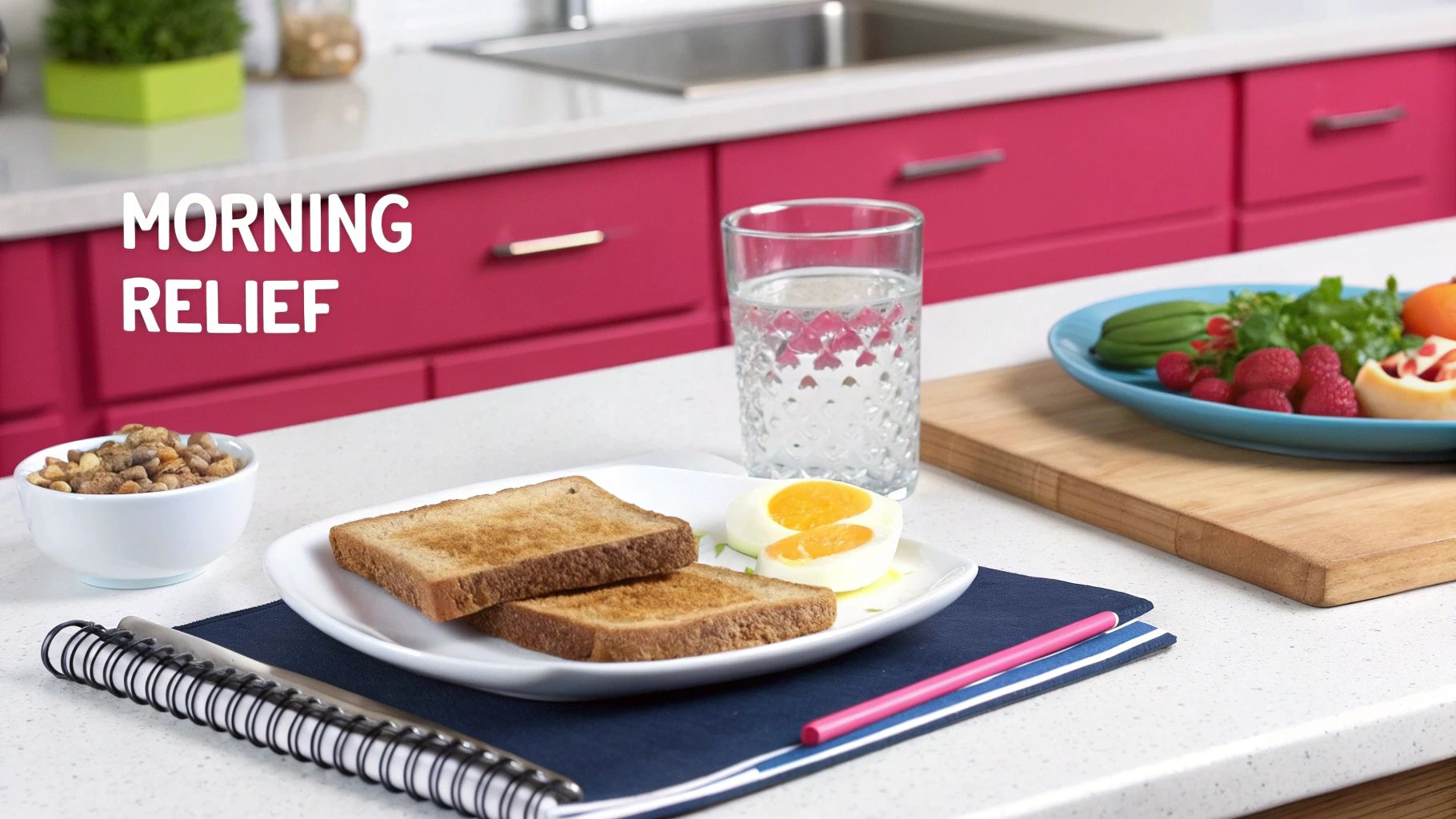
Waking up feeling foggy and sluggish is a sign your body needs a gentle reset, not an aggressive fix. The best approach is to support your system’s natural recovery process with a few simple, effective actions you can take right from your kitchen.
The first order of business is always tackling that dry mouth and lingering headache. While THC doesn't dehydrate you in the same direct way alcohol does, it's common to drink less fluids while you’re high, leaving you parched the next day.
Prioritize Smart Hydration
That first glass of water is essential, but you can do better. Dehydration isn't just about a lack of water; it’s also about depleted minerals that help your body function. This is where electrolytes become your best friend.
A simple glass of water might not be enough to restore your body’s equilibrium quickly. Try these instead:
- Add Electrolytes: Squeeze some fresh lemon or orange into your water for a natural hit of potassium and vitamin C. A tiny pinch of quality sea salt can help with sodium levels, too.
- Drink Herbal Tea: Peppermint or ginger tea is fantastic. It helps soothe an upset stomach and adds to your fluid intake without being boring.
- Sip Coconut Water: It’s naturally loaded with electrolytes like potassium and magnesium, making it an ideal choice for rehydration.
If you feel you need a more concentrated boost, electrolyte powders can be a game-changer. Taking a moment for understanding electrolyte balance will help you pick one that works for you.
Refuel with a Balanced Meal
Once you’ve started rehydrating, turn your attention to food. I know a greasy, heavy breakfast might sound tempting, but trust me, it’s more likely to make you feel even more sluggish. What you really need is a balanced meal that provides sustained energy.
Think of your breakfast as a tool to rebuild and stabilize. Combining lean protein, complex carbs, and healthy fats is the key to clearing the mental fog and getting your energy back. Something like oatmeal with berries and nuts or scrambled eggs on whole-wheat toast will give your brain the steady fuel it's craving.
A common mistake is skipping breakfast because of low appetite or nausea. Even a small, nutrient-dense meal can kickstart your metabolism and make a huge difference in how you feel for the rest of the day.
Embrace Gentle Movement
This might be the last thing you feel like doing, but some light physical activity is incredibly effective. I’m not talking about a grueling workout—just enough to get your blood flowing and clear your head.
A short, 15-minute walk outside can work wonders. The combination of fresh air, gentle movement, and a change of scenery helps stimulate circulation and deliver more oxygen to your brain. This simple act can cut through the brain fog and shake off that groggy feeling much faster than staying glued to the couch. It’s like hitting a gentle reset button for your entire system.
Targeted Solutions to Speed Up Recovery
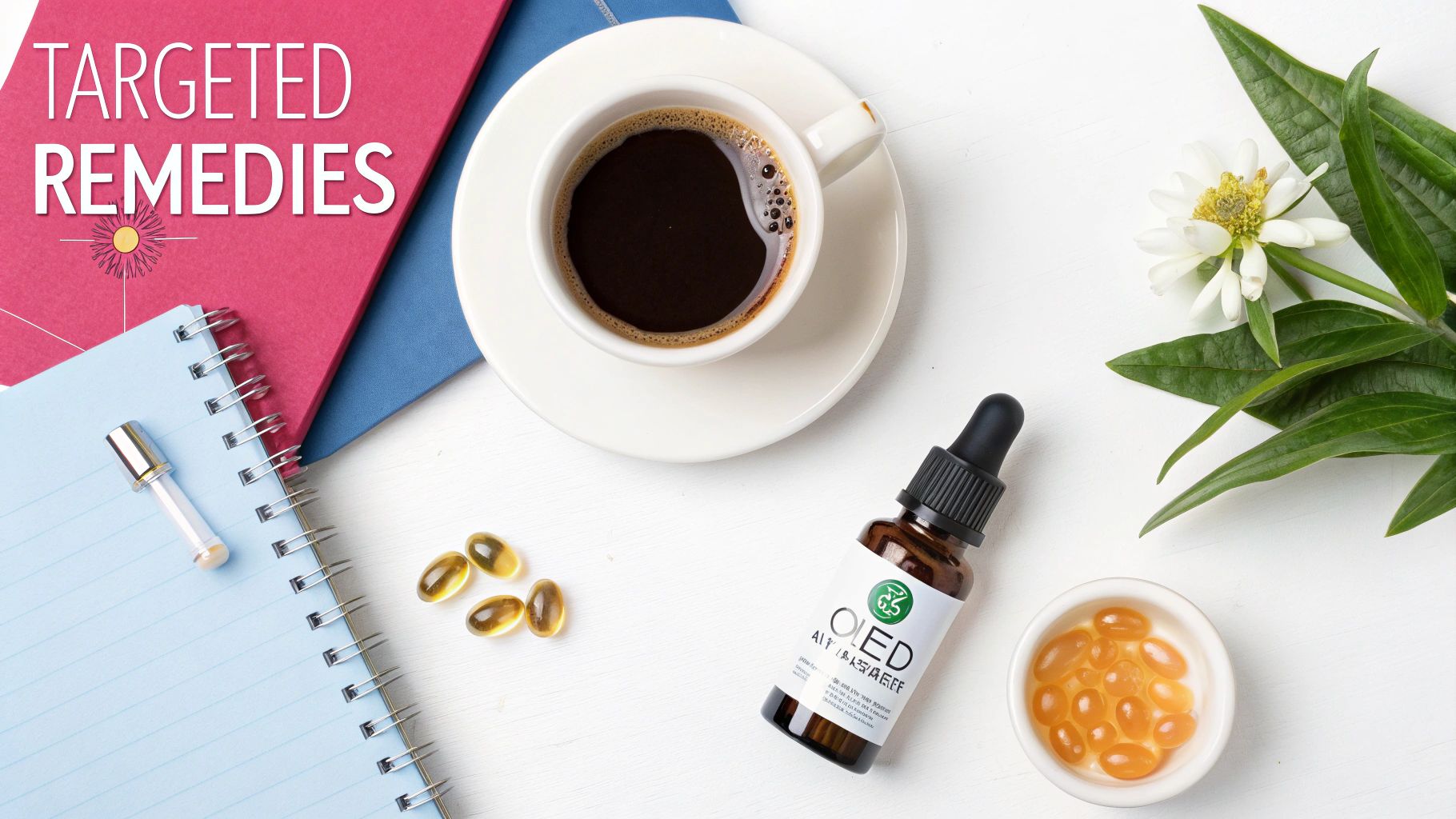
Once you've handled the fundamentals—hydration, good food, and some rest—you can bring in a few more specific tools to clear out the last of that mental fog. These aren't miracle cures, but they can genuinely help you feel more like yourself and get on with your day.
Think of these as the second wave of your recovery plan.
A classic for a reason, a cup of coffee or tea can be a powerful ally against that heavy, sluggish feeling. The caffeine helps by blocking adenosine, a chemical in your brain that signals sleepiness. The result? A welcome jolt of alertness that can help you focus.
Just be careful not to overdo it. Caffeine is a bit of a double-edged sword. While one cup can work wonders, too much might dial up anxiety or give you the jitters. It's also a diuretic, which won't help if you're already dehydrated. Stick with a single cup to get the boost without the backlash.
Finding Balance with CBD
If caffeine tends to make you feel anxious, Cannabidiol (CBD) is an excellent alternative. CBD is the non-intoxicating cousin to THC, known more for creating a sense of calm and balance than for any kind of high. That makes it incredibly useful for taking the edge off the restlessness or unease that sometimes lingers the morning after.
A lot of people find that CBD helps smooth out the mental and physical rough spots of a THC hangover. It works with your body's endocannabinoid system to help regulate your mood and calm things down.
There are a few easy ways to try it:
- CBD Tinctures: A few drops under the tongue get to work pretty quickly.
- CBD Capsules: Simple, pre-measured, and no-fuss.
- CBD-Infused Beverages: A great way to hydrate while getting a dose of calm.
The point of using CBD here isn't to get high again—it's to find your footing. By soothing your nervous system, CBD can help you feel more grounded and less jittery, making it that much easier to shake off the grogginess for good.
The Role of Key Supplements
Finally, let's talk about giving your body the raw materials it needs to bounce back. Your system has been working hard, and a couple of key supplements can help replenish what was used up. This is all about supporting your body’s natural ability to create energy and relax.
Two of the most helpful supplements in this situation are B-complex vitamins and magnesium.
Vitamin B-Complex: This group of vitamins is your body's engine crew, responsible for turning food into usable energy. Taking a B-complex supplement can directly fight that washed-out, fatigued feeling and help clear up brain fog.
Magnesium: If you're stuck with a dull, nagging headache, magnesium can be a game-changer. This mineral is vital for muscle relaxation and nerve function. It’s well-known for easing physical tension, which can help knock out that headache and just make you feel more at ease overall.
How to Prevent a THC Hangover Before It Starts
While it's great to have a morning-after game plan, the best thc hangover cure is avoiding one altogether. A few thoughtful choices can be the difference between waking up clear-headed and feeling like you're wading through molasses. It really just boils down to mindful consumption and paying attention to how your body responds.
This isn't about setting strict limits, but more about making smarter choices to get the experience you’re actually looking for. A little planning goes a long way.
Master Your Dosage
The biggest lever you can pull to prevent a THC hangover is your dosage. It’s a pretty direct relationship: the more THC you consume, the greater the odds you'll feel off the next day. This is why the age-old advice to "start low and go slow" is so important, especially with edibles.
Edibles are notorious for their delayed fuse. You could be waiting anywhere from 30 minutes to over two hours to feel the peak effects. The classic mistake is thinking it isn't working and taking more, only to have it all hit you at once.
We've all heard the story: someone takes a 10mg gummy, feels nothing after an hour, and pops another. A little while later, both doses kick in, and they’re far higher than they ever intended to be, paving the way for a rough morning. Patience is truly your best friend here.
Choose Your Products Wisely
Not all cannabis is created equal. The product you choose directly shapes your experience and the likelihood of feeling groggy the next day. In my experience, high-potency concentrates and sugary, processed edibles are the most common culprits.
Here's what to keep in mind when you're making a selection:
- Potency: Look for products with lower THC percentages. A balanced ratio of THC to CBD can also create a more grounded experience and help counteract some of THC’s more intense effects.
- Ingredients: Try to avoid edibles packed with sugar, artificial flavors, and preservatives. Those extra ingredients can contribute to inflammation and leave you feeling just as crummy as the THC itself. Simpler is almost always better.
- Method: Smoking or vaping provides more immediate feedback, making it easier to gauge your dose. If you're set on edibles, consider low-dose THC beverages. They tend to offer a cleaner, more predictable experience.
A 2024 study actually found that when participants were given cannabis with lower THC levels (3.1%), their alcohol consumption dropped by about 19%. This points to low-dose THC beverages as a smart harm-reduction strategy—helping you sidestep both cannabis and alcohol hangovers.
Create a Supportive Environment
Your surroundings and headspace, what's often called "set and setting," are incredibly influential. If you're feeling anxious or you're in an uncomfortable place, you might be tempted to consume more to "fix" your mood, which usually just makes things worse.
Make sure you're in a comfortable, safe spot where you can genuinely relax. It also makes a huge difference to be well-rested and hydrated before you even start. Prioritizing good sleep hygiene is a fantastic preventative measure; you can explore strategies to improve sleep quality naturally to help your body’s built-in recovery systems.
Finally, just pace yourself. There's no need to keep up with anyone else. Listen to your body and give it plenty of time to process the effects before you even think about having more. This mindful approach is the real secret to enjoying the moment without paying for it the next day.
The Impact of Mixing Alcohol and THC
If you’ve ever heard someone talk about “crossfading,” they’re talking about mixing alcohol and cannabis. It's a common combo, but it's also a fast track to a miserable next morning. The way these two substances interact can dramatically crank up the intensity of their effects, making a rough hangover almost inevitable.
So, what's happening on a chemical level? Alcohol is a vasodilator, which is a fancy way of saying it opens up your blood vessels. This increased blood flow means that when you consume THC, it gets absorbed into your system much faster and in higher concentrations than it would on its own.
Why This Combination Is a Recipe for Regret
When alcohol puts THC absorption into overdrive, it’s incredibly easy to overdo it. You can quickly feel far more intoxicated than you planned, which often brings on the not-so-fun side effects: dizziness, paranoia, and that awful spinning sensation. This intense high often sets the stage for a hangover that feels like a mashup of the worst parts of being hungover from both weed and booze.
It's worth noting that the relationship between cannabis, alcohol, and hangovers isn't a one-size-fits-all situation. Your personal metabolism, tolerance levels, and even your mood can have a huge impact on how you feel the next day. The experience varies wildly from person to person.
And it's a two-way street. While alcohol amps up THC, cannabis can actually blunt your perception of how drunk you're getting. You might not feel the usual cues that tell you to slow down, leading you to drink more than you normally would. The result? A brutal alcohol hangover layered on top of the groggy after-effects of THC.
Practical Harm Reduction Strategies
If you do decide to mix, a little mindfulness can be your best friend. The goal here is harm reduction—minimizing the fallout so you don't completely write off the next day.
Here are a few tips from the field to keep things from going off the rails:
- Cut Back on Both: This is the golden rule. If you're mixing, you absolutely should consume much less of each substance than you would if you were having them separately.
- Hydrate Like It's Your Job: Try to have a full glass of water between drinks or sessions. This tactic helps counteract the dehydrating one-two punch of alcohol and the cottonmouth from THC.
- Listen to Your Body: The combined effects can be a wild card. Pay close attention to how you're feeling and be ready to hit the brakes long before you feel like you're losing control.
Fascinatingly, some research has hinted that for some people, mixing might lead to less severe hangovers than drinking alcohol alone. But the very same study points out how complex this is, with factors like mood playing a major role. You can read more about these complex interactions if you want to dive deeper.
When it comes down to it, though, moderation is always your safest and most reliable bet.
Got Questions About THC Hangovers?
Even with the best advice, you're bound to have some questions. Everyone’s body is different, and figuring out how cannabis affects you is a personal journey. What helps your friend might not be the trick for you.
Let’s clear up some of the most common questions people have about the morning-after effects of THC.
How Long Does a THC Hangover Last?
Honestly, there’s no single answer here. It really depends on you and how much you consumed.
For most people, that tell-tale grogginess and brain fog from a THC hangover usually fades within a few hours of waking up. Think of it as a morning thing that typically clears up by the afternoon.
But if you went big with a high dose, especially with edibles, you might feel the effects for a while longer. Edibles take a different route through your body, so THC hangs around in your system for an extended time. In those cases, don't be surprised if you feel a little "off" for a full 24 hours.
Do Different Consumption Methods Matter?
Absolutely. How you consume cannabis plays a massive role in whether you'll wake up feeling rough. It all boils down to dosage control and the way your body processes the THC.
-
Smoking or Vaping: These hit you almost instantly, which is great because it makes it much easier to know when you've had enough. You can take a puff, wait a few minutes, and decide if you want more. Because of that control, hangovers are way less common.
-
Edibles: This is where things get tricky, and where most people accidentally overdo it. The effects can take anywhere from 30 minutes to over two hours to kick in, and it's all too easy to think, "this isn't working," and take more. Bad idea. Edibles are processed by the liver, making the experience more intense and much longer-lasting—a perfect recipe for a next-day hangover.
-
Concentrates: Dabs, waxes, and other high-potency products deliver a huge dose of THC all at once. It's easy to overwhelm your system, making concentrates a frequent cause of that heavy, foggy feeling the next morning.
A good rule of thumb? The harder it is to control your dose, the higher your risk of a hangover. This is why a measured, mindful approach is the most effective thc hangover cure.
Can CBD Actually Help With a THC Hangover?
Yes, CBD can be a great ally when you're feeling the after-effects. Unlike THC, CBD isn't intoxicating and is well-known for its ability to create a sense of balance and calm. It works by counteracting some of THC's less desirable side effects, like that lingering feeling of anxiety or a racing mind.
Many people find that a bit of CBD oil or a CBD-infused drink helps them feel more centered and clear-headed. It won't magically erase the hangover, but it can definitely take the edge off and make the whole recovery process feel a lot smoother.
Ready for a cleaner, more predictable cannabis experience? Day Dreamer offers a sophisticated line of hemp-derived Delta-9 THC and CBD sparkling waters, crafted with no added sugars or artificial ingredients. Elevate your moments without the morning-after regret. Explore our refined beverages.
The statements made regarding these products have not been evaluated by the Food and Drug Administration. The efficacy of these products has not been confirmed by FDA-approved research. These products are not intended to diagnose, treat, cure, or prevent any disease. All information presented here is not meant as a substitute for, or alternative to, information from healthcare practitioners. Please consult your healthcare professional about potential interactions or other possible complications before using any product. The Federal Food, Drug, and Cosmetic Act requires this notice. All products on this website contain 0.3% THC or less.


