
In a world where social events often revolve around drinking, making a conscious choice to cut back can feel like a significant challenge. Yet, a growing movement towards mindful drinking and sober curiosity shows that many are seeking a healthier, more intentional lifestyle. The desire to reduce alcohol consumption is not about rigid restriction; it's about gaining control, improving physical and mental well-being, and discovering a new, more present form of social enjoyment. This guide is built to provide a comprehensive toolkit with practical, evidence-based ways to reduce alcohol consumption for anyone ready to redefine their relationship with drinking.
We will explore ten powerful, actionable strategies that move beyond generic advice like "just drink less." You will find a diverse set of options tailored to different needs and goals. This includes proven therapeutic methods like Cognitive Behavioral Therapy (CBT), habit-formation techniques such as routine replacement, and the role of medication-assisted treatments like Naltrexone. We will also cover modern tracking tools, the power of environmental design to manage triggers, and the importance of peer support systems.
Whether your goal is moderation, taking a temporary break, or exploring a completely sober lifestyle, this article offers a structured path forward. For those exploring alternatives, we will touch upon sophisticated non-alcoholic options and even discuss how CBD and other cannabis-adjacent products are being cautiously framed in this conversation. This is your starting point for building a more balanced and mindful life, equipped with the specific tools and knowledge to succeed.
1. Strategy 1: Identify and Reshape Drinking Patterns with Cognitive Behavioral Therapy (CBT)
Cognitive Behavioral Therapy (CBT) is a highly effective, evidence-based approach for changing your relationship with alcohol. It operates on the principle that our thoughts, feelings, and behaviors are interconnected. Instead of relying on sheer willpower, CBT gives you the tools to understand and alter the thought patterns that drive your drinking habits.
This therapeutic method teaches you to act like a detective investigating your own mind. You learn to pinpoint the specific triggers, whether they are thoughts like "I deserve a drink after this stressful day" or situations like social gatherings, that lead to cravings. By recognizing these connections, you can begin to challenge and reframe them, which is a powerful way to reduce alcohol consumption.

How CBT Works in Practice
CBT is not about abstract theory; it's about building practical skills. A therapist helps you identify the automatic negative thoughts associated with drinking and systematically dismantle them.
For example, you might believe that alcohol is the only way you can relax. Through CBT, you would analyze this belief, question its validity, and explore alternative, healthier relaxation techniques like meditation, exercise, or hobbies. This process helps you build a robust toolkit of coping mechanisms for high-risk situations.
Actionable Steps to Apply CBT Principles
You can start applying CBT concepts on your own or with a therapist:
- Keep a Thought Record: For one week, log your drinking. Note the situation, your accompanying thoughts and feelings, and the resulting behavior. This helps reveal your unique patterns.
- Challenge Your Thoughts: When a craving hits, question the thought behind it. Ask yourself: "Is it really true that I need a drink to have fun?" or "What's a different way I could handle this stress?"
- Behavioral Experiments: Test your beliefs. Try attending a social event without drinking and observe the outcome. You might find you enjoy yourself just as much, providing powerful evidence to counter your old assumptions.
2. Strategy 2: Enhance Motivation from Within with Motivational Interviewing (MI)
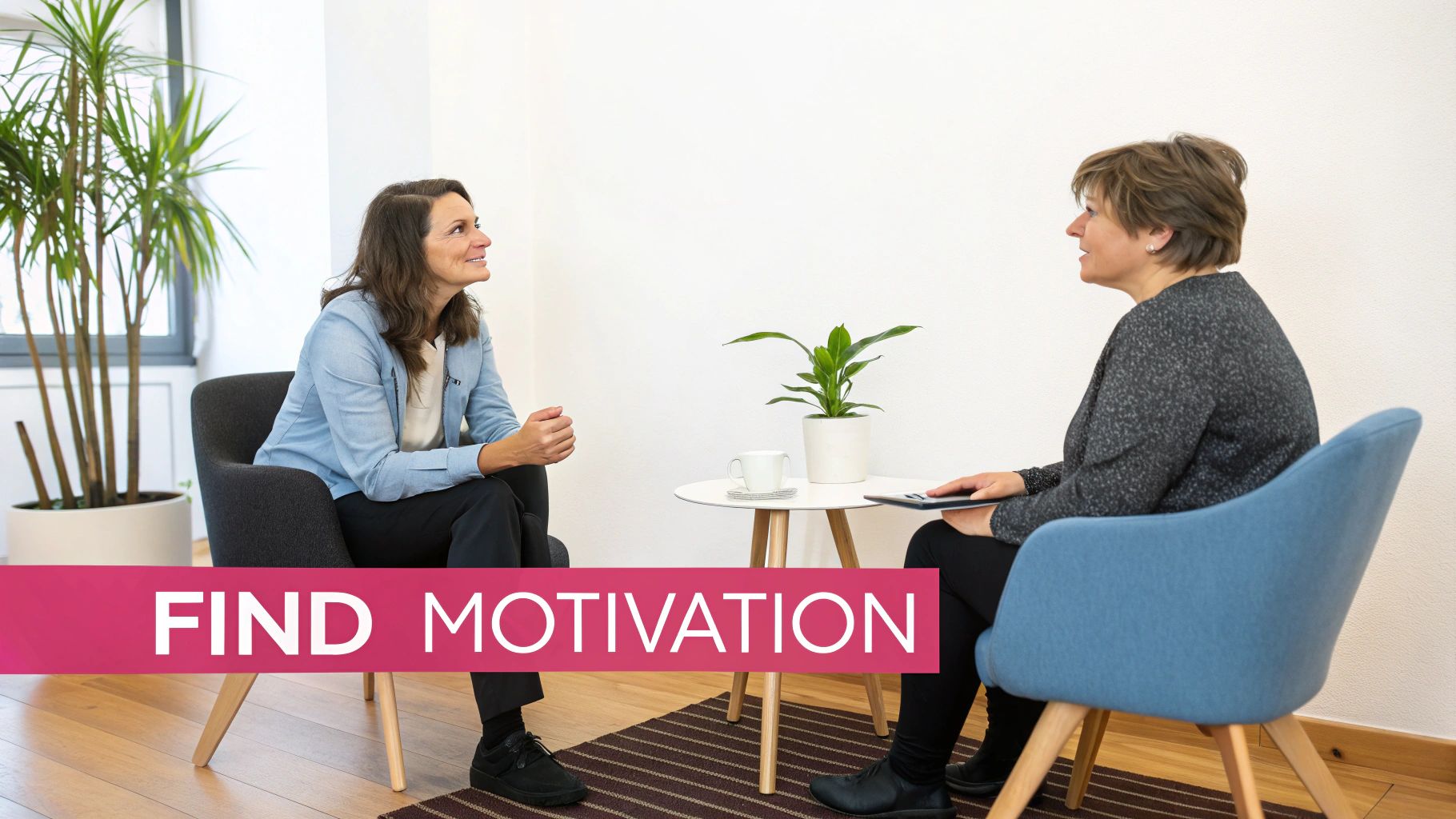
Motivational Interviewing (MI) is a collaborative, client-centered counseling style for strengthening a person’s own motivation and commitment to change. Developed by William Miller and Stephen Rollnick, it moves away from confrontation and instead focuses on exploring and resolving the ambivalence you might feel about your drinking habits. It helps you find the internal drive to change, making it one of the most respectful and effective ways to reduce alcohol consumption.
This approach is guided by a partnership between you and a practitioner. Through specific communication techniques, MI helps you articulate your own reasons for wanting to cut back. It empowers you by highlighting your autonomy and capacity for change, rather than having an expert tell you what to do. The goal is to build your confidence and readiness to take action on your own terms.
How MI Works in Practice
At its core, MI is a conversation about change. A trained professional uses open-ended questions, affirmations, reflective listening, and summaries to help you explore your feelings about drinking. This process allows you to examine the discrepancy between your current behaviors and your deeper personal values or goals.
For example, a practitioner might say, "On one hand, you enjoy socializing with friends over drinks, but on the other, you're concerned about how it's affecting your energy levels and work performance." This reflection helps you hear your own mixed feelings out loud, clarifying your personal motivations for reducing your intake without feeling pressured or judged. It’s frequently used in brief interventions in primary care and within employee assistance programs (EAPs).
Actionable Steps to Apply MI Principles
While MI is best practiced with a trained counselor, you can apply its spirit to your self-reflection:
- Explore Your Ambivalence: Write down the "good things" and "not-so-good things" about drinking. This honest assessment helps you see the full picture and understand what drives your choices.
- Use Open-Ended Questions: Ask yourself questions that can’t be answered with a simple "yes" or "no." For example, "What would be some of the benefits if I drank less on weekends?" or "How does my alcohol use fit with my goal of being healthier?"
- Connect to Your Values: Identify your core values, such as health, family, or career success. Then, consider how your current drinking patterns align with or conflict with those values. This can create powerful internal motivation for change.
3. Naltrexone (Medication-Assisted Treatment)
Medication-assisted treatment (MAT) offers a powerful, science-backed approach to curbing alcohol use, and naltrexone is a leading option in this category. It works by blocking the opioid receptors in your brain that are responsible for the pleasurable and rewarding feelings you get from drinking alcohol. By diminishing this reinforcing effect, naltrexone helps reduce cravings and lowers the incentive to drink, making it one of the most effective ways to reduce alcohol consumption.
This medication doesn't create a negative reaction to alcohol like some other treatments; instead, it simply makes drinking less appealing. By taking the "reward" out of the equation, naltrexone empowers you to break the cycle of craving and consumption. It's available as a daily oral pill or a monthly extended-release injection (Vivitrol), offering flexibility to fit different lifestyles and needs.

How Naltrexone Works in Practice
Naltrexone is not a "magic pill" but a tool that works best when integrated into a comprehensive treatment plan that includes therapy and support. It gives you the physiological support needed to engage more effectively in behavioral changes.
For example, someone who typically drinks heavily at social events might take naltrexone and find that after one drink, the usual urge for a second or third is significantly weaker or absent. This allows them to practice new social skills and build confidence in situations that were previously high-risk, reinforcing their long-term goals.
Actionable Steps to Consider Naltrexone
If you're exploring medication, it's crucial to work with a healthcare professional.
- Consult a Doctor: Schedule an appointment with a primary care physician or a specialist in addiction medicine to discuss if naltrexone is right for you. They will perform necessary evaluations, including liver function tests.
- Combine with Counseling: Naltrexone is most effective when paired with therapy like CBT. The medication addresses the physical cravings, while therapy helps you develop coping strategies and address the root causes of your drinking.
- Be Patient and Consistent: The effects of naltrexone can take a week or two to become noticeable. Adherence to your prescribed dose and attending regular follow-up appointments are essential for success.
4. Strategy 4: Restore Brain Chemistry with Acamprosate (Campral)
Acamprosate, known by the brand name Campral, is an FDA-approved medication designed to help individuals maintain abstinence from alcohol. It operates differently from other treatments by working to restore the natural chemical balance in the brain that has been disrupted by chronic, heavy drinking. By stabilizing this neurochemistry, it helps reduce the persistent, long-term withdrawal symptoms like unease, anxiety, and insomnia that often lead to a relapse.
This medication doesn't create a disulfiram-like reaction (making you sick if you drink) or produce any rewarding or euphoric effects. Instead, it diminishes the physical and emotional distress associated with early sobriety, making it one of the most effective medical ways to reduce alcohol consumption by targeting the underlying biological cravings. It is a powerful tool for those who have already stopped drinking and need support to maintain their sobriety.
How Acamprosate Works in Practice
Acamprosate is typically prescribed once a person has achieved initial abstinence. It is believed to work by modulating the glutamate and GABA neurotransmitter systems, which are key players in the brain's reward and stress pathways. Chronic alcohol use hyper-activates these systems, and Acamprosate helps bring them back to a state of equilibrium.
This rebalancing act makes cravings less intense and less frequent. It is commonly used in both inpatient and outpatient settings, such as addiction medicine practices, and is often integrated into comprehensive recovery programs that include counseling and behavioral therapy for the most effective outcome.
Actionable Steps for Using Acamprosate
Consulting with a healthcare professional is the first and most crucial step. If Acamprosate is right for you, consider these tips:
- Adhere to the Dosing Schedule: Acamprosate is typically taken three times per day. Set phone reminders or use a pill organizer to maintain consistency, which is critical for its effectiveness.
- Combine with Therapy: Medication works best when paired with counseling or a support group. This combination addresses both the biological and psychological aspects of alcohol dependence.
- Commit to the Full Course: Treatment is often recommended for up to 12 months. Sticking with the full duration helps stabilize brain function and solidify new, healthier habits.
5. Habit Stacking and Routine Replacement
Habit stacking is a powerful behavioral strategy that leverages your existing daily routines to build new, healthier habits. Popularized by authors like James Clear, this method operates on the simple principle of attaching a new desired behavior to a pre-existing one, effectively replacing an old habit without relying on sheer willpower.
Instead of fighting the urge to have a drink after work, you create a new, automatic sequence. The cue that once triggered your desire for alcohol, like walking in the door after your commute, becomes the trigger for a healthier activity. This is one of the most effective ways to reduce alcohol consumption because it works with your brain's natural tendency to follow established patterns.
How Habit Stacking Works in Practice
The core idea is to replace the drinking ritual with something else you find rewarding. If your automatic routine is "After I finish work, I will pour a glass of wine," habit stacking helps you rewrite that script to "After I finish work, I will change into my workout clothes and go for a walk."
By linking the new action directly to an established cue, you remove the decision-making process that often leads back to old habits. The goal is to make the new routine so automatic that it becomes the default, pushing the old drinking habit out of the picture.
Actionable Steps to Apply Habit Stacking
You can start engineering new behaviors and replacing old routines with a structured approach:
- Map Your Current Routine: Identify the exact cue that triggers your drinking. Is it finishing your last work email? Hearing a specific notification? Pinpoint the moment just before the craving starts.
- Choose an Enjoyable Replacement: Select a new habit that you genuinely look forward to. This could be preparing a relaxing herbal tea, listening to a favorite podcast, or spending 15 minutes on a hobby. The replacement must be appealing.
- Start Small and Be Consistent: Begin with one habit stack. For example: "When I put my work laptop away, I will immediately put on my running shoes." Consistency is more important than intensity. To provide structure and accountability, many people find success using the best habit tracking apps to monitor their progress.
6. Strategy 6: Cultivate Self-Awareness with Mindfulness and Meditation
Mindfulness and meditation practices offer a powerful, internal strategy for changing your relationship with alcohol. This approach is based on developing a moment-to-moment awareness of your thoughts, feelings, and bodily sensations without judgment. Instead of being automatically driven by a craving, mindfulness gives you the space to observe it, understand its transient nature, and choose a different response.
This technique trains you to become an impartial observer of your own internal landscape. You learn to recognize the early signs of a craving, the emotional triggers like stress or boredom that fuel it, and the automatic thought patterns that say "I need a drink." By simply noticing these urges without acting on them, you weaken their power over time, which is a transformative way to reduce alcohol consumption.
How Mindfulness Works in Practice
Mindfulness isn't about emptying your mind; it's about learning to sit with your thoughts and urges without being controlled by them. Programs like Mindfulness-Based Relapse Prevention (MBRP), developed by researchers including Sarah Bowen, are specifically designed to help people manage cravings for substances.
For instance, when a strong urge to drink arises, a mindful approach would be to pause and notice the physical sensations of the craving. You might observe a tightness in your stomach or a racing thought. By breathing through these feelings instead of immediately reaching for a drink, you learn that cravings are temporary waves that will pass, building your resilience and self-control.
Actionable Steps to Apply Mindfulness Principles
You can begin integrating mindfulness into your daily life with simple, consistent practices:
- Start Small with Guided Meditation: Use apps like Headspace or Insight Timer for 5-10 minutes each day. Guided sessions make it easy to build a habit and learn foundational techniques.
- Practice Mindful Observation: When a craving strikes, don't fight it. Acknowledge it by saying to yourself, "There is a craving to drink." Observe how it feels in your body and notice as it eventually subsides on its own.
- Incorporate a Body Scan: Spend a few minutes bringing awareness to different parts of your body, from your toes to your head. This practice grounds you in the present moment and can reduce anxiety-driven drinking.
- Join a Support Group: Connecting with others on a similar path provides encouragement and accountability. For those considering online peer support, understanding how to build an online community that thrives can enhance your journey to reduce alcohol consumption.
7. Support Groups and Peer Support (AA, SMART Recovery, etc.)
Connecting with others who share similar goals and experiences can be a cornerstone of successfully changing your drinking habits. Support groups provide a safe, non-judgmental space to share challenges, celebrate successes, and learn from the journeys of others. They are built on the principle of mutual aid, where members offer accountability and encouragement.
These community-based programs dismantle the sense of isolation that often accompanies a decision to reduce alcohol consumption. Whether your goal is moderation or complete abstinence, hearing from people who understand your struggles firsthand provides powerful validation and practical wisdom. This shared experience creates a strong foundation for lasting change.
How Support Groups Work in Practice
Support groups operate with different philosophies, allowing you to find a system that aligns with your personal beliefs and goals. Programs like Alcoholics Anonymous (AA) use a 12-step spiritual framework, while alternatives like SMART Recovery focus on self-empowerment and cognitive-behavioral techniques to manage urges.
For instance, someone in a Moderation Management meeting might share a strategy for sticking to a two-drink limit at a wedding, while a member of Women for Sobriety might discuss coping mechanisms specific to the pressures women face. The core function is the same: providing a structured environment for peer-driven support.
Actionable Steps to Engage with Peer Support
Finding the right group is key, and it often requires some exploration:
- Explore Different Formats: Attend meetings for a few different groups like AA, SMART Recovery, or a local moderation group. Notice the tone, structure, and general "feel" of each one to see what resonates with you.
- Find an Accountability Partner: Within a group, connect with a sponsor or an accountability partner. This person can provide one-on-one support during high-risk moments.
- Leverage Online Options: If local meetings are inaccessible or you prefer anonymity, explore the vast number of online meetings and forums. Most major organizations offer robust virtual platforms.
- Commit to Consistency: Try the "90 meetings in 90 days" approach, a traditional recommendation. Consistent attendance helps build relationships and reinforces new, healthier habits.
8. Environmental Design and Trigger Management
Changing your environment is a powerful, proactive strategy to reduce alcohol consumption by removing the very cues that prompt you to drink. This approach, known as environmental design, is based on the simple idea that our surroundings heavily influence our behavior. Instead of battling constant temptations with willpower alone, you strategically modify your physical and social spaces to make healthier choices easier.
This method involves identifying and eliminating triggers in your daily life. A trigger can be anything from seeing a bottle of wine on your kitchen counter to driving past your favorite bar on the way home from work. By consciously engineering your environment to minimize exposure to these cues, you reduce the frequency and intensity of cravings, creating a supportive setting for your goals.
How Environmental Design Works in Practice
This strategy is about making intentional changes, both big and small, that steer you away from drinking. It's less about resisting temptation and more about preventing it from appearing in the first place. You become the architect of your own environment, designing it for success.
For example, if you often drink while watching TV after work, you could remove all alcohol from the house and stock the fridge with appealing non-alcoholic alternatives like flavored sparkling water or craft mocktails. This simple change removes the immediate, easy option to drink and replaces it with a healthier one, disrupting the old habit loop.
Actionable Steps to Redesign Your Environment
You can start shaping a more supportive environment with these practical steps:
- Conduct an Environment Audit: Walk through your home and daily routines. Identify every "drinking trigger," such as a specific chair, a liquor cabinet, or a particular route home. Make a list of these cues.
- Remove Temptations: The most direct step is to remove alcohol from your home entirely. If that's not possible, store it in an inconvenient, out-of-sight location, like a locked cabinet in the garage.
- Create New Paths: Consciously change your routines to avoid triggers. Take a different route home to bypass bars and liquor stores, or suggest social activities that don't revolve around alcohol, like hiking or going to a movie.
- Stock Up on Alternatives: Fill your fridge with exciting non-alcoholic drinks. Having a delicious, ready-to-pour alternative makes it much easier to skip the alcohol when a craving strikes.
9. Disulfiram (Antabuse) - Deterrent Medication
Disulfiram, commonly known by the brand name Antabuse, is an FDA-approved medication that uses negative reinforcement to deter drinking. It operates on a simple, powerful principle: if you consume alcohol while taking it, you will experience a highly unpleasant physical reaction. This approach is different from other medications that reduce cravings; instead, it creates a strong deterrent to the act of drinking itself.
This medication works by blocking an enzyme involved in metabolizing alcohol, causing a rapid buildup of acetaldehyde, a toxic compound. The resulting reaction can include severe flushing, throbbing headaches, nausea, vomiting, and chest pains. Knowing this consequence provides a potent reason to avoid alcohol, making it one of the most direct ways to reduce alcohol consumption for those who are highly motivated to quit.
How Disulfiram Works in Practice
Disulfiram is not a standalone cure but a tool that supports a broader recovery plan. It is most effective when used within a structured environment where accountability is high, such as in an intensive outpatient program or as part of a court-ordered treatment plan following a DUI.
Its success hinges on the individual's commitment to taking the medication consistently. When integrated with comprehensive behavioral therapy and medical supervision, it provides a crucial safety net that prevents impulsive drinking, giving the individual space to develop new coping skills and healthier habits.
Actionable Steps for Using Disulfiram Safely
Due to its potent effects, using Disulfiram requires careful medical guidance. It is reserved for individuals who are fully committed to sobriety.
- Wait Before Starting: You must wait at least 12-24 hours after your last alcoholic drink before taking the first dose to avoid triggering a reaction.
- Combine with Therapy: Use Disulfiram alongside a strong behavioral support system, like Cognitive Behavioral Therapy (CBT), to address the underlying reasons for drinking.
- Undergo Medical Monitoring: Regular check-ins with a healthcare provider are essential to monitor for side effects and ensure the treatment remains safe and effective for you.
- Build Accountability: This medication works best when you have external support. Informing a trusted family member or participating in a supervised program can reinforce your commitment.
10. Goal-Setting and Drink Tracking Apps/Tools
Leveraging technology can provide the data and motivation needed to change your drinking habits. Goal-setting and drink tracking apps turn the abstract goal of "drinking less" into a concrete, measurable project. By logging each drink, you gain a clear, objective view of your consumption patterns, which is the first step toward making informed changes.
This method works by increasing your awareness and accountability. Instead of guessing how much you drank over the week, you have precise data showing your intake, spending, and progress toward your goals. This feedback loop is a powerful tool for self-monitoring and is one of the most effective ways to reduce alcohol consumption by making you more mindful of each decision to drink.
How Drink Tracking Works in Practice
These tools range from simple journals to sophisticated apps that track everything from drink type and volume to calories and cost. Apps like Drinks Meter provide personalized feedback based on your consumption, while others like Nomo focus on sobriety streaks and community support. The key is transforming an unconscious habit into a conscious action that you must record.
For example, you might set a goal to have no more than four drinks per week. Each time you have a drink, you log it in your chosen app or notebook. At the end of the week, you can review your log to see if you met your goal, identify which days or situations were most challenging, and adjust your strategy for the following week.
Actionable Steps to Apply Tracking Tools
You can begin using a tracking method immediately to support your reduction goals:
- Choose Your Tool: Select a method that fits your lifestyle. This could be a dedicated app like the Moderation Companion, a health app with tracking features, or simply a small notebook you carry with you.
- Set SMART Goals: Make your goals Specific, Measurable, Achievable, Relevant, and Time-bound. For example, "I will drink a maximum of two alcoholic beverages only on Friday and Saturday nights for the next month."
- Review Your Data Weekly: Set aside time each Sunday to analyze your patterns. Did stress at work lead to more drinking? Did you drink more when with certain friends? Use these insights to plan ahead.
- Celebrate Milestones: Acknowledge your progress. Meeting a weekly goal or hitting a one-month milestone reinforces your new habits and keeps you motivated for the long term.
10-Method Comparison: Reducing Alcohol Consumption
| Approach | Implementation Complexity 🔄 | Resource Requirements 💡 | Expected Outcomes ⭐📊 | Ideal Use Cases | Key Advantages ⚡ |
|---|---|---|---|---|---|
| Cognitive Behavioral Therapy (CBT) | Moderate 🔄 — structured therapy, 12–20 sessions | Trained therapist or online program; time and moderate cost | Strong evidence ⭐⭐⭐ 📊 — reduces drinking, builds coping skills | Skills-building, relapse prevention, those open to therapy | Addresses root causes; transferable skills; adaptable |
| Motivational Interviewing (MI) | Moderate–High 🔄 — requires skilled, empathic practitioner | Clinician training; can be brief; integrates with care | Good evidence ⭐⭐ 📊 — increases motivation; ~20–30% effect in studies | Ambivalent or resistant clients; brief primary-care interventions | Reduces resistance; brief and versatile; integrates well |
| Naltrexone (Medication-Assisted) | Low–Moderate 🔄 — prescriber management and monitoring | Medication (daily or monthly), liver tests, cost/insurance | High ⭐⭐⭐ 📊 — reduces heavy drinking; 25–50% relapse reduction | Moderate–severe AUD; combined with counseling | Pharmacologic craving reduction; no abuse potential |
| Acamprosate (Campral) | Low 🔄 — medication with consistent dosing (TID) | Medication adherence support; renal monitoring; low side effects | Moderate ⭐⭐ 📊 — helps maintain abstinence post-withdrawal | Maintaining sobriety after detox; long-term support | Safe, non-addictive; suitable for long-term maintenance |
| Habit Stacking & Routine Replacement | Low 🔄 — self-directed but requires planning | Time and planning; low cost; environment prep | Moderate over time ⭐⭐ 📊 — steady behavior change (30–60+ days) | People with stable routines wanting gradual change | Sustainable, low-cost, leverages existing cues |
| Mindfulness & Meditation | Low–Moderate 🔄 — needs regular practice and guidance | Daily practice time; apps or programs; minimal cost | Moderate ⭐⭐ 📊 — improves craving management and regulation | Stress- or cue-driven drinking; adjunctive therapy | Portable practice; broad mental-health benefits |
| Support Groups & Peer Support | Low 🔄 — peer-led, variable structure | Time commitment; local/online access; often free | Moderate–High ⭐⭐📊 — better outcomes with consistent participation (40–60%) | Seeking accountability, social support, or low-cost help | Accessible, communal support, low cost |
| Environmental Design & Trigger Management | Low 🔄 — practical modifications and planning | Planning, boundary-setting; low cost; social coordination | Immediate moderate effect ⭐⭐ 📊 — reduces cue exposure and slips | High-risk environments; early relapse prevention | Quickly reduces triggers; lowers reliance on willpower |
| Disulfiram (Antabuse) | Moderate 🔄 — medical supervision + high motivation required | Medication, liver monitoring, accountability; inexpensive | Effective for deterrence ⭐⭐ 📊 — strong aversive effect for motivated users | Highly motivated abstainers; court-ordered or monitored programs | Powerful behavioral deterrent; long-acting protection |
| Goal-Setting & Drink-Tracking Apps/Tools | Low 🔄 — simple to start, needs consistent use | App or journal, device access; user engagement | Moderate ⭐⭐ 📊 — self-monitoring → ~15–25% greater change | Self-directed users; complements therapy or meds | Convenient, data-driven, affordable and scalable |
Your Path Forward: Crafting a Sustainable and Fulfilling Lifestyle
Embarking on a journey to reduce your alcohol consumption is a profound act of self-care and empowerment. It's not about a single, dramatic decision but a series of conscious, positive choices that accumulate over time. The comprehensive list of strategies we've explored, from therapeutic approaches like Cognitive Behavioral Therapy (CBT) to practical tools like drink tracking apps, provides a powerful and diverse toolkit. This isn't a rigid prescription; it's a menu of possibilities designed to help you find what truly resonates with your unique life circumstances, goals, and personality.
The core takeaway is that there is no universal "right way" to approach this change. Your most effective strategy might be a dynamic combination of methods. For instance, you could use the structured goal-setting of an app to monitor your progress while simultaneously practicing mindfulness to better understand the emotional triggers that lead you to drink. You might find that redesigning your home environment to remove alcohol cues is most impactful when paired with the accountability of a support group like SMART Recovery. The power lies in the integration of these tools.
Key Insights for Your Journey
The most successful paths forward are built on a foundation of self-awareness and consistent action. As you move from reading this article to implementing its ideas, keep these central principles in mind:
- Curiosity Over Judgment: Approach this process with an open and curious mindset. Instead of judging yourself for a slip-up, ask what you can learn from it. What was the trigger? What need was the drink attempting to fill? This perspective transforms setbacks into valuable data points for future success.
- Proactive Planning is Paramount: Lasting change rarely happens by accident. The most effective ways to reduce alcohol consumption involve proactive planning. This means deciding your drink limit before you go to the party, stocking your fridge with appealing non-alcoholic alternatives, and having a ready-made response for when someone offers you a drink you don't want.
- Progress, Not Perfection: The goal is not flawless execution from day one. There will be challenging days and moments of temptation. Celebrate small victories, like sticking to your goal for a single evening or trying a new alcohol-free activity. Consistent effort, even with occasional missteps, is what builds lasting momentum.
Actionable Next Steps to Take Today
Transforming knowledge into action is the most critical step. Don't let this be just another article you read; choose one or two concrete actions to implement immediately.
- Select Your Starting Strategy: Review the ten methods discussed. Which one feels most accessible or exciting to you right now? Is it downloading a tracking app like Sunnyside? Is it researching local mindfulness classes? Commit to exploring just one of these avenues this week.
- Identify and Address a Key Trigger: Think about the single most common situation where you tend to drink more than you'd like. Is it stress after work? Social anxiety at gatherings? Develop a specific, non-alcoholic plan for that one scenario. This could be brewing a calming herbal tea upon arriving home or planning a specific conversation starter for your next social event.
- Voice Your Intention: Share your goal with a trusted friend, partner, or family member. Simply stating your intention out loud can create a powerful sense of accountability and open the door for support you might not have otherwise received.
Ultimately, this journey is about so much more than subtracting drinks from your week. It’s about adding richness, clarity, and intention to your life. It’s about reclaiming your evenings for restorative rest, your weekends for energizing hobbies, and your mind for clearer thinking. By thoughtfully exploring these ways to reduce alcohol consumption, you are investing in a future with improved physical health, deeper emotional well-being, and a more authentic connection to yourself and the world around you. This is your path to design, and it leads to a more vibrant and fulfilling life.
Ready to redefine your evening ritual with a sophisticated, non-alcoholic alternative? Day Dreamer offers a thoughtfully crafted beverage designed to help you unwind and relax without the alcohol, making it an ideal companion on your journey to mindful consumption. Explore how you can elevate your wind-down routine at Day Dreamer.


