
So, you’ve heard the old saying that a little "hair of the dog that bit you" can fix a hangover. But what about the "hair of the other dog"—cannabis? The idea that weed can cure a hangover is a classic piece of folk wisdom, but it's not quite the magic wand some people make it out to be.
The truth is a lot more nuanced. While cannabis can’t magically undo a night of too many drinks, some of its compounds can definitely help you feel more human again. Think of it less as a cure and more as a very effective symptom manager for the worst parts of a hangover, like nausea, headaches, and that dreaded hangxiety.
Separating Hangover Myth from Reality
When your head is pounding and your stomach is doing flips, you're willing to try just about anything. The suggestion to use cannabis for a hangover has been passed around for ages, but what does the actual science have to say? Frankly, the research is still playing catch-up to what many people have been saying for years.
The whole conversation really boils down to cannabinoids—the active compounds in the cannabis plant. You’ve likely heard of the two main players: THC (tetrahydrocannabinol) and CBD (cannabidiol). Each one works with your body's endocannabinoid system, a vast network that helps keep things like your mood, pain sensation, and appetite in balance.
THC is the compound known for its psychoactive effects, but it's also a powerhouse at stopping nausea in its tracks. CBD, on the other hand, won’t get you high but is fantastic for its anti-inflammatory and anxiety-soothing benefits.
This distinction is everything. Using cannabis for a hangover isn't about getting stoned out of your mind. It’s about strategically picking the right tool for the job. THC can be your go-to for settling a rebellious stomach, while CBD is perfect for taking the edge off your anxiety and soothing those body aches.
Cannabis for Hangovers Fact vs Fiction
Let's clear the air and break down what's real and what's just wishful thinking.
| Claim | Scientific Reality |
|---|---|
| "Cannabis is a complete cure for hangovers." | Fiction. Cannabis can alleviate specific symptoms like nausea or headaches, but it doesn't address the root causes like dehydration or alcohol's metabolic byproducts. |
| "Any cannabis product will help." | Fiction. THC can help with nausea, while CBD is better for inflammation and anxiety. High-THC products might actually worsen anxiety or dizziness for some. |
| "Getting high will make me forget my hangover." | Partial Fact. The psychoactive effects of THC can distract from discomfort, but overdoing it can lead to paranoia or a "green out," making you feel much worse. |
| "Cannabis helps with hangover headaches." | Fact. Both THC and CBD have pain-relieving and anti-inflammatory properties that can help soothe a pounding headache. |
| "Smoking weed for a hangover is the best way." | Fiction. Smoking can irritate the throat and lungs. Healthier alternatives like beverages or tinctures are gentler on the body and help with hydration. |
Understanding these distinctions helps you make smarter choices instead of just blindly hoping for the best.
What the Research Shows
When we look for hard scientific proof, things get a bit murky. A comprehensive 2022 systematic review on the topic highlighted just how much modern research is needed. It found that across a batch of older studies, only 3.5% of performance tests showed any significant impairment the next day, and none of them used the rigorous, double-blind, placebo-controlled methods we rely on today.
This gap in high-quality studies means we often have to lean on what we know about how cannabinoids work in the body, plus the massive amount of anecdotal evidence from people who swear by it.
A Modern Approach to Relief
Thankfully, we've moved far beyond just smoking a joint and hoping for the best. The market today is full of sophisticated products designed for much more controlled and gentle effects. Think low-dose THC and CBD-infused beverages, like sparkling waters, which offer a much more practical way to find relief.
These newer options have some clear advantages when you're feeling fragile:
- Hydration: Unlike smoking, a cannabis-infused drink actually helps you rehydrate—a crucial part of bouncing back from a hangover.
- Gentle Dosing: They come with precise doses, making it easy to "start low and go slow" to find your sweet spot without getting uncomfortably high.
- Stomach Friendly: A light, bubbly drink is often far more appealing and easier on a queasy stomach than a heavy edible.
The key is to shift your mindset. Cannabis isn’t a one-shot cure. It’s a tool you can use to manage your discomfort, and when you approach it that way, you can make informed choices that genuinely help you feel better on a rough morning.
So, Why Do Hangovers Happen in the First Place?
Before we can talk about relief, we have to get to know the enemy. A hangover isn't just one thing—it’s a full-on system failure caused by your body struggling to process last night's alcohol. It’s less of a single problem and more like a riot breaking out inside your body, with several different troublemakers causing chaos at once.
The most famous culprit is dehydration. Alcohol is a diuretic, which is just a fancy way of saying it makes you pee constantly. This drains your body of water, and that pounding headache and desperate thirst are your body’s way of screaming for H2O.
But it’s not just about being thirsty. Your body also kicks off a huge inflammatory response to the alcohol, almost like it’s fighting off an injury. This is why you feel so achy, foggy, and generally miserable—your immune system is in overdrive, causing inflammation that makes you feel sick.
The Main Hangover Culprits
To have any chance of feeling better, you need to know what you're actually fighting. That awful feeling is a cocktail of several distinct biological reactions.
Here’s a breakdown of what your body is up against:
- Gastrointestinal Mayhem: Alcohol is a direct irritant to your stomach lining. It cranks up stomach acid production, which is a direct ticket to nausea, stomach pain, and sometimes even vomiting.
- Wrecked Sleep: Sure, a drink might knock you out, but the quality of that sleep is terrible. Alcohol messes with your sleep cycles and prevents you from getting the deep, restorative rest you need. It’s why you wake up feeling completely drained, no matter how long you were in bed.
- Toxic Byproducts: As your liver works hard to break down alcohol, it produces a nasty compound called acetaldehyde. This toxic substance is a major player behind the headache, nausea, and flushed feeling of a hangover.
A hangover is your body sending a very clear signal: you pushed it too far. It's a brutal mix of dehydration, inflammation, digestive upset, and sleep deprivation all hitting you at once.
Knowing these individual pieces of the puzzle is key. It helps explain why the idea that "weed cures hangovers" isn't about some magic bullet, but rather about a substance that can potentially tackle these specific symptoms one by one.
Meet Your Body’s Master Regulator: The Endocannabinoid System
Tucked away inside your body is a powerful network you might have never heard of: the endocannabinoid system (ECS). Think of it as your body's internal balancing act, constantly working to maintain a state of equilibrium called homeostasis. It has a hand in regulating just about everything, from your mood and appetite to pain and immune function.
This system is built on two main types of receptors, CB1 and CB2, which are scattered throughout your brain, organs, and immune cells. Your body even makes its own cannabinoids (called endocannabinoids) to activate these receptors and keep things running smoothly.
When you’re hungover, the ECS is thrown into chaos. Your internal balance is gone, which is why you feel pain, nausea, and anxiety. This is where cannabis comes into the picture.
The cannabinoids found in the cannabis plant (like THC and CBD) are molecularly very similar to the ones your body produces naturally. They can interact with your CB1 and CB2 receptors, almost like calling in reinforcements to help restore order. For instance, THC can influence receptors in the brain that quiet nausea, while CBD can help calm the inflammatory response that’s making you feel so awful.
This interaction is the scientific reason why cannabis might offer real, targeted relief. It’s not just about masking how you feel—it’s about working directly with your body’s own regulatory system to calm the internal storm and help you get back to feeling human again.
A Practical Guide to Managing Hangover Symptoms with Cannabis
Let's be real: claiming that weed "cures" a hangover is a stretch. But if you use it smartly, it can feel like a total lifesaver. The trick isn't to get super high to forget you feel awful. It's about using specific cannabinoids to target the exact symptoms making you miserable.
Think of THC and CBD as different tools in your recovery toolkit. Instead of taking a sledgehammer to the problem, you can break your hangover down—the churning stomach, the pounding head, the racing thoughts—and pick the right tool for each job. This symptom-by-symptom approach gives you targeted, effective relief when your body feels completely out of your control.
Tackling Nausea and an Upset Stomach
Of all the hangover horrors, that relentless, queasy stomach is often the worst. It’s the feeling that makes even looking at a glass of water a challenge. This is where THC is the star player, thanks to its well-known anti-nausea (or antiemetic) powers.
THC works by interacting with receptors in your brainstem that manage your vomiting reflex, essentially sending a "calm down" signal to your stomach. For this, a product with a decent amount of THC will usually work better than CBD alone. But—and this is important—you have to start with a tiny dose. Too much THC can easily backfire, making you feel dizzy and even more anxious.
A gentle entry point is key. A low-dose cannabis-infused beverage, like a THC sparkling water, can be perfect. It gives you a controlled amount of THC to settle your stomach while also helping you with the number one rule of hangover recovery: hydration. It’s a much kinder option for an irritated gut than smoking or a heavy edible.
Soothing a Pounding Headache
A hangover headache isn't just a regular ache; it’s more like a tiny, angry drummer took up residence between your ears. That throbbing pain is usually a nasty cocktail of dehydration and alcohol-induced inflammation. The good news is that both THC and CBD can help here, as they both have pain-relieving (analgesic) and anti-inflammatory properties.
- THC for Pain: It works on pain pathways in the brain, helping to turn down the volume on the pain signals.
- CBD for Inflammation: It’s known for its ability to reduce inflammation throughout the body, which helps tackle one of the root causes of your misery.
For headaches, a product with a balanced 1:1 ratio of CBD to THC is often the sweet spot. You get the pain-dulling benefits of THC, while the CBD helps with the underlying inflammation and can smooth out any potential jitters from the THC. Just remember to chug plenty of water alongside it—cannabis helps the pain, but it won't fix the dehydration causing it.
Calming Hangover Anxiety or "Hangxiety"
For a lot of us, the physical pain of a hangover comes with a brutal sidekick: a wave of anxiety, regret, and general unease. We call it "hangxiety." Alcohol messes with the brain's chemical balance, and as your body processes it, the rebound effect can leave you feeling mentally frazzled and on edge.
This is where CBD really shines. It's non-intoxicating and has fantastic anti-anxiety (anxiolytic) properties. It helps soothe your nervous system without any psychoactive effects that could spin you into a paranoid state, which is the last thing you need when you're already feeling fragile.
When you're trying to shut down hangxiety, a CBD-dominant product is your safest and most effective choice. It helps take the mental edge off, letting you relax and recover without the risk of feeling "too high."
If you’re stuck with both a headache and anxiety, that balanced 1:1 ratio product can be a great two-for-one solution. The two cannabinoids work together to provide a much more rounded and gentle sense of relief.
Choosing the Right Cannabinoid for Your Hangover Symptom
Figuring out which cannabinoid to use for which symptom can feel like a pop quiz when you're already feeling rough. This table breaks it down, helping you match the right cannabis compound to the specific hangover problem you're trying to solve.
| Hangover Symptom | Best Cannabinoid Approach | Potential Benefit | Consideration |
|---|---|---|---|
| Nausea & Vomiting | THC-Dominant | Directly targets the brain's nausea control center for quick relief. | Start with a very low dose (2-5mg) to avoid dizziness or worsening symptoms. |
| Headache & Body Aches | Balanced 1:1 THC:CBD | Combines THC's pain relief with CBD's anti-inflammatory properties for comprehensive care. | Hydration is still essential. This is not a substitute for water. |
| Anxiety & "Hangxiety" | CBD-Dominant | Calms the nervous system and reduces feelings of unease without psychoactive effects. | Look for products with at least 10-20mg of CBD per serving for noticeable effects. |
| Fatigue & Brain Fog | Low-Dose Sativa or CBD | Some sativa strains may provide a mild energy boost, while CBD can help improve mental clarity. | Avoid high-THC products, which can increase grogginess for some users. |
At the end of the day, you're looking for gentle support, not a way to overwhelm your already stressed-out system. By choosing your cannabinoid and consumption method carefully—with a big thumbs-up for hydrating, low-calorie options like a Day Dreamer sparkling water—you can manage your symptoms and make that road to recovery a whole lot smoother.
How to Use Cannabis Safely When Hungover
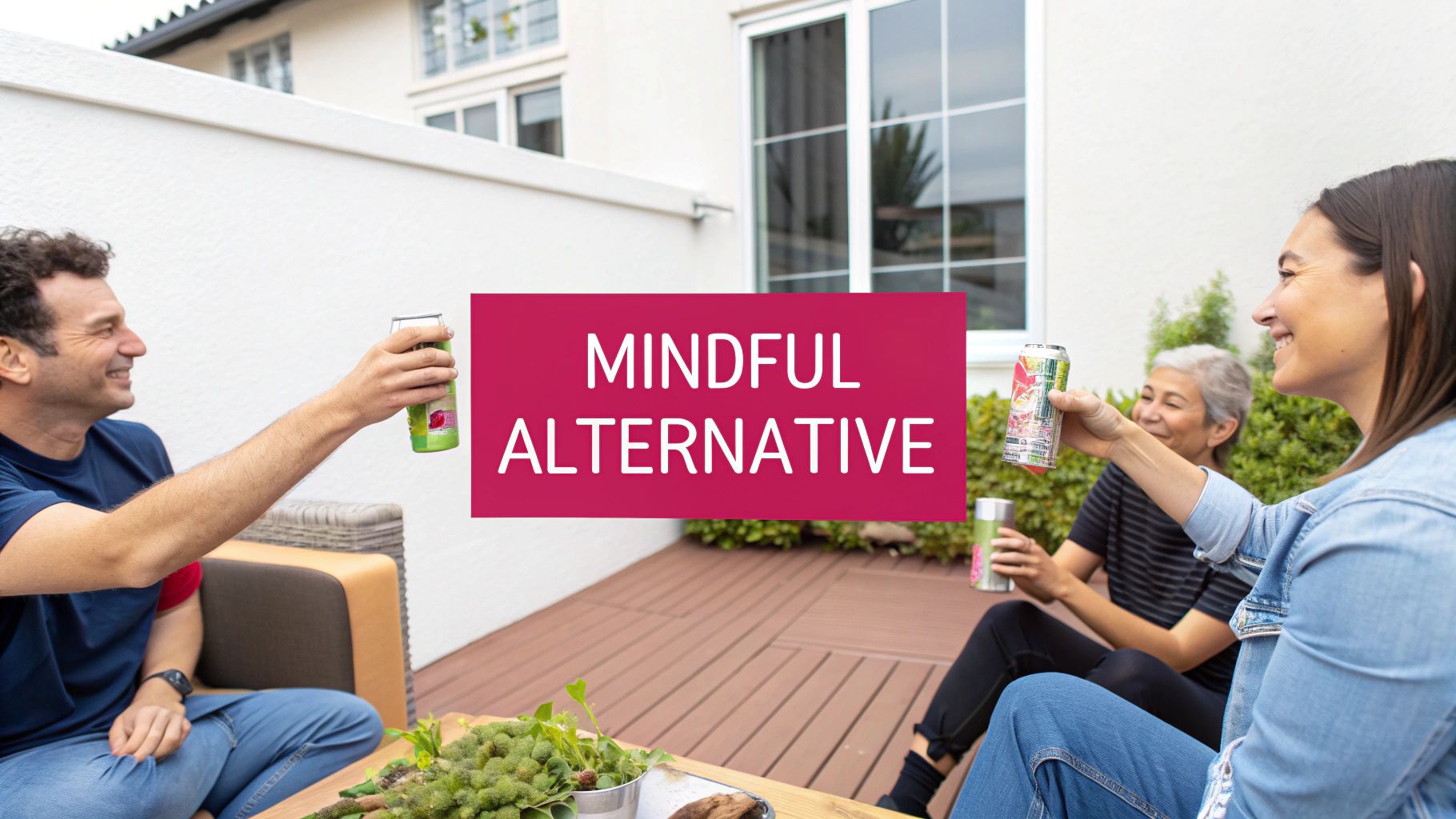
When your body is already waving a white flag after a long night, reaching for cannabis requires a smart, gentle touch. This isn't about overpowering your system; it's about finding careful, targeted relief. The main thing to remember is that your body is in a uniquely vulnerable state.
Think of your normal cannabis tolerance as your baseline on a good day. A hangover, however, is a different beast entirely—your internal systems are already battling dehydration, inflammation, and fatigue. This means your usual dose might feel much stronger or even produce unpredictable effects, making a cautious approach absolutely essential.
Start Low and Go Slow: Your Hangover Mantra
The golden rule of cannabis consumption—"start low and go slow"—is more critical than ever when you're hungover. Your body's chemistry is already out of whack, and a dose that feels perfect on a normal day could easily tip you into anxiety or dizziness when you're already feeling fragile.
Begin with a true microdose, somewhere between 1-2.5mg of THC. After that, wait. Give it at least a full hour, especially if you're using beverages or tinctures, to really see how you feel before even thinking about taking more. This patient approach is the best way to keep from making a bad morning even worse.
Your hungover body is not your normal body. Treat it with extra care by assuming your tolerance is significantly lower than usual. A small dose can provide relief without overwhelming your already stressed system.
This isn’t a race to feel better. It’s a slow, steady process of helping your system find its balance again. Going overboard is the fastest way to turn a potential remedy into another problem.
Key Risks to Keep in Mind
While the thought of weed soothing a hangover is appealing, it's a mistake to ignore the potential risks. Safe use is all about knowing the pitfalls and actively steering clear of them. The goal is to feel better, not to add new symptoms to the list.
Here are the most important things to watch out for:
- Compounding Dehydration: Cannabis is known to cause dry mouth, but it is absolutely not a substitute for water. Your first priority should always be rehydrating with water and electrolytes. A cannabis beverage can certainly help, but it shouldn't be your only source of fluids.
- Increased Dizziness and "Greening Out": Hangovers often bring a sense of lightheadedness. THC can lower blood pressure, which can make that dizziness feel much more intense, especially when you stand up too quickly. A high dose can lead to a "green out"—nausea, sweating, and anxiety—which is the exact opposite of what you're looking for.
- Impairment and Driving: This can't be said enough: never drive while under the influence of cannabis. A hangover already messes with your coordination, reaction time, and judgment. Adding cannabis to that mix makes getting behind the wheel dangerously irresponsible.
Choosing Your Product Wisely
The type of cannabis product you choose makes a huge difference when you're hungover. You're looking for something controllable, predictable, and gentle on your system.
Low-Dose Beverages vs. Edibles:
This is where THC-infused sparkling waters really shine. They offer very precise dosing, they tend to kick in much faster than traditional edibles (usually within 15-30 minutes), and they help with hydration. This lets you gauge the effects quickly and avoid that classic mistake of taking a second dose before the first one has even hit.
On the other hand, edibles like gummies or brownies can take up to two hours to fully take effect and their potency can feel unpredictable. That long, delayed fuse is a risky game to play when you're already feeling unwell. A precisely dosed, low-calorie beverage like a Day Dreamer sparkling water offers a much safer and more pleasant path to relief.
The Bigger Picture: Cannabis as an Alcohol Alternative
So far, we've been talking about using cannabis for damage control after a night of drinking. But let's zoom out for a second. What if, instead of just managing hangovers, you could sidestep them altogether? This changes the game from reacting to a rough morning to proactively choosing how you want to socialize and unwind.
This isn't just about dodging a headache. It's part of a much larger wellness trend where people are getting more mindful about what they put into their bodies. Many are starting to question why alcohol is the automatic, default social drink, especially when it comes with such a steep price the next day.
This search for better, smarter options is exactly why cannabis is stepping into the spotlight as a serious alcohol alternative.
The True Cost of Alcohol
That occasional, brutal hangover is really just the tip of the iceberg. When you look at the bigger picture, the health consequences of alcohol are massive, giving a pretty compelling reason why so many people are looking for an exit ramp. We're talking about a staggering global health issue.
A landmark 2018 study in The Lancet laid it all out, revealing that alcohol was tied to nearly 3 million deaths around the world each year. The really shocking part? For men between 15 and 49, it was behind a jaw-dropping 12% of all deaths. That makes it one of the biggest risk factors for dying prematurely in that group. You can dig deeper into these findings over at DocMJ.com.
Numbers like these really reframe the whole "let's grab a drink" conversation, moving it from a casual choice to one with some heavy long-term implications.
The Rise of the "California Sober" Lifestyle
This growing awareness is fueling a cultural shift, often called the "California Sober" movement. It's a simple concept: people cut back on or completely ditch alcohol, choosing instead to use cannabis in a more mindful, intentional way. It's less about swapping one substance for another and more about making a conscious lifestyle upgrade.
The "California Sober" mindset is all about keeping the good parts of a social drink—the ritual, the relaxation, the connection—without the physical and mental baggage that comes with alcohol.
This idea really clicks with people who can't afford to lose their productivity, mental clarity, or physical health to a hangover. They still want to hang out, celebrate, and enjoy a sophisticated drink, but they’re done sacrificing the entire next day for a few hours of fun. It’s all about finding a better balance.
A Modern Solution for Social Drinking
This is where precisely dosed, low-calorie cannabis beverages come in. Products like Day Dreamer sparkling waters are practically tailor-made for this modern, health-conscious crowd. They're designed to slip right into all those social moments where a beer or cocktail used to be the only option.
Think about it: you show up to a party with a cool, refreshing drink that helps you relax and get into the vibe, but you wake up the next morning feeling sharp and ready to go. That’s the entire appeal.
These drinks have a few key things going for them if you're looking to make the switch:
- A Controlled Vibe: With clear dosing (like 2.5mg or 5mg of THC), you’re in the driver's seat. You can dial in the perfect level of gentle buzz without going overboard.
- A Healthier Profile: Most are low-calorie, sugar-free, and made with natural ingredients. You get to skip the empty calories and sugar crash from typical alcoholic drinks.
- No Hangover. Period. This is the killer feature. You get to enjoy your night and wake up without the nausea, headache, or hangxiety.
By offering a genuinely enjoyable and sophisticated alternative, cannabis beverages are making it easier than ever to rethink our relationship with alcohol. They open up a path to a more balanced social life—one where you don't have to choose between having a good time and feeling good.
Look, while cannabis can definitely take the edge off a nasty hangover, the best ways to feel better are often the simplest ones—and they have nothing to do with THC or CBD.
The only foolproof way to dodge a hangover is to not overdo it in the first place. But if you're already past that point, a few tried-and-true, science-backed methods are your best bet for a real recovery.
Think of it less like searching for a magic pill and more like assembling a recovery toolkit. Your most powerful tools are always going to be hydration, good food, and rest.
Smart Drinking Strategies for Prevention
The best hangover cure is the one you never need. A little mindfulness while you're out can completely change how you feel the next day. It’s all about supporting your body while it’s busy processing everything you’re drinking.
These three habits are your strongest line of defense:
- Hydrate Relentlessly: This is the big one. For every alcoholic drink, have a full glass of water. It's a simple rule that directly counters the dehydrating effects of alcohol and is probably the single best thing you can do.
- Eat a Substantial Meal: Never, ever drink on an empty stomach. A solid meal with protein, healthy fats, and carbs before you start drinking slows down alcohol absorption, giving your liver a chance to keep up.
- Pace Yourself: Your body can process roughly one standard drink per hour. If you drink faster than that, you're creating a backlog of nasty byproducts. Slowing down gives your system a fighting chance.
The Morning After Recovery Plan
Okay, so prevention didn't happen. Now what? Your goal should be gentle, restorative care. Your body is in overdrive trying to get back to normal, so you just need to give it the right tools without adding more stress.
First things first: rehydrate like it's your job. Water is great, but an electrolyte drink or powder is even better. It’ll help you restock the essential minerals you lost, which can make a huge difference in how quickly you bounce back.
Next, think about gentle nutrition. Your stomach is probably not ready for a greasy feast. Simple, nutrient-packed foods are your friend—think bananas for potassium, eggs for protein, or some toast for easy carbs. And while you might be considering cannabis for relief, a solid recovery plan also means looking after your overall well-being. Keeping your digestive system happy is crucial, and it's worth learning about gut health supplements that can support your body's recovery after a night of drinking.
Finally, for that killer headache, an over-the-counter anti-inflammatory like ibuprofen or aspirin can work wonders. They directly target the inflammation that's causing a lot of your pain. One thing to avoid, though, is acetaminophen (Tylenol). It's processed by the liver, which is already working overtime. Stick to these basics, and you'll be feeling human again in no time.
Got Questions? We’ve Got Answers.
When you’re trying to figure out if cannabis can help a hangover, a few common questions always pop up. Let’s walk through them so you can feel confident about your choices.
Should I Smoke Weed While Drunk to Prevent a Hangover?
Mixing cannabis and alcohol—often called "crossfading"—is a roll of the dice, and the odds aren't in your favor. It can amplify the effects of both, and not in a good way. Think dizziness, serious nausea (the dreaded "green out"), and poor judgment. It's definitely not a hangover prevention plan.
It's much smarter to keep them separate. Enjoy each one moderately, on its own terms. Interestingly, some new research is pointing to a different kind of relationship between the two. One major study found that when people used cannabis with 7.2% THC, they ended up drinking 27% less alcohol. This hints that for some, cannabis might actually become a substitute for booze. You can dive deeper into the science behind how cannabis might curb alcohol intake on PsychologyToday.com.
Are THC Drinks a Better Bet Than Edibles for a Hangover?
For a rough morning after, a THC-infused beverage is almost always the way to go. They work much faster, usually within 15-30 minutes, so you can feel the effects and decide if you need more without accidentally overdoing it. Plus, they're hydrating and won't upset a stomach that's already on the edge.
Edibles are a different story. They can take up to two hours to kick in, and their effects are intense and long-lasting. That's a recipe for feeling overwhelmed when your body is already struggling.
Is a "Weed Hangover" a Real Thing?
It’s a bit of a debate, but yes, some people report feeling groggy, foggy-headed, or just plain tired the day after using a lot of cannabis. The last thing you want is to pile that feeling on top of an existing alcohol hangover.
Here’s how to sidestep that double-hangover situation:
- Stick with low-dose products. This is the best way to avoid feeling sluggish the next day.
- Look for a balanced THC:CBD ratio. CBD can help smooth out the experience.
- Hydrate, hydrate, hydrate. Drink plenty of water along with whatever cannabis product you choose.
Ready to unwind without worrying about the morning after? Day Dreamer makes a fantastic line of clean, perfectly dosed THC and CBD sparkling waters built for good times and clear heads. Discover a better way to relax at https://enjoydaydreamer.com.
The statements made regarding these products have not been evaluated by the Food and Drug Administration. The efficacy of these products has not been confirmed by FDA-approved research. These products are not intended to diagnose, treat, cure, or prevent any disease. All information presented here is not meant as a substitute for, or alternative to, information from healthcare practitioners. Please consult your healthcare professional about potential interactions or other possible complications before using any product. The Federal Food, Drug, and Cosmetic Act requires this notice. All products on this website contain 0.3% THC or less.


