
To get a handle on alcohol cravings, you first have to understand what you're up against. It's not about willpower or being "strong enough." It’s about recognizing that a craving is a very real biological response, and then having the right tools—like mindfulness, distraction, or just reframing your thoughts—to get through the moment until it fades.
Why Do Alcohol Cravings Feel So Intense?
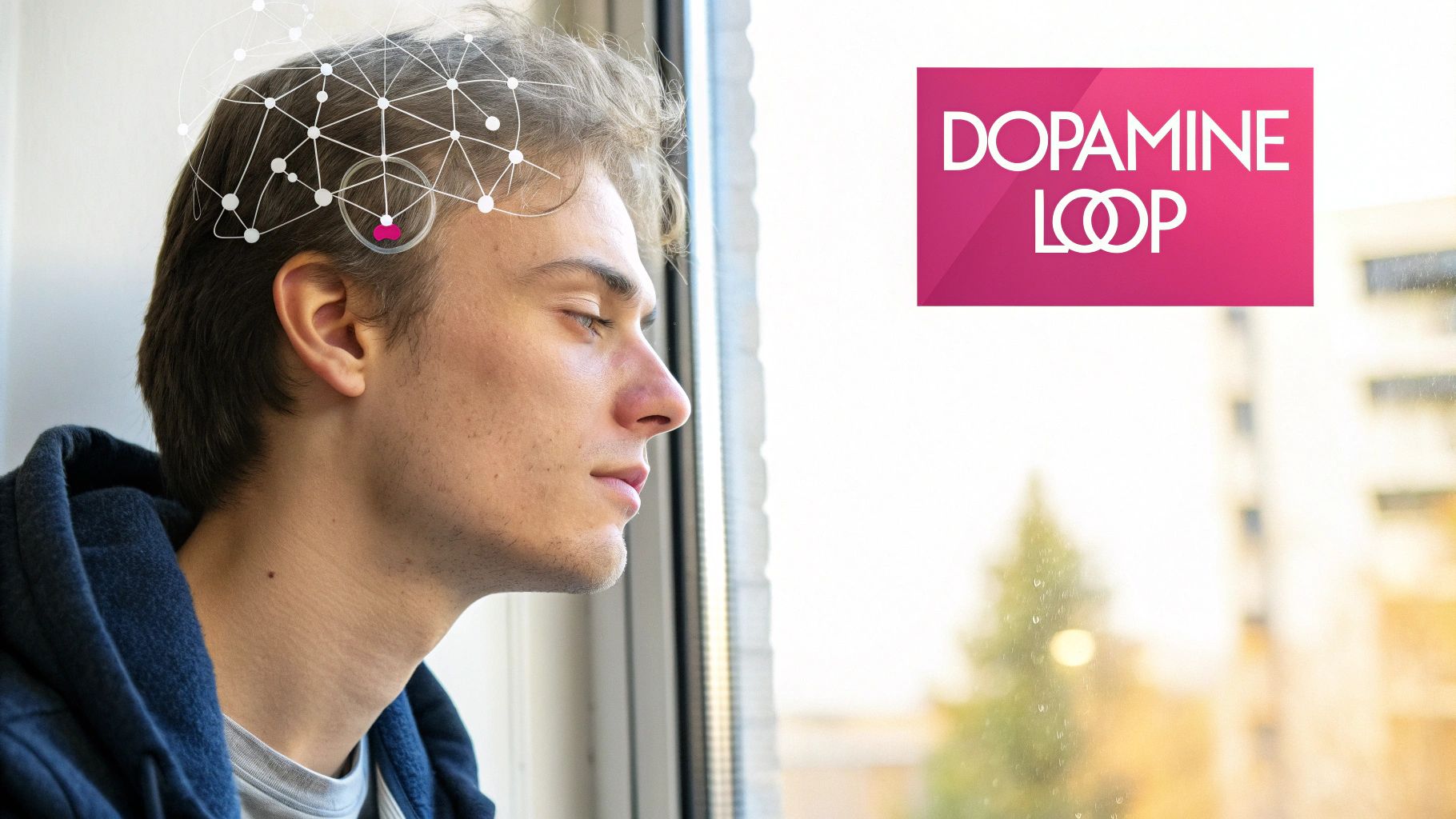
Let's get one thing straight: alcohol cravings can feel like a powerful, unstoppable force. But they aren't a sign of weakness. They’re a completely predictable biological and psychological response from a brain that's readjusting. Knowing the "why" behind them is the first real step toward taking back control.
At its most basic level, a craving is your brain reacting to the absence of something it got used to. Alcohol essentially hijacks the brain’s reward system, creating a flood of dopamine—the chemical messenger tied to pleasure and motivation. With repeated exposure, your brain starts to adapt. It dials back its own natural dopamine production, coming to rely on alcohol to feel good, or even just to feel normal.
So when you suddenly stop drinking, this system gets thrown into chaos. Your brain starts sending out powerful signals—what we call cravings—demanding the substance it thinks it needs to get by. This process forges a stubborn habit loop that can be incredibly tough to break.
The Power of Triggers
Triggers are the specific cues that set this whole craving cycle in motion. They're unique to each person and usually fall into a few key buckets:
- Emotional Triggers: Feelings are a big one. Stress, anxiety, boredom, loneliness, or even happiness can all spark an urge. If you've spent years using alcohol to unwind after a bad day, your brain learns to link "stress" with the "solution" of drinking.
- Social Triggers: These are all about people and places. Seeing friends drink, walking into your old favorite bar, or going to a party can create an almost automatic association with alcohol. The entire environment becomes a powerful cue.
- Pattern Triggers: These are woven into the fabric of your daily life. It might be that glass of wine you always poured while cooking dinner, or the beer you grabbed every Saturday while watching the game. The routine itself becomes the trigger.
The real power comes from understanding what’s happening inside your brain and pinpointing your personal triggers. It allows you to move from pure reaction to intentional action. This knowledge is the foundation for building strategies that will actually work for you.
This isn't a small problem. Around the world, an estimated 400 million adults deal with alcohol use disorders, and 209 million of them experience alcohol dependence. But there's good news. One of the most proven strategies for managing these cravings is cognitive behavioral therapy (CBT), which has been shown in clinical trials to reduce relapse rates by up to 50%. You can dig deeper into these alcohol addiction statistics to get the full picture.
Your Toolkit for Managing Cravings in the Moment

When an intense craving hits, it can feel all-consuming, like your brain is hijacking your thoughts and demanding a drink. The most important thing to remember in that moment is that these urges are temporary. They rise, peak, and fall just like a wave.
Your job isn’t to fight the wave head-on; that's exhausting. It's about learning how to ride it out until it passes. Having a few go-to strategies ready can make all the difference between giving in and staying in control.
Play the Tape Forward
One of the most effective mental tools you can use is called "Playing the Tape Forward." Instead of fantasizing about the immediate, fleeting relief a drink might offer, force yourself to visualize the entire scenario.
Think past that first sip. What happens next? The potential hangover, the wave of regret, the crushing anxiety, and the disappointment in yourself for breaking your promise. This simple act of visualization yanks your focus from a distorted fantasy and grounds it in a much more realistic, and often undesirable, outcome.
Embrace the Urge Without Giving In
Another powerful technique, rooted in mindfulness, is "Urge Surfing." This approach asks you to acknowledge the craving without judgment or resistance. Instead of trying to crush the feeling or push it away, you simply observe it with a bit of curiosity.
Notice the physical sensations. Where do you feel it in your body? What thoughts are attached to it? Like a literal wave, you'll find the urge builds in intensity, crests, and then naturally subsides on its own. The good news? Most cravings only last for a few minutes.
A huge part of this is learning to master emotional regulation, which helps you navigate intense feelings without immediately reaching for alcohol. Simple breathing exercises are a fantastic starting point.
Here's an easy one to try—the 4-7-8 breathing technique:
- Breathe in quietly through your nose for 4 seconds.
- Hold your breath for a count of 7 seconds.
- Exhale completely through your mouth, making a whoosh sound, for 8 seconds.
Repeating this simple cycle just three to five times can quickly calm your nervous system. It creates just enough mental space for you to pause and make a conscious choice, rather than a reactive one.
Think about a college student using a 5-minute meditation app before a party, or a parent taking a moment for deep breaths after a particularly stressful day with the kids. These aren't just abstract ideas; they are real, immediate actions that put control back in your hands.
The science backs this up. Mindfulness-based interventions are a game-changer for those struggling with alcohol cravings, a condition affecting a staggering 400 million people and contributing to 2.6 million deaths annually worldwide.
While men have historically been more affected, mortality rates for women drinkers are rising 2.5 times faster. A recent meta-analysis showed mindfulness can slash cravings by an average of 35-45%, with the positive effects lasting up to six months. These tools don't just help you get through a tough moment; they build lasting resilience for the road ahead.
To make this even more practical, here's a quick reference guide for when a craving strikes.
Your In-the-Moment Craving Killer Toolkit
| Technique | How It Works | Example Scenario |
|---|---|---|
| Play the Tape Forward | Shifts focus from short-term pleasure to long-term consequences by visualizing the entire drinking scenario. | It's Friday after a long week. You think, "One beer won't hurt." Instead, you visualize feeling groggy and disappointed tomorrow morning. |
| Urge Surfing | Mindfully observing the physical and mental sensations of a craving without acting on it, letting it pass naturally. | You're cooking dinner and get a strong urge for wine. You pause, notice the tension in your shoulders, and breathe until it subsides. |
| 4-7-8 Breathing | Calms the nervous system through controlled breathing, creating a mental pause between the urge and your reaction. | You see friends drinking at a restaurant and feel a pang of craving. You excuse yourself and do three rounds of this breathing exercise. |
| Quick Distraction | Engages your mind in a different activity to redirect focus away from the craving until it fades. | You're bored at home and start thinking about drinking. You immediately put on your favorite upbeat playlist and do the dishes. |
Having these tools ready to go makes you an active participant in your recovery, not just a passive observer. You learn that you can handle the discomfort, and with each craving you successfully navigate, you get stronger.
Redesigning Your Routines for Lasting Change
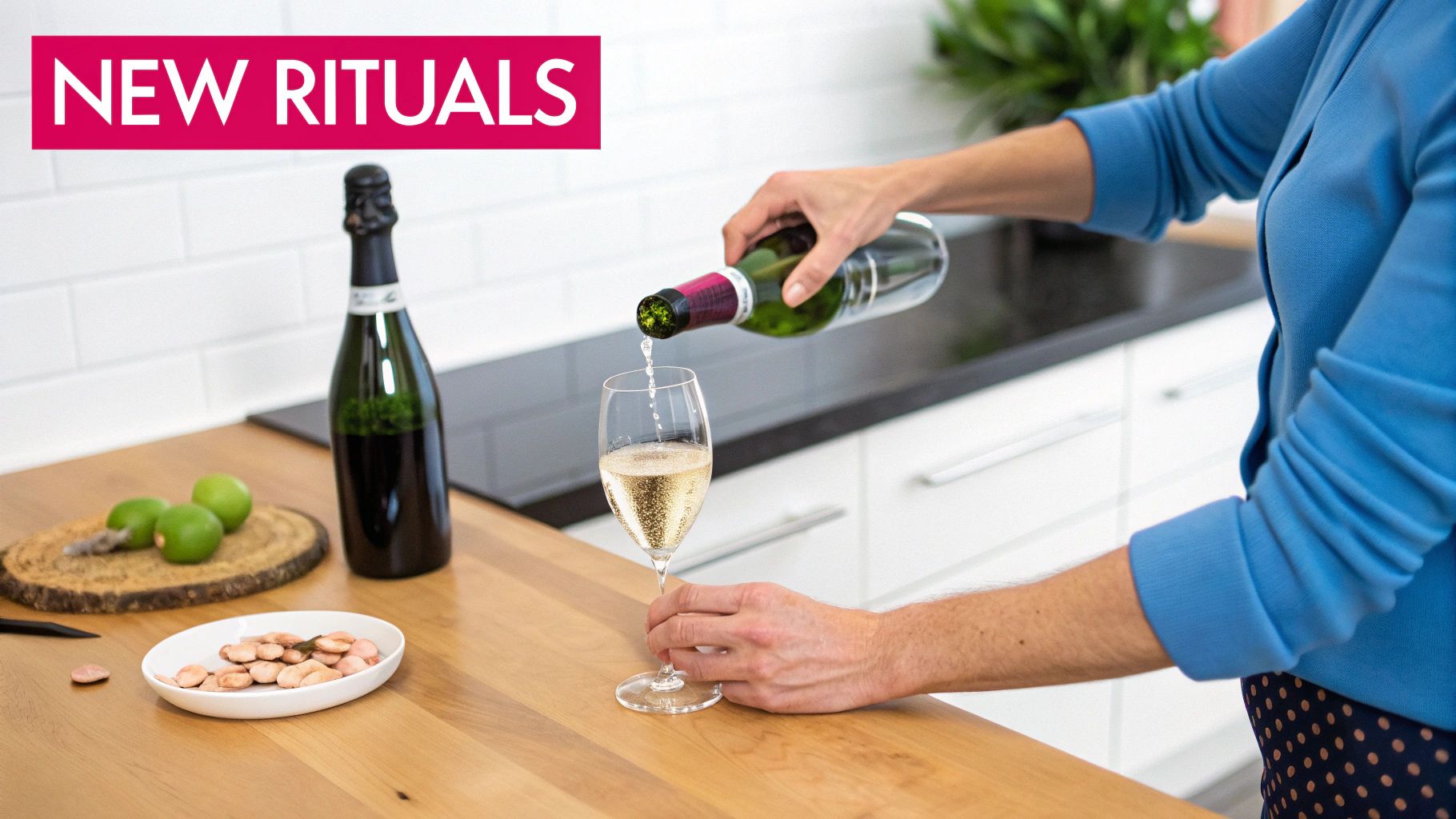
While having in-the-moment tricks to beat a craving is crucial, the real path to freedom lies in changing the very routines that set the stage for them. This is the long game. It’s about methodically rewiring your daily life until sobriety feels less like a fight and more like second nature. The first step is getting brutally honest about your own habit loops.
Every habit, good or bad, follows a simple pattern called a habit loop: A cue sparks a routine, which delivers a reward. For so many of us, that loop is built around alcohol. The cue might be the laptop closing at 5 PM, the routine is pouring that glass of wine, and the reward is that ahhh feeling of unwinding. To truly break free from cravings, you have to dismantle and rebuild that cycle from the ground up.
Think of a young professional in her 30s. Her cue is the exhaustion and stress that hits after a long day of meetings. Her routine is to meet friends for happy hour to vent. The key isn't to avoid the stress (that's impossible) but to swap out the happy hour part for something else that still delivers that feeling of relief and connection.
Identifying and Replacing Your Habit Loops
For the next week, I want you to act like a detective investigating your own life. When a craving strikes, pull out your phone and jot down a few notes. What time is it? What just happened? Who are you with? What emotion are you feeling? This isn't just busywork; you're gathering the critical data that will pinpoint your personal triggers.
Once you see the patterns, you can get strategic about swapping out the routine.
- Stress is your cue? Instead of numbing it with a drink, try burning it off with a quick 15-minute walk around the block. Put on a high-energy playlist and have a one-song dance party in your living room. Or, call that one friend who always knows how to make you laugh.
- Boredom is the trigger? Your brain is just looking for a little kick. Have a go-to project ready, whether it’s finally organizing that junk drawer, trying out a new recipe, or getting lost in a good puzzle.
- Craving social connection? That doesn’t have to happen in a bar. Be the one to suggest meeting for coffee or trying that new taco place. You could even get a group together to join a local sports league or find a cool hiking trail to explore on a Saturday morning.
The goal here is simple: find a new routine that gives you an equal—or even better—reward. A recent college grad who defaults to weekend bar-hopping might discover that joining a climbing gym provides a much deeper sense of community and a bigger thrill.
Engineer Your Environment for Success
It’s amazing how much our surroundings dictate our behavior. If you want to make sobriety the easy choice, you have to make alcohol the hard choice. This isn’t about hiding from the real world forever, but it is about making your home a genuine sanctuary.
Clearing your home of all alcohol and the stuff that goes with it is one of the single most powerful moves you can make early on. Getting rid of the visual cues—the wine rack on the counter, the corkscrew in the drawer, the special cocktail glasses—removes dozens of tiny, subconscious nudges that can spark a craving out of nowhere.
This strategy is often called environmental restructuring, and it’s about putting yourself back in control. It acknowledges that willpower is a finite resource. It's just smart design. You wouldn't fill your pantry with cookies if you were trying to eat healthier, right? The same logic absolutely applies here.
And don’t forget to think about what you can add to your space. Stock your fridge with things you’re actually excited to drink. Load up on interesting sparkling waters, fancy herbal teas, kombucha, or craft sodas. This simple shift means that when a cue hits, you have an appealing, healthy alternative right at your fingertips, ready to complete your new, positive habit loop.
Finding Sophisticated Alcohol Alternatives
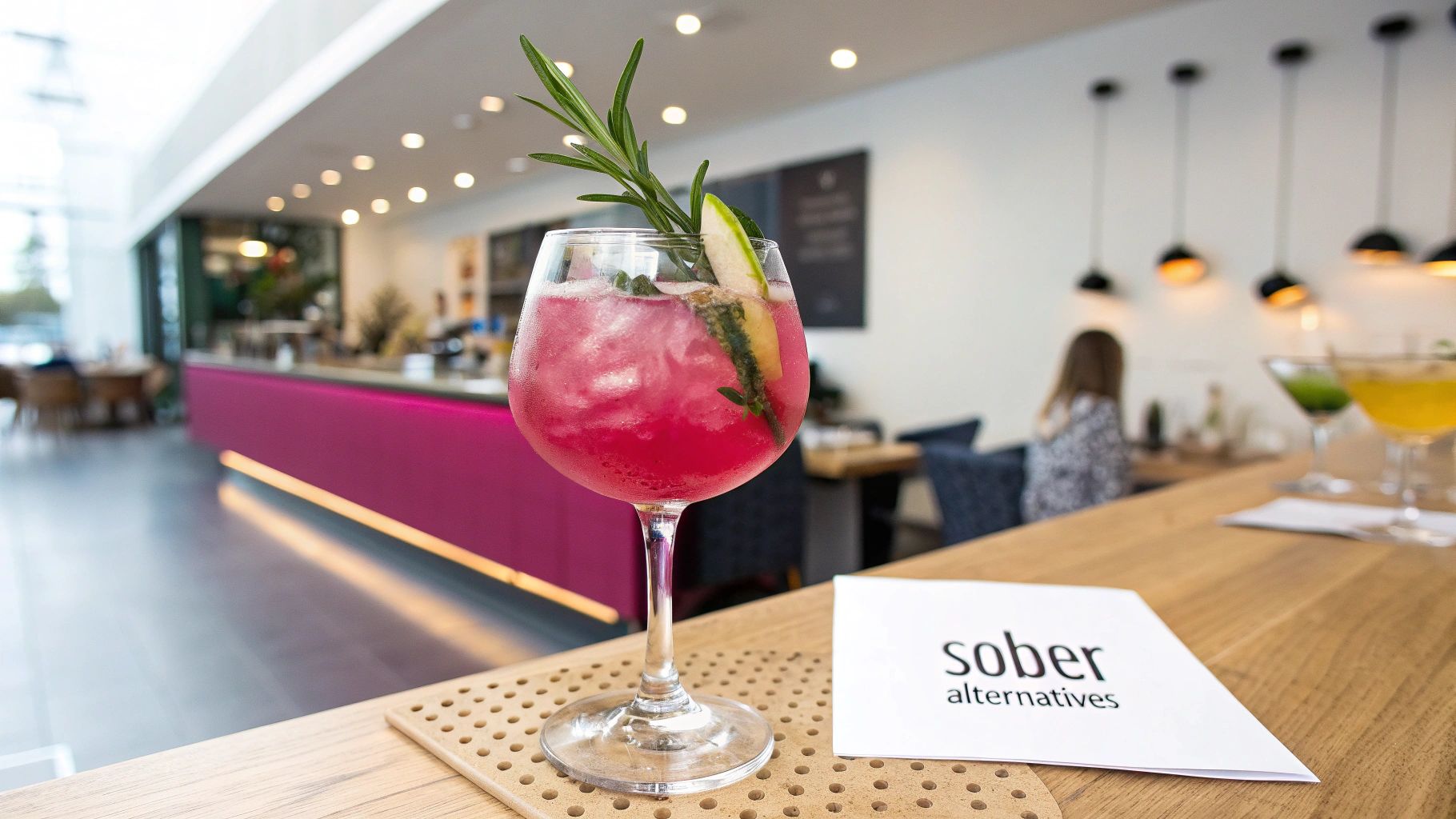
Giving up alcohol doesn’t mean you have to give up the ritual of a special drink. For so many of us, the simple act of pouring, sipping, and savoring is just as important as what's in the glass. This isn’t about downgrading your experience; it’s about upgrading your options.
Thanks to the ‘sober curious’ movement, we're in a golden age of non-alcoholic beverages that are anything but boring. The days of settling for club soda or a syrupy-sweet juice are over. Today’s alternatives are crafted with complexity and a sense of occasion, turning a moment of craving into an opportunity for mindful indulgence.
The Rise of Purposeful Beverages
People now expect more from their drinks—they want great flavor, real function, and clean ingredients. This shift has blown the doors open for creative options that satisfy that end-of-day urge to unwind, but without the baggage of alcohol.
Many of these new drinks are built around functional ingredients that offer tangible benefits, like stress reduction, better focus, or just a gentle mood lift. They understand that people often drink to change how they feel, and they offer a healthier way to get there.
The real power of a great alcohol alternative is its ability to seamlessly replace the old ritual. It fills the same time slot, satisfies the same hand-to-mouth action, and provides a complex flavor that demands to be sipped, not chugged.
This is where something like a well-made, hemp-derived THC or CBD sparkling water can be a total game-changer for some people. It can provide that feeling of relaxation and take the edge off a stressful day, perfectly mimicking the "reward" part of your old habit loop.
How Cannabinoid Beverages Fit In
For many adults, especially those in their 30s and 40s or recent grads navigating new social scenes, a low-calorie, no-sugar cannabinoid beverage can fit perfectly into a health-conscious lifestyle. It feels like an intentional, adult way to unwind.
Instead of feeling left out at a party, you’ve got an elegant can in your hand that provides a light, enjoyable buzz without the morning-after regrets. That simple swap can make social situations feel way less daunting. If you're looking for ideas, you can start by crafting some delicious mojito mint mocktails right at home.
- It Satisfies the Ritual: The physical act of popping a can and pouring it into a nice glass is a powerful and familiar routine.
- It Offers Relaxation: Low-dose THC and CBD can help manage the very anxiety and stress that often trigger alcohol cravings in the first place.
- It Aligns with Wellness Goals: With clean ingredients, zero alcohol, and low calories, these drinks support your health journey, they don't sabotage it.
Breaking the habit loop is one of the most effective ways to deal with cravings, and what you choose to drink plays a huge role. Alcohol is dehydrating, which only makes cravings worse. But consistently swapping it for a non-alcoholic option can make a massive difference. In fact, some research suggests these kinds of swaps can slash cravings by as much as 55%.
Products like THC-CBD sparkling waters, which are compliant with the 2018 Farm Bill, are a fast-growing part of this trend. They're projected to capture 30% of the market share among people quitting alcohol, and an incredible 62% of users report their urges were cut in half.
Ultimately, finding the right alternative is your own personal journey. The goal is to discover something you genuinely look forward to drinking, which transforms a moment of temptation into a genuine act of self-care.
Building a Craving-Resistant Lifestyle
Your daily habits are your best defense against the unpredictable nature of alcohol cravings. While having a plan for when an urge hits is crucial, building a resilient lifestyle gets ahead of the problem. It tackles the root causes, making cravings show up less often and with less power when they do.
It's about making small, consistent changes that add up to a strong foundation for your long-term well-being.
This proactive approach starts with what you put on your plate. Heavy drinking throws your blood sugar all over the place, which can make you irritable and trigger intense cravings for both sugar and alcohol. When you quit, your body might still be stuck on that rollercoaster for a while.
You can stabilize your blood sugar by eating a balanced diet full of protein, fiber, and complex carbs. Think lean chicken, fish, beans, whole grains, and a ton of vegetables. These foods give you a steady stream of energy, which helps prevent the crashes that your brain might misinterpret as a signal for a drink.
Strengthen Your Mind and Body
Regular physical activity is another game-changer. You don't have to train for a marathon—even a brisk 20-minute walk can make a huge difference. Exercise releases endorphins, your body's natural mood elevators, giving you a healthy dopamine hit that directly competes with the one you used to get from alcohol.
Study after study shows that physical activity is a powerful way to manage cravings and dial down stress. It gives you a real, immediate way to burn off that anxious energy.
Think of it this way: cravings often pop up because you want to change how you feel, right now. Exercise is one of the healthiest and most effective ways to do exactly that, leaving you with a sense of control and accomplishment.
Beyond movement, you have to prioritize sleep. Being chronically sleep-deprived messes with your judgment, makes you emotionally reactive, and tanks your impulse control. That’s a dangerous cocktail when you’re trying to ride out a craving.
Aiming for 7-9 hours of quality sleep a night isn't a luxury; it's a non-negotiable part of regulating your emotions and building mental resilience. A well-rested brain is just so much better at making conscious, healthy choices.
The Power of Connection
Finally, don't try to go this alone. Sobriety isn't a solo mission. Isolation is a massive trigger and can make cravings feel absolutely overwhelming. Building a solid support network is essential for navigating the emotional ups and downs. And no, that doesn't have to mean formal meetings if that’s not your vibe.
Your community could be anything that works for you:
- An online forum where you can share what’s going on anonymously.
- A sober sports league that mixes activity with connection.
- A weekly coffee date with a friend who gets it and supports you.
- A book club or a volunteer group that’s focused on a shared passion.
The whole point is to find connection and purpose in places that don't revolve around alcohol. When you feel seen, understood, and part of something bigger, the pull of alcohol starts to fade. These pillars—nutrition, exercise, sleep, and community—all work together to build a life where being sober isn't just doable, but genuinely enjoyable.
Frequently Asked Questions About Managing Cravings
When you're navigating life without alcohol, questions are bound to pop up. Having some clear, straightforward answers can give you the confidence you need to handle cravings and understand the road ahead.
How Long Do Alcohol Cravings Actually Last?
This is the question on everyone's mind, and the answer is probably shorter than you think. A single, intense craving usually peaks and fades within about 15-20 minutes. Seriously, that's it.
Now, in the early days of quitting, those 20-minute waves can feel like they come one after another for days or even weeks. That's normal. But the key is knowing they do pass. As your brain chemistry starts to recalibrate and you build new habits over a few months, you'll notice they become less frequent, less powerful, and a whole lot easier to shut down.
Can THC Or CBD Drinks Genuinely Help With Cravings?
For a lot of people, they absolutely can. Let's be honest, a big part of drinking is the ritual—that special drink to signal the end of the day. A well-crafted cannabinoid beverage can slot right into that space.
Low-dose THC and CBD are known to help with anxiety and stress, which happen to be two of the most common triggers for reaching for a drink. So, a THC or CBD sparkling water can offer that feeling of relaxation and take the edge off, but without the hangover, extra calories, or negative health effects of alcohol. It’s all about swapping out the old habit for a healthier one that still scratches the itch.
What Should I Do If I Have A Slip-Up?
First, take a deep breath. A slip-up is not a failure. It doesn't erase all the progress you've made. The most important thing you can do is get curious, not critical.
Instead of beating yourself up, try to understand what happened. What was the trigger? Were you stressed? Bored? In a tough social situation? Figuring out the "why" is gold because it gives you the intel you need to handle it better next time. The next step is simple: recommit to your goal immediately. Don't wait until tomorrow. Call a friend, remind yourself of why you started this journey, and get right back on track.
A slip-up is a learning opportunity, not a complete failure. The most important response is to analyze the trigger, recommit to your goal immediately, and show yourself compassion. One drink does not erase all your progress.
When Is It Time to Seek Professional Help?
Listen to your gut on this one. If your cravings feel overwhelming and you can't seem to manage them on your own, it's a good sign that it's time to call in some backup. The same goes if you're experiencing physical withdrawal symptoms like shaking, sweating, or nausea—that means you definitely shouldn't try to go it alone.
Therapists who specialize in addiction, support groups, or a doctor can offer the structure and safety you need to move forward. Reaching out isn't a sign of weakness; it's a sign of incredible strength and a smart move for long-term success.
At Day Dreamer, we believe in upgrading your rituals with sophisticated, mindful alternatives. Our hemp-derived THC & CBD sparkling waters are crafted with clean ingredients to help you unwind without compromise.
Explore a new way to relax at https://enjoydaydreamer.com.


