

At its core, making THC drinks at home is a two-step dance: first, you activate the cannabis with heat (a process called decarboxylation), and then you infuse that activated goodness into a liquid. The real trick is getting the THC to properly bond to a carrier that will mix evenly into your drink, giving you a smooth, consistent experience every time.
Why Everyone Is Talking About Cannabis Drinks
There’s a quiet revolution happening in kitchens and at get-togethers everywhere. More and more, people are swapping their evening glass of wine for a well-crafted, homemade THC beverage. This isn’t just a fleeting trend—it’s a conscious shift toward a more controlled, hangover-free way to relax and socialize.
Unlike the classic brownie that can take forever to kick in, cannabis drinks tend to have a much quicker onset time. This faster absorption means you have far more control over the experience, making it easier to find your perfect dose without spending hours waiting and wondering.
The Appeal of Sippable Cannabis
The draw of cannabis drinks is about more than just the buzz. For a lot of people, it’s about the creativity and craft of it all. Once you learn how to make THC drinks, you unlock a whole new world of flavor possibilities, from simple sparkling waters to intricate, layered mocktails.
Taking a hands-on approach has some serious perks:
- Total Dose Control: When you’re the one making the infusion, you dictate the potency. You can craft a drink that’s perfectly suited to your tolerance and the vibe you’re going for.
- Flavor Freedom: Forget generic, store-bought flavors. You get to play with fresh ingredients like citrus, herbs, and spices to create something that truly fits your tastes.
- Smarter on the Wallet: Making your own infusions in batches is almost always more economical than buying pre-made cannabis drinks from a dispensary.
- Under the Radar: A cannabis-infused lemonade or iced tea is an incredibly discreet and socially graceful way to enjoy THC, fitting in naturally just about anywhere.
This isn't just a niche hobby, either. The global cannabis drinks market was valued at around USD 1.0 billion as of 2025, and North America is leading the way. That kind of growth sends a clear message: people are hungry for smoke-free cannabis options. You can dive deeper into the cannabis beverage market trends and see the data for yourself.
Navigating the Legal Landscape
Before we get to the fun part, we have to talk about the rules. In the U.S., the 2018 Farm Bill made hemp-derived products federally legal, as long as they contain less than 0.3% Delta-9 THC by dry weight. The key thing to remember is that state laws can, and often do, differ.
Crucial Takeaway: Always check your local and state regulations on hemp-derived THC. Staying compliant is absolutely essential for making your drinks safely and legally. It's on you to know the law where you live.
This guide is focused only on creating drinks with federally compliant, hemp-derived cannabinoids. We’ll walk through methods to make sure you can craft beverages that are both amazing and well within legal bounds.
To give you a little preview of what’s ahead, let's look at the main infusion methods we'll be breaking down.
At-a-Glance Guide to THC Infusion Methods
Here's a quick rundown of the core techniques for getting THC into your drinks. Each one has its own strengths, and we'll cover them all in detail later on.
| Infusion Method | Best For | Key Advantage |
|---|---|---|
| THC Tinctures | Quick, sublingual dosing and long-term storage. | Fast-acting effects and high potency in small amounts. |
| THC-Infused Oils | Versatile use in drinks that have fatty ingredients. | Excellent for locking in cannabinoids and terpenes. |
| Water-Soluble Powders | Effortless mixing into any water-based beverage. | Seamlessly dissolves without separation or oily texture. |
Think of this as your starting map. Now, let’s get into the specifics of how to bring these methods to life in your own kitchen.
The Science Behind a Great THC Drink
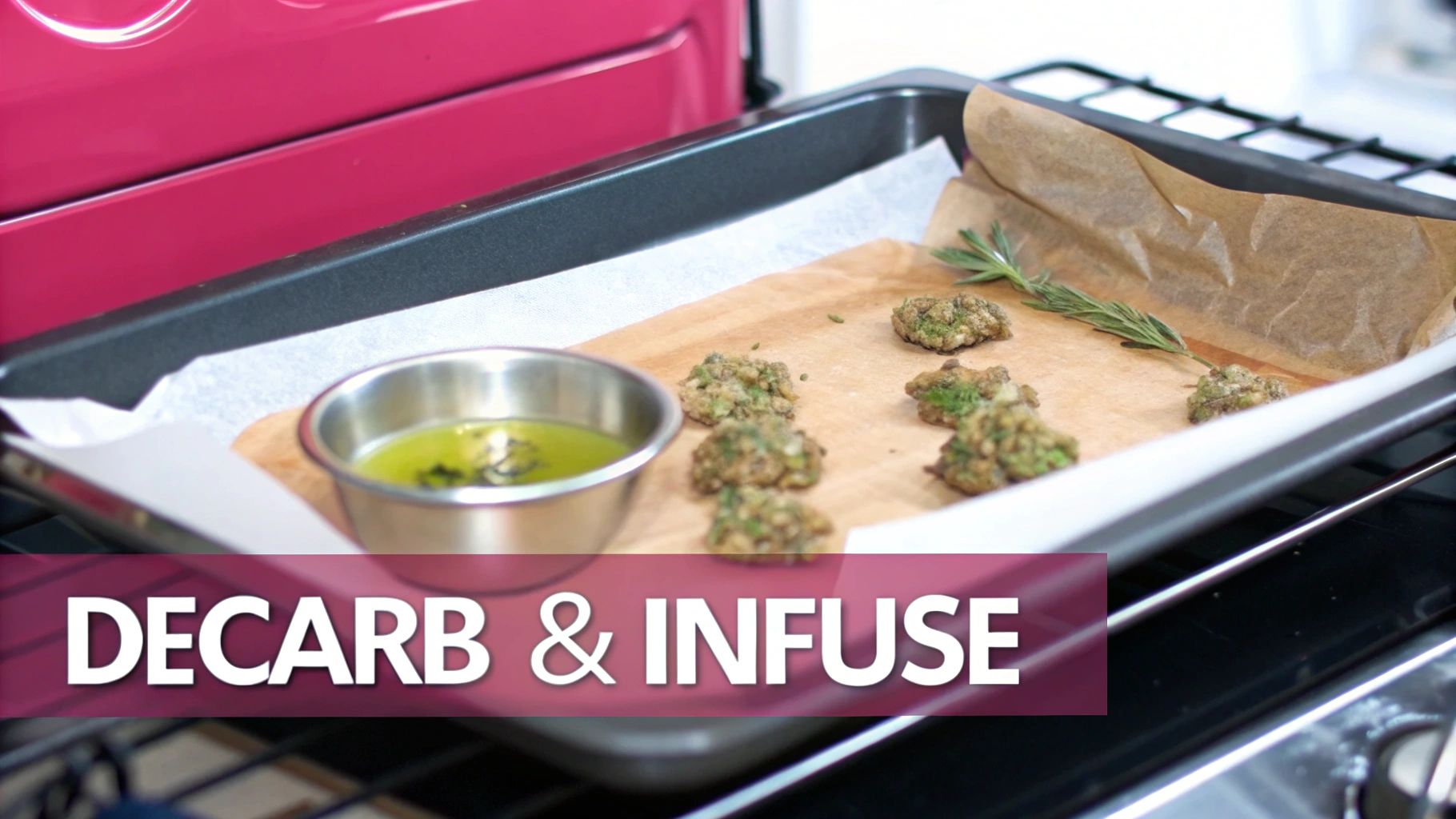
Before we start mixing up delicious drinks, we need to cover the science that makes it all possible. It’s what turns simple hemp flower into a truly sippable experience. You can't just toss a nug of raw hemp into your seltzer and hope for the best—it simply won't work.
There are two essential processes that unlock the plant's potential. Getting these right is the secret to making THC drinks that are potent, consistent, and safe every single time. Think of it like making coffee; you roast the beans first to bring out the caffeine and flavor. We have to do something similar here.
The Magic of Decarboxylation
The first, and arguably most important, step is decarboxylation. It’s a mouthful, so most people just call it "decarbing." All it really means is gently heating your hemp flower to "activate" the good stuff inside.
See, raw hemp flower is full of THCA (tetrahydrocannabinolic acid), which is actually a non-intoxicating compound. It’s the precursor to THC.
By applying low, steady heat, you knock off that extra acid molecule (the "A" in THCA). This simple chemical reaction converts the inactive THCA into the Delta-9 THC you’re looking for. If you skip this, your drink will have zero effect, no matter how much flower you use.
A solid grasp of herbal extraction methods is really what separates the amateurs from the pros, and it all starts with a proper decarb.
Your Simple Oven Decarboxylation Method
Good news: you don't need a fancy lab to decarb your hemp. Your kitchen oven works perfectly.
- Get the Oven Ready: Preheat your oven to 240°F (115°C). This is the sweet spot—hot enough to trigger the conversion but cool enough to preserve the fragile terpenes that give your hemp its unique aroma and flavor.
- Prep the Flower: Gently break up your hemp flower into pieces about the size of a pea. Spread them out in a single layer on a baking sheet lined with parchment paper. An even layer is key for uniform heating.
- Bake It: Pop the baking sheet into the oven for 30 to 40 minutes. Your kitchen will fill with an earthy smell, and you'll see the flower turn from a vibrant green to a duller, toasted brownish-green.
- Let It Cool: Once time’s up, pull the tray out and just let it cool down on the counter. The flower will feel dry and crumbly when it’s ready.
Pro Tip: Your oven's built-in thermometer can be wildly inaccurate. I highly recommend grabbing a cheap oven thermometer from any kitchen supply store. Hitting that 240°F mark precisely makes a huge difference in the final potency.
Now that your hemp is activated, you're ready to infuse.
Understanding Infusion and Bioavailability
With your decarbed flower ready to go, the next step is infusion. This is where we pull that activated THC out of the plant material and into a liquid carrier, like an oil or alcohol. This is absolutely necessary because THC is lipophilic, which is a fancy way of saying it loves to dissolve in fat, not water.
If you were to just dump your decarbed flower into a glass of water, the THC wouldn't mix in. It would just float around, making for a weak and disappointing drink. We need to give the THC molecules a fatty substance to bind to.
This is also where we need to talk about bioavailability—how much of the THC your body can actually absorb and use. By infusing the THC into a fat, you’re basically giving your digestive system a helping hand, making it much easier for your body to process the cannabinoids so you feel the full effect.
Some of the most common carriers for infusion are:
- Fats and Oils: Coconut oil, MCT oil, and even butter are fantastic choices. Their high saturated fat content makes them cannabinoid magnets.
- High-Proof Alcohol: Spirits like Everclear are perfect for creating concentrated tinctures. The alcohol acts as a powerful solvent, stripping the THC right from the plant.
The whole point of infusion is to create a perfectly blended, homogenous liquid. You want the THC distributed evenly throughout your oil or tincture, ensuring every single drop has a consistent dose. That consistency is the foundation of a predictable and enjoyable experience.
Choosing Your Perfect Infusion Method
Alright, you've got the basics of decarboxylation down. Now comes the fun part—deciding how you're actually going to get that activated THC into your drink.
This is where you can really tailor the process to fit your kitchen, your patience level, and the kinds of drinks you’re excited to make. There’s no single "best" way to do this. The right method for you depends entirely on what you're trying to achieve.
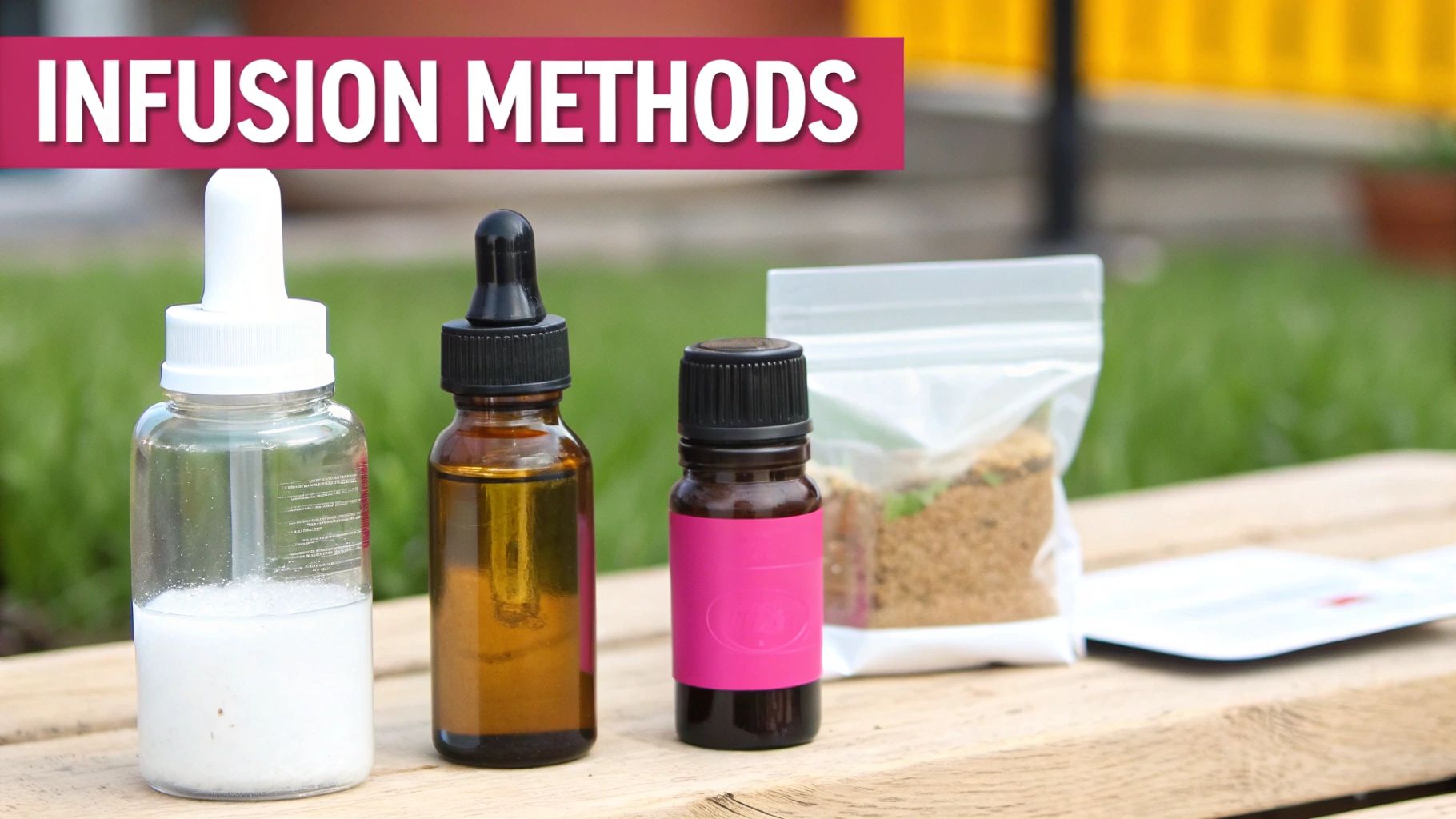
Let’s walk through the three main ways to infuse: classic tinctures, versatile oils, and modern water-soluble powders. Each has its own personality, and understanding them will help you pick the perfect one for your project.
Classic THC Tinctures
A THC tincture is the old-school, tried-and-true method. It’s a potent liquid extract made by soaking your decarbed hemp in high-proof alcohol, like Everclear. The alcohol is a fantastic solvent, pulling all the good stuff—cannabinoids and terpenes—right out of the plant material.
This method has stuck around for a reason. It's incredibly effective and creates a product with an impressively long shelf life. Seriously, if you store it in a cool, dark place, an alcohol tincture can stay potent for years. The final result is so concentrated that you’ll only need a few drops to get the job done.
What You'll Need
- Decarboxylated Hemp Flower: Your activated starting material.
- High-Proof Alcohol: You need food-grade, high-proof stuff like Everclear—aim for at least 151 proof (75.5% ABV) for a solid extraction.
- Glass Jar: Any mason jar with a tight lid will work perfectly.
- Cheesecloth or Fine-Mesh Sieve: To strain out the plant matter.
- Dropper Bottle: A dark glass bottle (amber or cobalt blue) is best for storage and makes dosing a breeze.
The process is simple: combine the hemp and alcohol in your jar, give it a good shake every day, and let it steep for a few weeks. While some people use gentle heat to speed things up, the traditional cold-steep method is fantastic for preserving the delicate terpenes that give hemp its unique aroma and flavor. Once it's done steeping, you just strain the liquid, transfer it to a dropper bottle, and you're good to go.
Pro Tip: Tinctures have a secret weapon. Because they're alcohol-based, they can be absorbed sublingually (under your tongue). This bypasses your digestive system entirely, meaning you can feel the effects much faster—often within 15 to 30 minutes.
Versatile THC Infused Oils
Infusing THC into a carrier oil like coconut or MCT oil is another go-to method, especially if you'd rather skip the alcohol. THC is fat-soluble, so oils are a natural fit for extraction. The infused oil you create is super versatile and can be used in drinks, baked goods, or even savory dishes.
But there’s a small hurdle when it comes to drinks: oil and water don't mix. If you just drop THC oil into a sparkling water, it's going to float right on top. To get around this, you’ll need an emulsifier, like sunflower lecithin, to help it blend smoothly.
This method usually involves gently heating your decarbed hemp and oil together in a slow cooker or a double boiler for a few hours. This low-and-slow approach allows the THC to fully infuse into the oil without scorching off any of the valuable compounds.
Best Oils for Infusion
- MCT Oil: This is my personal favorite. Its high saturated fat content makes for an efficient infusion, and its neutral flavor won't overpower your drink.
- Coconut Oil: Another great choice that binds well with cannabinoids. Just be aware that it might add a subtle coconut taste to your final creation.
Once infused and strained, your oil is ready. It works beautifully in drinks that already have a creamy base, like lattes or smoothies, where it blends in more naturally. For everything else, that emulsifier will be your best friend.
Modern Water Soluble THC Powders
If you're looking for the easiest, most straightforward path to a perfectly infused drink, water-soluble THC powders are the answer. This is the modern solution that completely sidesteps the oil-and-water problem.
These powders are made using some pretty cool technology that encapsulates tiny THC oil molecules, allowing them to dissolve instantly and evenly in any liquid.
You just measure out the powder and stir it into your drink—hot or cold. No fuss. There’s no greasy film on top, no separation, and no need for extra ingredients. You get a perfectly blended beverage from the first sip to the last, which means your dosing is always consistent.
While making a true water-soluble powder at home isn't really feasible without lab equipment, you can easily buy high-quality, lab-tested powders made from legal hemp. This is the exact approach we take for our Day Dreamer beverages to ensure a clean, consistent experience every time. It’s the simplest way to get a predictable result.
Comparing THC Infusion Techniques
Choosing the right infusion method really comes down to what you prioritize—tradition, versatility, or pure convenience. Each technique has its trade-offs. The table below breaks it down to help you decide which path is the best fit for your kitchen and your goals.
| Technique | Ease of Use | Versatility | Onset Time | Shelf Life |
|---|---|---|---|---|
| THC Tincture | Moderate | High | Fast (sublingual) | Excellent (years) |
| THC Infused Oil | Moderate | High | Moderate (ingested) | Good (months) |
| Water-Soluble Powder | Very Easy | Drink-Specific | Fast (ingested) | Excellent (years) |
Ultimately, this is your first big creative decision. Whether you want to embrace the hands-on craft of a tincture, the culinary freedom of an oil, or the plug-and-play simplicity of a powder, your choice will set the stage for all the delicious drinks to come.
Putting It All Together: Recipes and Responsible Dosing
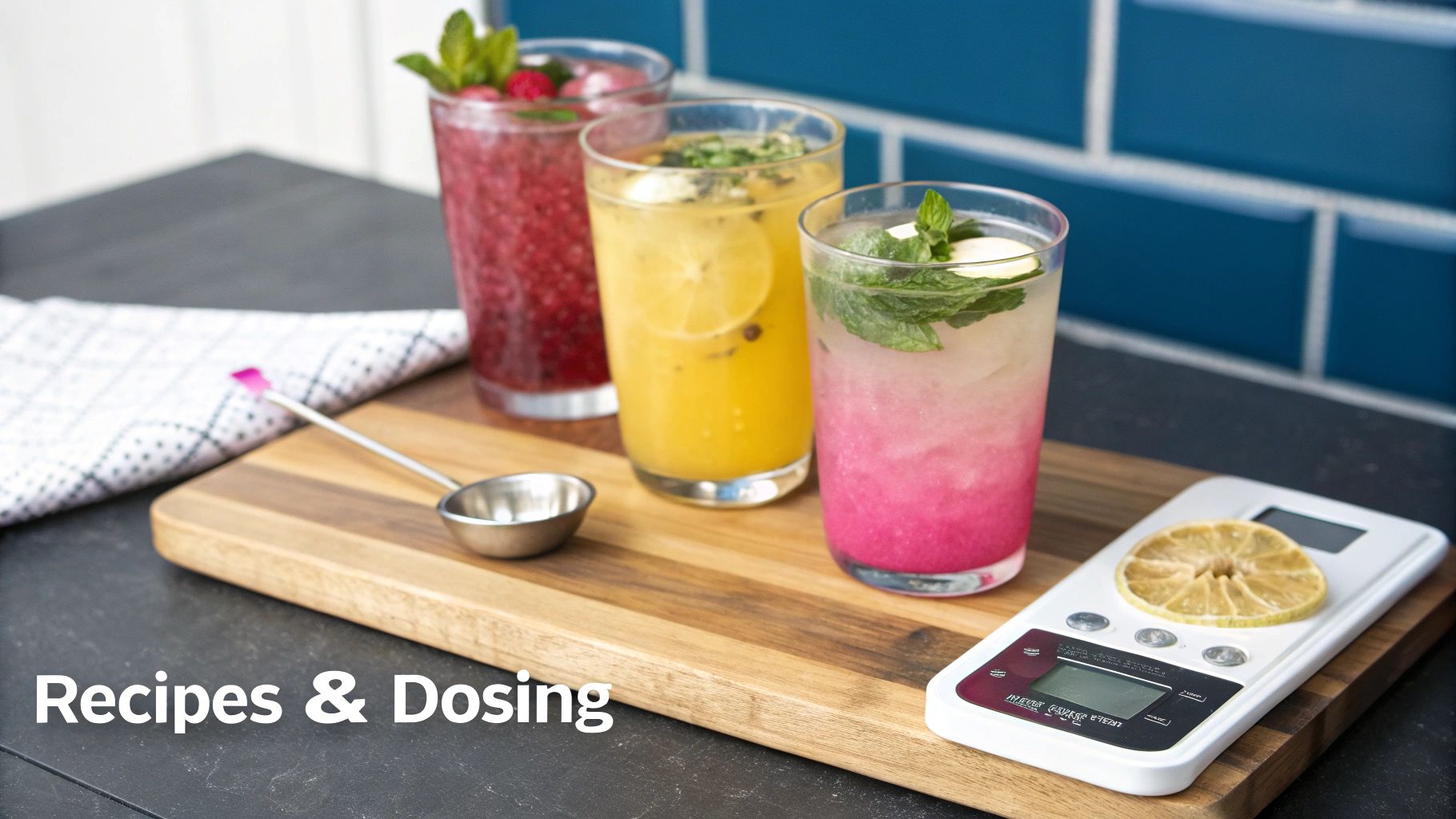
You’ve done the prep work and your infusion is ready to go. Now for the fun part—turning that carefully crafted tincture or oil into a delicious, perfectly dosed drink. This is where you get to play mixologist.
When you're just starting out, it's best to stick with simple recipes. This lets you focus on nailing the dosage and getting comfortable with the process before you start experimenting with more complex flavor combinations.
Here are a couple of my go-to recipes that work beautifully with different types of infusions.
Sparkling THC Lemonade
You can’t go wrong with a classic. This recipe is clean, crisp, and ridiculously refreshing on a warm day. It’s the perfect vehicle for a water-soluble THC powder because the powder dissolves right in without changing the texture one bit.
Here’s what you’ll need:
- 8 oz of sparkling water or club soda
- 1 oz of fresh-squeezed lemon juice
- 1/2 oz of simple syrup (or agave if you prefer)
- Your chosen dose of water-soluble THC powder
- A lemon wheel and a sprig of mint for garnish
Making the magic happen:
- Grab a tall glass and fill it to the brim with ice.
- Pour in the lemon juice and simple syrup.
- Add your precisely measured THC powder and give it a gentle stir until it vanishes into the liquid.
- Top everything off with the sparkling water and one last, slow stir.
- Garnish with your lemon wheel and mint, and enjoy.
Pro Tip: The beauty of this recipe is its simplicity. The clean flavors of lemon and soda let the THC blend in seamlessly. Using a water-soluble powder is key here—it guarantees a consistent dose from the first sip to the last.
Spicy Mango THC Mocktail
Ready for something with a bit more of a kick? This mocktail brings a fantastic combination of sweet, tangy, and spicy. It’s a great way to use an MCT oil infusion; the healthy fats from both the mango and the oil help everything emulsify for a smooth, well-blended drink.
Gather your ingredients:
- 1/2 cup of mango chunks (fresh or frozen both work great)
- 1/2 oz of fresh lime juice
- 1/4 oz of agave nectar
- 1-2 slices of fresh jalapeño (adjust to your heat preference!)
- Your desired dose of THC-infused MCT oil
- 4 oz of sparkling water
- Chili-lime seasoning for the rim (optional, but highly recommended)
How to mix it:
- For a professional touch, run a lime wedge around the rim of your glass and dip it in the chili-lime seasoning.
- In a cocktail shaker, muddle the mango, lime juice, agave, and jalapeño slices until they're nicely combined.
- Add your dose of THC-infused oil and a generous scoop of ice.
- Shake it hard for about 20 seconds. You want it to get nice and frosty.
- Strain the mixture into your prepared glass over fresh ice.
- Top with sparkling water and add another slice of jalapeño for garnish.
The Art of Dosing: Start Low, Go Slow
Making a great-tasting drink is one thing, but dosing it correctly is what truly makes for a positive experience. Unlike store-bought products with lab-tested labels, homemade infusions require a careful approach and a healthy dose of respect for their potency.
For anyone new to edibles or drinks, a dose between 2.5 mg and 5 mg of THC is the perfect starting point. It’s enough to feel the effects without being overwhelming. This isn't just anecdotal advice; it's a trend seen across the commercial market. The 2.5–5 mg THC seltzer segment, for instance, held the largest market share at 47.8% in 2024, which shows that consumers overwhelmingly prefer a more controlled, sessionable experience. You can dig deeper into these trends with THC seltzer market insights on Grandview Research.
How to Estimate Your Homemade Dose
Calculating the exact potency of your infusion at home is an estimate, not a science. But you can get pretty close with some simple math.
Here’s a basic formula:
-
Find the Total THC in Milligrams: First, convert the weight of your flower to milligrams (1 gram = 1,000 mg). Then, multiply that by the THC percentage.
- Example: 1 gram of flower at 15% THC is 1,000 mg x 0.15 = 150 mg of THC.
-
Factor in Decarboxylation: The decarb process isn't 100% efficient. A good rule of thumb is to assume about 90% efficiency, so multiply your total by 0.9.
- Example: 150 mg x 0.9 = 135 mg of available THC.
-
Calculate Potency Per Milliliter: Finally, divide your total available THC by the total volume (in ml) of your oil or tincture.
- Example: 135 mg of THC in 60 ml of MCT oil = 2.25 mg of THC per ml.
Remember, this is just an estimate. The first time you try a new batch, start with half of what you calculated as a single dose. Wait at least two hours to see how you feel before even thinking about having more. This is the golden rule of homemade edibles.
Keeping Your Creations Fresh and Fixing Common Hiccups
So you've mixed up your first batch of THC drinks. The hard part is over, but don't put everything away just yet. How you store your creations is just as important as how you make them, directly impacting freshness, potency, and most importantly, safety.
Once your drink is ready, it needs to head straight for the fridge. THC doesn't do well with heat, light, or air; they're the triple threat that can degrade its potency. A cold, dark environment is your best friend here. This is especially true if you've used fresh ingredients like fruit juice, which can spoil just like any other homemade juice.
Think of it this way: you wouldn't leave a fresh-pressed juice on the counter, and your THC beverage is no different.
Smart Storage for Safety and Potency
To make sure your drinks stay as good as the moment you made them, a few simple storage habits are non-negotiable. These aren't just about quality; they're about keeping everyone in your home safe from accidental mix-ups.
- Go Airtight: Mason jars and swing-top glass bottles are your go-to options. A solid seal keeps oxygen out, which preserves not only the THC but also the bright flavors you worked to create.
- Block the Light: Light is a major culprit in THC degradation. If you can find dark-colored bottles (like amber or cobalt blue), grab them. If not, no sweat—just wrap your clear glass container in opaque tape or tuck it into a paper bag inside the refrigerator.
- Label Like You Mean It: This is the single most critical safety measure. Use a permanent marker and be loud and clear. Write "CONTAINS THC" in big letters, and also jot down the date you made it and the approximate dose per serving. This simple step is your best defense against someone—a roommate, a guest, a family member—unknowingly grabbing the wrong drink.
A Quick but Critical Safety Reminder: Never, ever store THC-infused drinks in old soda bottles, commercial water bottles, or juice cartons. Always use a dedicated, clearly marked container. You have to assume that someone will eventually mistake it for a regular beverage.
When stored properly in the fridge, most of your homemade drinks will be good for about 3 to 5 days. If you're just storing the base infusion, like your THC oil or tincture, that will last much longer. An oil can last for several months, and a high-proof alcohol tincture can last for years if kept in a cool, dark cabinet.
What to Do When Things Go Wrong
Even the most seasoned home-bartender hits a snag now and then. Don't get discouraged if your first batch isn't perfect. Most common problems have surprisingly simple solutions, and each one is a learning experience for next time. Let's walk through a few of the usual suspects.
Problem: "My drink tastes a little too... green."
Sometimes that earthy, potent cannabis flavor can dominate everything else in the glass. This usually happens if the infusion was a bit too strong or wasn't filtered thoroughly enough.
- How to Fix It: Fight flavor with flavor. Bold ingredients are brilliant at mellowing out that "weedy" taste. Think fresh ginger, a strong squeeze of lemon or lime, a slice of jalapeño for heat, or assertive herbs like mint and rosemary. For your next batch, try filtering your infusion through a coffee filter after the cheesecloth to catch more of that fine plant material.
Problem: "All the oil is floating on top."
Ah, the classic oil-and-water separation. This is a dead giveaway that you've added a THC oil directly to a water-based liquid without anything to help them become friends.
- How to Fix It: You need an emulsifier. These are ingredients that help oil and water mix and stay mixed. A tiny bit of liquid sunflower lecithin (start with half a teaspoon per drink) whisked or blended in will work wonders, creating a smooth, consistent drink. The ultimate easy button, though, is to start with a water-soluble THC powder, which is specifically designed to dissolve seamlessly.
Your Questions on Making THC Drinks Answered
Diving into homemade cannabis drinks is exciting, but it’s totally normal to have a few questions. From the legal side of things to why your first batch looks a little… separated, getting good answers is the best way to feel confident. Let's walk through some of the most common questions people have when they're just starting out.
Getting these fundamentals down will make sure your whole experience is safe, predictable, and most importantly, enjoyable.
How Long Do THC Drinks Take to Kick In?
This is a big one, and the answer really depends on how you take the drink. For instance, if you're using a tincture and hold it under your tongue for about a minute (sublingual absorption), you could start feeling the effects in as little as 15-30 minutes.
If you just drink it straight down, the THC has to go through your digestive system. It's still generally faster than a brownie or a gummy because your body processes liquids more quickly. In this case, you’re probably looking at an onset of 30-90 minutes. Just remember, things like your metabolism, tolerance, and what you’ve eaten that day can all shift that timeline.
The Golden Rule: Seriously, start with a low dose and wait at least two full hours before even thinking about having more. Patience is your best friend here and the surest way to have a good time.
Can I Use Any Type of Cannabis for My Drinks?
First and foremost, you have to use legally sourced, hemp-derived products that comply with federal law and whatever your state has on the books. Once you've got the legal part sorted, the fun begins, because the strain you pick will absolutely shape the character of your drink.
- Effects: You've probably heard of indica, sativa, and hybrid strains. Think of indicas as your "wind-down" choice, perfect for a relaxing evening drink with more body-focused effects. Sativas, on the other hand, tend to be more energizing and cerebral, which can be great for social gatherings.
- Flavor: Every strain has its own unique mix of terpenes—the compounds that give it a specific aroma and taste. A strain with citrusy notes (from a terpene like limonene) or a fruity profile (from myrcene) can be an amazing complement to the other flavors in your mocktail.
My THC Oil Separated From My Drink. What Went Wrong?
Ah, the classic oil slick! This happens to almost everyone at first, and it's just basic chemistry at play. Your infused oil is lipophilic, meaning it loves fat, but your drink is mostly water. Just like oil and vinegar, they’re going to separate unless you introduce a peacemaker.
That peacemaker is called an emulsifier. It's an ingredient that helps oil and water mix and stay mixed. A tiny bit of liquid sunflower lecithin or some acacia gum powder blended in will solve the problem and give you a smooth, consistent drink. Honestly, though, the easiest route is to use a water-soluble THC product from the start. They're designed to dissolve perfectly in liquids, taking all the guesswork out of it.
Is Making THC Drinks at Home Legal?
This is where you need to do your homework, because legality is all about location, location, location. Federally, the 2018 Farm Bill made hemp-derived products with less than 0.3% Delta-9 THC by dry weight legal in the U.S.
However, state laws are all over the map. Some states are fully legal for recreational use, others are medical-only, and some are much more restrictive. It is 100% your responsibility to get to know the specific laws for your city and state before you even think about making anything at home.
Ready to skip the DIY and dive straight into a perfectly crafted, clean cannabis beverage? The team at Day Dreamer is putting the final touches on a curated line of hemp-derived Delta-9 THC and CBD sparkling waters. Designed for a refined experience without compromise, you can learn more and prepare for the launch on their website.


