
If you're looking for how to quit drinking alcohol naturally, you're on the right track. You're searching for a path that feels empowering and aligns with your body, not one that feels like a punishment. This guide is built on that exact idea—getting beyond the generic advice and into a real, supportive framework for change that you can manage on your own terms.
This isn't about rigid rules or a one-size-fits-all checklist. Think of it as a holistic journey: understanding your own patterns, creating a safe plan to cut back, nourishing your body, and slowly building a life where alcohol isn't the default choice.
It's a process of rediscovering your health without relying on sheer willpower, which, as many of us know, rarely works on its own.
Your Path to Natural Sobriety Starts Now
Making the decision to quit or cut back is a huge first step. You're not alone in this—far from it. You’re joining millions of people around the world who are putting their well-being first.
Globally, an estimated 400 million people aged 15 and older are living with alcohol use disorders. This isn't just a statistic; it's a reminder of how common this struggle is and why accessible, supportive methods are so crucial.
A "natural" approach simply means listening to your body and mind and giving them what they need to heal. It’s about putting you back in the driver's seat.
Key Pillars of Quitting Alcohol Naturally
To give you a clear roadmap, we've broken this journey down into a few core pillars. Think of these as the essential building blocks for creating lasting change.
| Pillar | What It Involves | Why It's Important |
|---|---|---|
| Assessment & Goal-Setting | Getting honest about your drinking habits and defining what a better future looks like for you. | A clear "why" is your strongest motivation when things get tough. |
| Safe Reduction Plan | Deciding between gradually tapering off or quitting cold turkey, with a huge emphasis on safety. | Abruptly stopping can be dangerous. A smart plan protects your health. |
| Behavioral Strategies | Identifying your triggers (stress, boredom, social events) and building new, healthier routines. | This is how you rewire the automatic habit of reaching for a drink. |
| Nutritional Support | Using food and specific, evidence-backed supplements to help your body and brain heal. | Alcohol depletes key nutrients; restoring them can reduce cravings and improve mood. |
| Building a Support System | Finding the right mix of peer groups, therapy, or social connections that actually work for you. | You don't have to do this alone. The right support makes all the difference. |
Each of these pillars works together to create a strong foundation. You might focus on one more than another at different times, and that's perfectly okay. This is your journey.
This approach is deeply personal. What works wonders for one person might not click for another. For a wider look at different strategies, you can explore these expert-backed tips on how to stop drinking alcohol.
The whole idea behind quitting naturally is empowerment. It's about giving yourself the tools—from nutrition and new habits to the right kind of support—to build a sustainable, alcohol-free life that you actually enjoy living.
This guide is designed to be your companion on this path, providing the structure and practical advice you need, every step of the way.
Creating Your Personal Quit Plan
The first step to quitting alcohol naturally isn’t some grand gesture. It’s sitting down and making a plan that’s actually built for you. This isn’t about following a strict, one-size-fits-all rulebook; it’s about creating a personal roadmap that understands where you are right now and where you want to go.
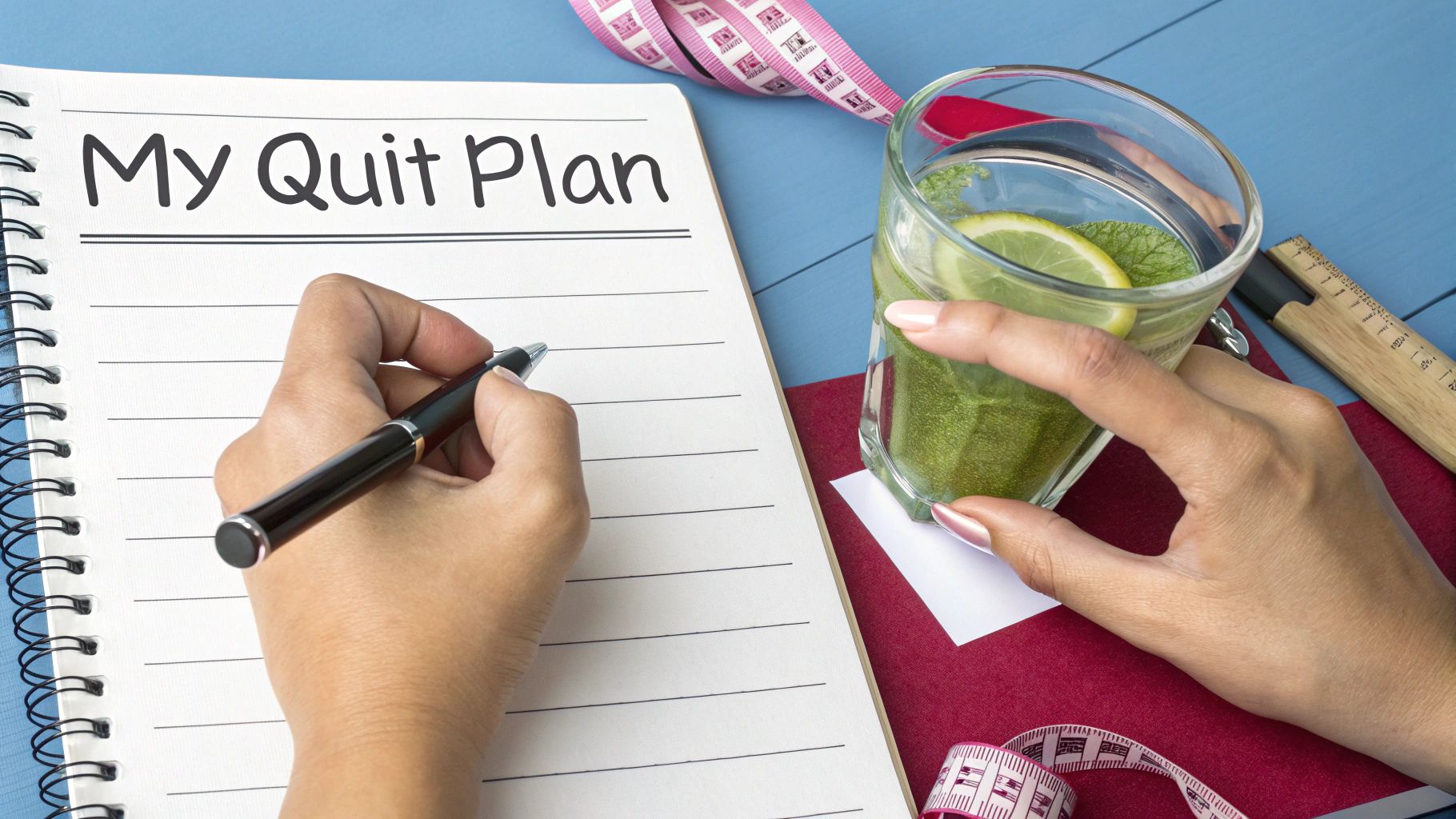
Before you can map out the future, you need a clear picture of the present. Get brutally honest with yourself about your current drinking habits. For a week or two, try keeping a simple journal to track your patterns—no judgment, just observation.
- How much am I really drinking? A "glass of wine" can be 5 ounces or 9. Be specific. Use a standard drink measurement to get a real number, not just a guess.
- When and why do I drink? What’s the trigger? Is it the stress of a long workday, the social pressure on a Friday night, or just plain boredom on a Tuesday? Note the time, place, and your mood.
- What's my "why" for quitting? This is your motivation. Write down the real reasons you want to stop. Is it for better sleep, more energy for your kids, clearer thinking at work, or just to feel healthier? Keep this list somewhere you’ll see it every day.
Tapering Off vs. Quitting Cold Turkey
Once you have that baseline, you’ve got a big decision to make: how to actually begin. While the idea of just stopping cold turkey sounds decisive and powerful, for many people who drink regularly, it’s often not the safest or most successful way to go.
Quitting "cold turkey" can shock your system. Your brain and body have gotten used to alcohol, and yanking it away suddenly can trigger alcohol withdrawal. These symptoms can range from deeply unpleasant to outright dangerous.
Tapering, on the other hand, means gradually reducing how much you drink over time. It’s a much safer approach for most, as it gives your body time to adjust. This lessens the blow of withdrawal and makes the entire process feel more manageable. Think of it as sustainable progress, not immediate, painful perfection.
A slow, controlled reduction is often the cornerstone of a successful natural sobriety plan. It reduces the risk of severe withdrawal and gives you time to build new coping mechanisms as you decrease your reliance on alcohol.
How to Build a Tapering Schedule
So, how do you actually build a tapering plan? It’s not as complicated as it sounds. The key is setting a realistic, steady pace you can actually follow. A great place to start is by reducing your total weekly drinks by a certain percentage.
Here’s a practical way to set it up:
- Calculate Your Weekly Average: Look at your drinking journal and find the average number of standard drinks you have per week. Let’s say you’re at 20 drinks.
- Set a Reduction Goal: Aiming for a 10-20% reduction each week is a safe and doable target. If your average is 20 drinks, a 10% cut means your goal for the first week is 18 drinks. Simple.
- Plan Your Pacing: How will you hit that new number? Maybe you’ll skip drinking on Mondays and Wednesdays, or you’ll have one less drink each evening you normally would. Decide on the "how" before the week starts.
- Drink Smarter, Not Faster: When you do have a drink, make it last. Sip it slowly. For every alcoholic beverage, have a full glass of water or seltzer right after. This keeps you hydrated and naturally slows you down.
- Measure Your Pours: Ditch the free-pouring. Use a jigger or a measuring cup to pour a standard-sized drink. This one small change takes the guesswork out of it and keeps your count accurate.
This kind of structured approach turns the vague goal of "drinking less" into a series of small, concrete wins. It puts you back in the driver's seat, allowing you to reclaim your health one step at a time. Be patient with yourself—if you have a setback, a solid plan makes it much easier to get right back on track.
Navigating Withdrawal and Prioritizing Your Safety
Let's talk about the elephant in the room: withdrawal. For a lot of people, this is the single biggest fear holding them back from quitting. It can feel really intimidating, but understanding what’s happening inside your body is the first step to managing it safely. Quitting naturally isn't about white-knuckling it; it's about supporting your body through a big transition.
When you drink consistently, your brain and nervous system get used to alcohol's sedative effects. When you suddenly take it away, your whole system goes on high alert, creating a rebound effect. That's withdrawal in a nutshell.
Symptoms can range from feeling like you have a nasty flu to being downright dangerous. They typically kick in within 12-24 hours of your last drink and often peak around the 72-hour mark. Knowing this timeline helps you mentally and physically prepare for what's coming.
Common Symptoms You Can Manage at Home
For many, withdrawal is deeply uncomfortable but not medically risky. This is where you can lean into natural support to get through the worst of it. Think of it like a severe, lingering hangover that just won't quit.
You’ll likely be dealing with some of these:
- Anxiety and Irritability: Your nervous system is recalibrating, which can leave you feeling jumpy, on edge, and quick to snap.
- Poor Sleep and Nightmares: Alcohol messes with your sleep architecture. It can take a little while for your brain to relearn how to get deep, restorative rest.
- Headaches and "Brain Fog": Dehydration and the chemical shuffle happening in your brain often lead to a pounding head and trouble focusing.
- Shakiness and Sweating: Mild hand tremors, clammy skin, and waking up to drenched sheets are all par for the course.
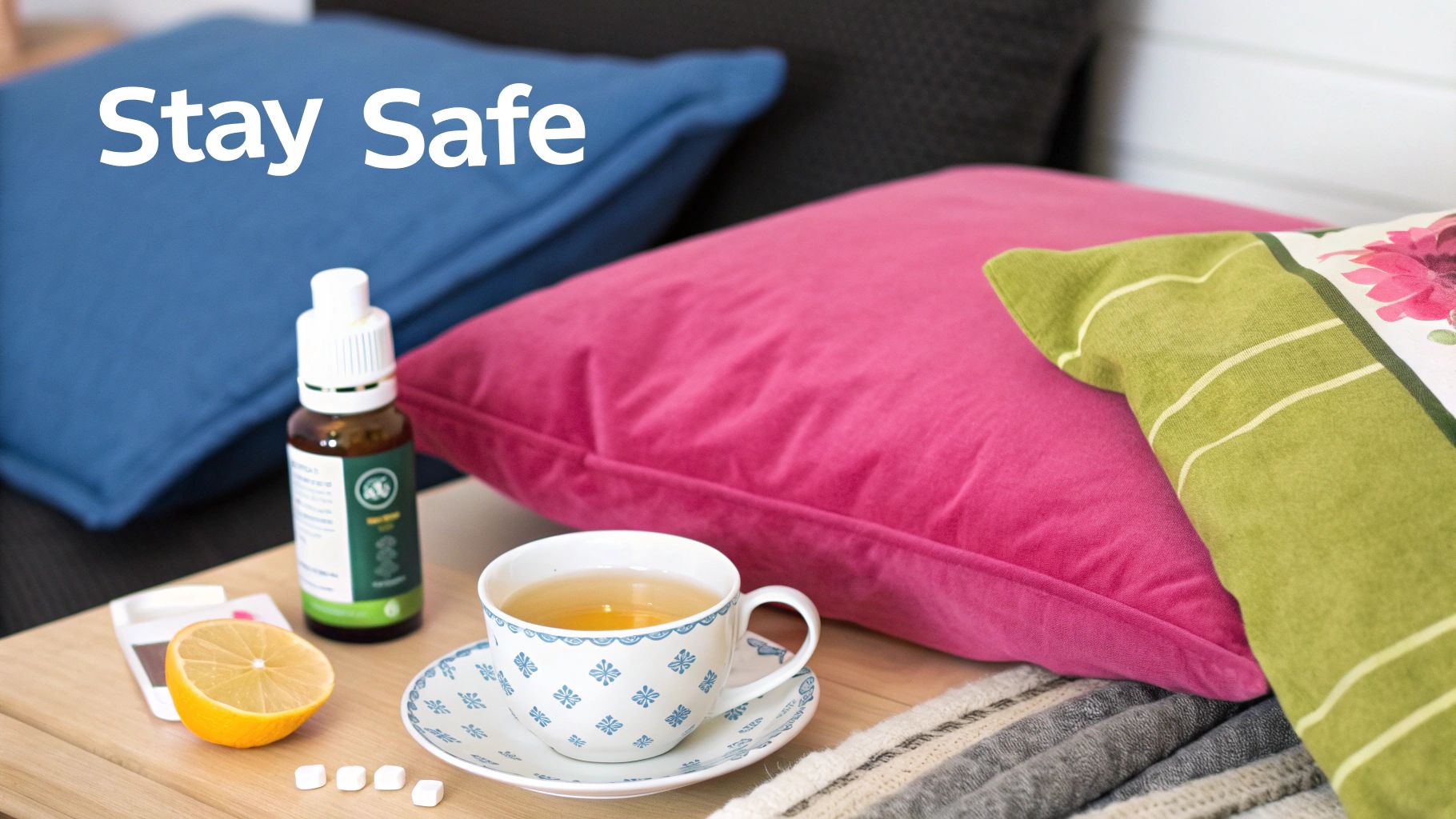
You can do a lot to help your body through this. Hydration is everything. Sip water constantly. I find that adding an electrolyte powder or just a pinch of sea salt really helps replenish what you lose from sweating.
Calming herbal teas, like chamomile or passionflower, can be a game-changer for taking the edge off your anxiety. And don't underestimate a little gentle movement. A slow walk in the fresh air can do wonders for restlessness and mood.
When to Seek Immediate Medical Help
Okay, this is the most important part. A "natural" approach has to be a safe one, first and foremost. While many people can get through withdrawal at home, some symptoms are absolute red flags. Do not try to ride these out alone.
Get professional medical help right away if you experience:
- Severe, Uncontrollable Shaking: This is what's known as delirium tremens, or "the DTs."
- Hallucinations: Seeing, hearing, or feeling things that aren't actually there.
- Extreme Confusion or Disorientation: Not knowing where you are, who you are, or what’s happening.
- High Fever and Racing Heart: A heart rate that won’t come down is a sign of extreme stress on your body.
- Seizures: This is a life-threatening emergency. Call for help immediately.
Your safety is non-negotiable. If you've been a heavy, daily drinker, the smartest and safest thing you can do is talk to a doctor before you stop. They can help you make a safe plan and determine if you need medical supervision to get through withdrawal.
Supportive Strategies for Milder Discomfort
If your symptoms are mild and you're safely managing at home, your job is to create a healing cocoon for yourself. Clear your schedule as much as you can for the first few days and just focus on resting.
Deep breathing is an incredibly powerful tool. When you feel a wave of anxiety coming on, try the 4-7-8 technique: breathe in through your nose for a count of four, hold it for seven, then exhale slowly from your mouth for a count of eight. Do this a few times—it really works to calm your nervous system.
Feed your body simple, nourishing foods. Think soups, smoothies, oatmeal, and other things that are easy to digest. Alcohol robs your body of nutrients, so giving it good fuel is essential for healing.
Most importantly, be kind to yourself. This phase is temporary. Your body and brain are doing some serious repair work. Patience and self-compassion will get you through to the other side.
Rewiring Your Habits and Daily Environment
Let's be honest: willpower is a finite resource. You can't just "white-knuckle" your way to sobriety and expect it to stick. Real, lasting change comes from fundamentally redesigning your daily routines and the environment you live in.
Think of it like being a detective in your own life. You have to understand what pulls you toward a drink and then intentionally build a world that supports your new, alcohol-free path.
Your drinking habit isn't just one thing—it’s a powerful loop. It starts with a cue (a trigger), which leads to a routine (drinking), and ends with a reward (the feeling you're chasing). To break that chain, you have to get smart about your cues and build a new plan. This is the core of quitting alcohol naturally: you're swapping an old, automatic behavior for a new, conscious one.
Become a Trigger Detective
First things first, you need to figure out what actually makes you want to drink. Triggers can be sneaky—they can be emotional, social, or even tied to a specific place or time. They're often so baked into our daily lives that we don’t even see them.
Take a minute to think about the last few times you drank. Ask yourself:
- When was it? That 5 PM feeling when the workday is finally over?
- Where were you? In the kitchen making dinner? On the couch after the kids went to bed?
- Who was with you? A certain friend? Your partner? Or were you by yourself?
- How did you feel? Stressed, bored, lonely, anxious? Maybe even happy and wanting to celebrate?
Grab a notebook and jot this stuff down for a week. You’ll be surprised at how quickly patterns pop out. Maybe your trigger is the stress of opening your laptop after dinner, or maybe it’s just the simple act of flicking on the TV.
Design Your Replacement Plan
Once you’ve identified your triggers, you can create a new response for each one. The trick is to replace the old routine (drinking) with something new that gives you a similar reward, whether that's relaxation, a mental shift, or a sense of connection.
Here are a few real-world examples:
- Trigger: Work Stress. Instead of uncorking a bottle of wine, your new plan could be a brisk 15-minute walk with a great podcast.
- Trigger: Boredom. Instead of cracking open a beer, have something ready to go—pick up that dusty guitar, work on a puzzle, or call a friend you haven't talked to in a while.
- Trigger: Social Connection. Instead of sharing a bottle with your partner, suggest brewing a pot of fancy tea or mixing up some creative mocktails together.
This isn't just about distracting yourself. You're literally building new pathways in your brain. Every time you practice the new routine, the old connection to alcohol gets a little bit weaker.
The goal is to make your new, healthy choice just as easy and automatic as the old one was. It's about designing your life so that sobriety becomes the path of least resistance.
Architect a Sober-Friendly Space
Your physical environment plays a huge role in your success. A few small but powerful tweaks to your home and social life can remove temptation and reinforce your commitment.
Start with a clean sweep of your house—get rid of any and all alcohol. The "out of sight, out of mind" principle is your best friend here.
Next, think about creating supportive boundaries with the people in your life. This can be as simple as having a quick, honest conversation. A script like, "Hey, I'm taking a break from alcohol to focus on my health, so I'd really appreciate it if we could grab coffee instead of hitting the bar this week," works wonders.
As your body and mind adjust, you might run into some common hurdles. Learning about combatting brain fog and fatigue can be a game-changer for feeling sharp and energized in your new life.
This proactive approach is catching on. There’s a global trend, especially among younger adults, showing a major shift away from heavy drinking. In the U.S., recent data shows average weekly alcohol consumption has fallen to just 2.8 drinks, a clear sign of a broader cultural move toward health and moderation. You’re not alone in this—you’re part of a growing movement.
Nourishing Your Body for a Stronger Recovery
Quitting drinking isn't just a mental game—it's about helping your physical self heal. Heavy drinking is tough on the body. It essentially acts as an "anti-nutrient," stripping your system of the very vitamins and minerals your brain needs to function, which is a big reason why you feel so awful when you stop.
A huge part of quitting alcohol naturally is consciously putting back what alcohol took away. This isn't about chasing a perfect diet. It’s about giving your body the right fuel to repair itself, which can make the whole process feel so much more manageable. The right nutrition can help stabilize your mood, curb cravings, and give you the energy to build new, healthier routines.
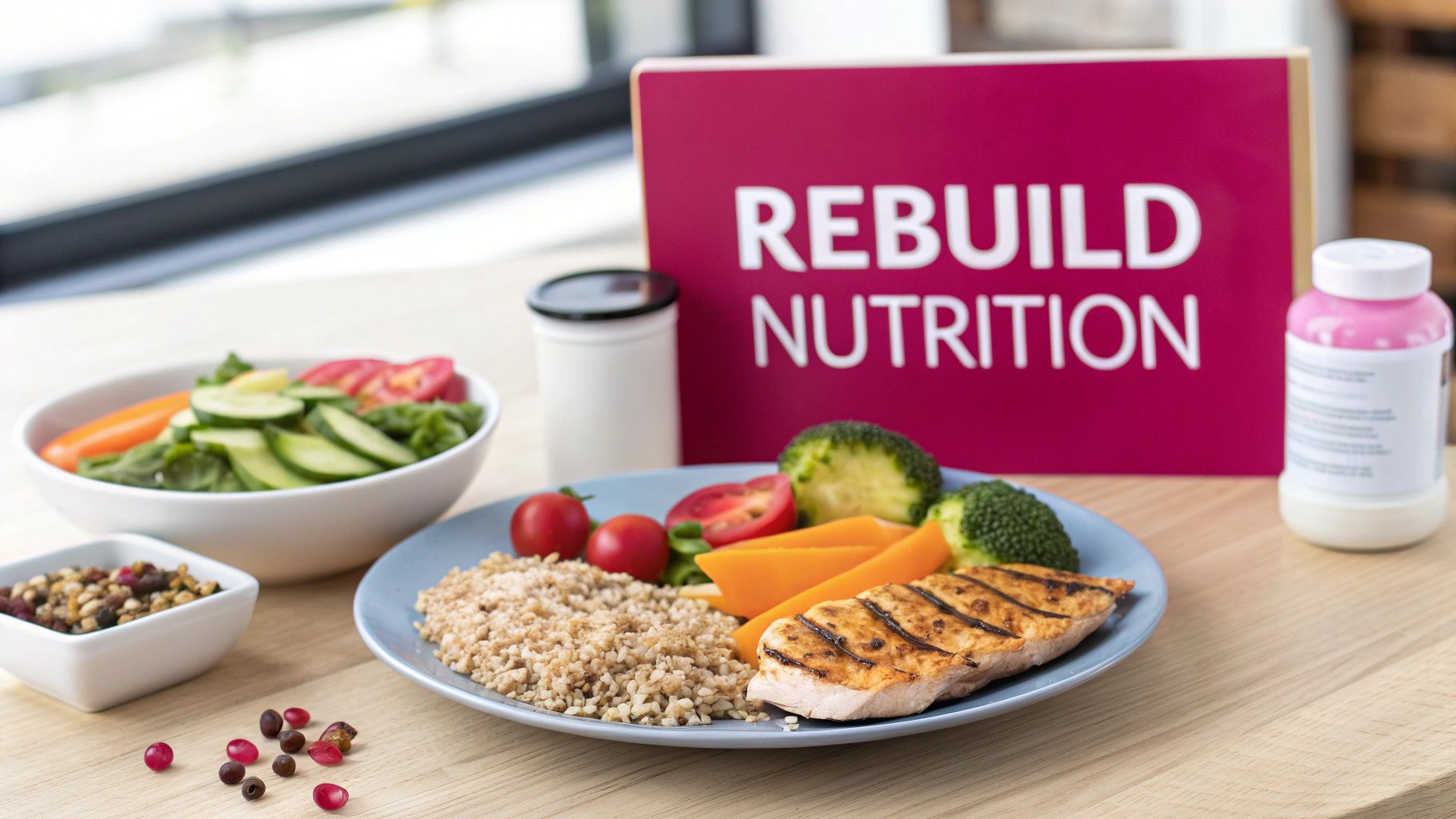
Restoring Essential Nutrients Depleted by Alcohol
Alcohol is especially brutal to a few key nutrients. By focusing on restoring these, you can give your recovery a serious leg up.
- B Vitamins: Alcohol absolutely demolishes your B vitamin stores, especially thiamine (B1). This is a big deal because thiamine is critical for brain function and energy. A deficiency can cause fatigue, irritability, and that awful brain fog—symptoms that feel a lot like withdrawal itself.
- Magnesium: Think of this mineral as a natural chill pill for your nervous system. Alcohol makes you excrete magnesium, leaving you depleted. When magnesium levels are low, it's common to experience more anxiety, restless sleep, and even muscle cramps.
- Blood Sugar: Most alcoholic drinks are packed with sugar and empty calories, sending your blood sugar on a wild ride. The inevitable crash that follows can trigger powerful cravings, mood swings, and fatigue, making it incredibly hard to stay on track.
The good news? Replenishing these doesn’t require a complete lifestyle overhaul. You can make a real difference with just a few simple tweaks to your diet.
Foods That Fuel Your Recovery
Start thinking of your plate as one of your best recovery tools. The right foods provide the building blocks your body is desperate for, helping you feel stronger and more emotionally stable.
Try to build your meals around these groups:
- Complex Carbohydrates: Ditch the sugary junk that leads to energy crashes. Instead, reach for things like oatmeal, brown rice, quinoa, and sweet potatoes. They release energy slowly, which helps keep your blood sugar—and your mood—on an even keel all day long.
- Lean Protein: Foods like chicken, fish, beans, and lentils are packed with amino acids. Your brain uses these to produce neurotransmitters like dopamine and serotonin, the chemicals that are absolutely essential for feeling happy and motivated.
- Healthy Fats: Don't be afraid of fats! Good sources like avocado, nuts, seeds, and olive oil are vital for brain health and help reduce the inflammation caused by chronic drinking.
By focusing on whole, unprocessed foods, you're doing more than just eating better. You're actively helping your brain rewire itself and giving your body exactly what it needs to heal from alcohol's impact.
Using Supplements Wisely
While real food should always be your first line of defense, some supplements can offer targeted support, especially in the early days when deficiencies are common. They can act as a temporary bridge to help your body get back to baseline faster.
It's worth talking to a healthcare professional about these options:
- B-Complex Vitamin: A quality B-complex supplement is a great way to quickly replenish all the B vitamins that alcohol has depleted.
- Magnesium Glycinate: This specific form of magnesium is easy for the body to absorb and is well-known for its calming effects. It can be a game-changer for improving sleep and taking the edge off anxiety.
Before you start any new supplement, it's essential to talk to your doctor or a registered dietitian. They can guide you on what’s safe and effective for your personal health situation. Remember, nourishing your body is a powerful act of self-care and a true cornerstone of learning how to quit drinking alcohol naturally.
Building Your Support System and Finding Alternatives
Going it alone when you decide to quit drinking is a tough road to travel. Think of it like trying to climb a mountain without a map or gear—sure, it's possible, but why make it harder on yourself? Having a solid support system is one of the most effective tools you can have. These are the people who will offer encouragement on the hard days and genuinely celebrate your wins.
Building this support network isn't about checking a box or following a rigid formula. It’s about finding what actually resonates with you and creating a safety net of people and resources where you feel understood, not judged.
Find Your People
Your support can come from all corners of your life, and the key is to be deliberate about it. For many, this starts with close friends and family who understand and respect your decision.
But sometimes, the most powerful connection is with people who have walked in your shoes. Finding others who just get it can be a game-changer.
- Peer Groups: If a spiritual approach isn't for you, secular groups like SMART Recovery or LifeRing are fantastic options. They focus on practical, science-based skills for self-empowerment and provide a structured, supportive community.
- Online Sobriety Communities: Sometimes the best support is available 24/7, right from your phone. Online forums like Reddit’s r/stopdrinking or other dedicated apps are full of people who can offer immediate advice and encouragement whenever you need it.
- Therapy or Counseling: A good therapist can help you dig into the "why" behind your drinking. It’s a completely confidential space to work through underlying issues like anxiety, stress, or trauma and develop healthier ways to cope.
Choosing your support system is an act of self-care. It's about surrounding yourself with people who will lift you up, hold you accountable with kindness, and remind you of your "why" on the days you forget.
Embrace the World of Alcohol Alternatives
Let's be honest: one of the toughest parts of quitting can be feeling like you're missing out. The good news? You don't have to. The market for non-alcoholic (NA) beverages has absolutely exploded, and we've moved way beyond club soda with a lime.
This boom is part of a larger movement toward mindful, health-conscious living. In fact, the global market for ready-to-drink beverages just saw a 2% volume increase and a 6% value growth, with NA options leading the charge. This shift in consumer demand means it’s easier than ever to find a satisfying substitute. You can learn more about these exciting beverage trends and what they mean for consumers.
Diving into this new world can actually be a fun part of the journey.
- Non-Alcoholic Beers: Seriously, the craft NA beer scene is incredible. You can find IPAs, stouts, and lagers that are so good you'll barely notice the difference.
- Zero-Proof Spirits: Love a good cocktail? You can now buy convincing non-alcoholic versions of gin, whiskey, and tequila to mix up complex, grown-up drinks at home.
- Ready-to-Drink Mocktails: For grab-and-go convenience, canned and bottled mocktails are perfect. They take the guesswork out of social events and taste amazing.
Having a go-to alternative in the fridge or knowing what to order at a bar takes the pressure off. It gives you back the power of choice, turning a moment of potential temptation into a chance to try something new that supports your goals.
Comparing Support and Alternative Options
Choosing the right combination of support and alternatives is a personal decision. What works for one person might not be the best fit for another. This table breaks down some popular options to help you figure out what might align with your lifestyle and needs.
| Option Type | Examples | Best For | Key Consideration |
|---|---|---|---|
| Peer Support Groups | SMART Recovery, LifeRing, local meetups | People who thrive on community, shared experience, and structured meetings. | Requires a time commitment and willingness to share in a group setting. |
| Professional Therapy | Individual Counseling, CBT/DBT Therapists | Individuals wanting to address underlying issues like trauma or anxiety in a private, one-on-one setting. | Can be costly; finding the right therapist-client fit is crucial. |
| NA Beers & Wines | Athletic Brewing, Grüvi, Fre Wines | Social drinkers who enjoy the taste and ritual of beer or wine but want to eliminate alcohol. | Some NA beers contain trace amounts of alcohol (under 0.5%), which may be a trigger for some. |
| Zero-Proof Spirits & Mocktails | Ritual Zero Proof, Seedlip, pre-made mocktails | Cocktail lovers and those looking for sophisticated, complex flavors for social events or winding down. | Can be more expensive than traditional mixers; taste profiles vary widely. |
Ultimately, the goal is to build a toolkit that feels supportive, not restrictive. Mix and match these options to create a plan that makes you feel confident and empowered as you move forward.
We Get It, You’ve Got Questions
Once you decide to cut back or quit drinking, a whole host of "what if" scenarios and practical questions start swirling. It's completely normal. Let's tackle some of the most common ones head-on, drawing on real-world experience.
How Long Does Alcohol Withdrawal Actually Last?
This is the big one, and the honest answer is: it really depends on your relationship with alcohol. There’s no single timeline.
For someone who was a moderate drinker, you might feel a bit off for a few days to a week. Think headaches, some anxiety, or trouble sleeping. Things usually feel the toughest around the 72-hour mark and then start to improve.
If you were a heavier, more dependent drinker, the acute physical withdrawal can be more intense and typically lasts about five to seven days. It’s crucial to understand that even after the physical stuff subsides, some psychological symptoms can stick around. This is often called Post-Acute Withdrawal Syndrome (PAWS), and it can show up as mood swings or wonky sleep patterns for weeks or months. The key is to listen to your body and never hesitate to call a doctor if symptoms feel severe.
What on Earth Do I Drink When I Go Out?
Gone are the days when your only option was a flat soda. Navigating social events is one of the biggest hurdles, but having a game plan makes all the difference and keeps you from feeling like the odd one out.
Here are a few go-to moves that work:
- Club soda with a lime or a splash of cranberry. Simple, classic, and it looks just like a cocktail.
- Explore the craft non-alcoholic (NA) beer scene. Seriously, it has blown up. Many NA IPAs and lagers are genuinely delicious and indistinguishable from their boozy cousins.
- Ask for a mocktail. Bartenders are more creative than ever. Just ask them to whip up something interesting for you, minus the alcohol.
Just having a glass in your hand can make you feel more a part of the scene. The goal is to have a replacement you actually enjoy, so you don't feel deprived.
A slip-up is a data point, not a disaster. Avoid the all-or-nothing mindset. The most powerful thing you can do is learn from it, be kind to yourself, and get right back to your plan.
Okay, But What if I Slip Up and Have a Drink?
First off, don't panic. A single drink doesn't undo all the hard work you’ve put in. It doesn't mean you've failed. The absolute worst thing you can do is let a slip turn into a slide by adopting an "all-or-nothing" mentality.
Instead, get curious. Treat it like a scientist would—as a piece of data. What happened right before you drank? Were you in a specific place, with a certain person, or feeling a powerful emotion like stress or boredom? Use that information. It’s a valuable clue that shows you where your plan might need a little reinforcement.
Tomorrow is a new day. Acknowledge what happened, learn from it, and get right back on track. Building resilience isn't about being perfect; it's about how you recover when you stumble.
At Day Dreamer, we believe in mindful choices that enhance your well-being. If you're exploring alternatives to alcohol, discover our curated line of clean, hemp-derived Delta-9 THC and CBD sparkling waters at the Day Dreamer website.


